
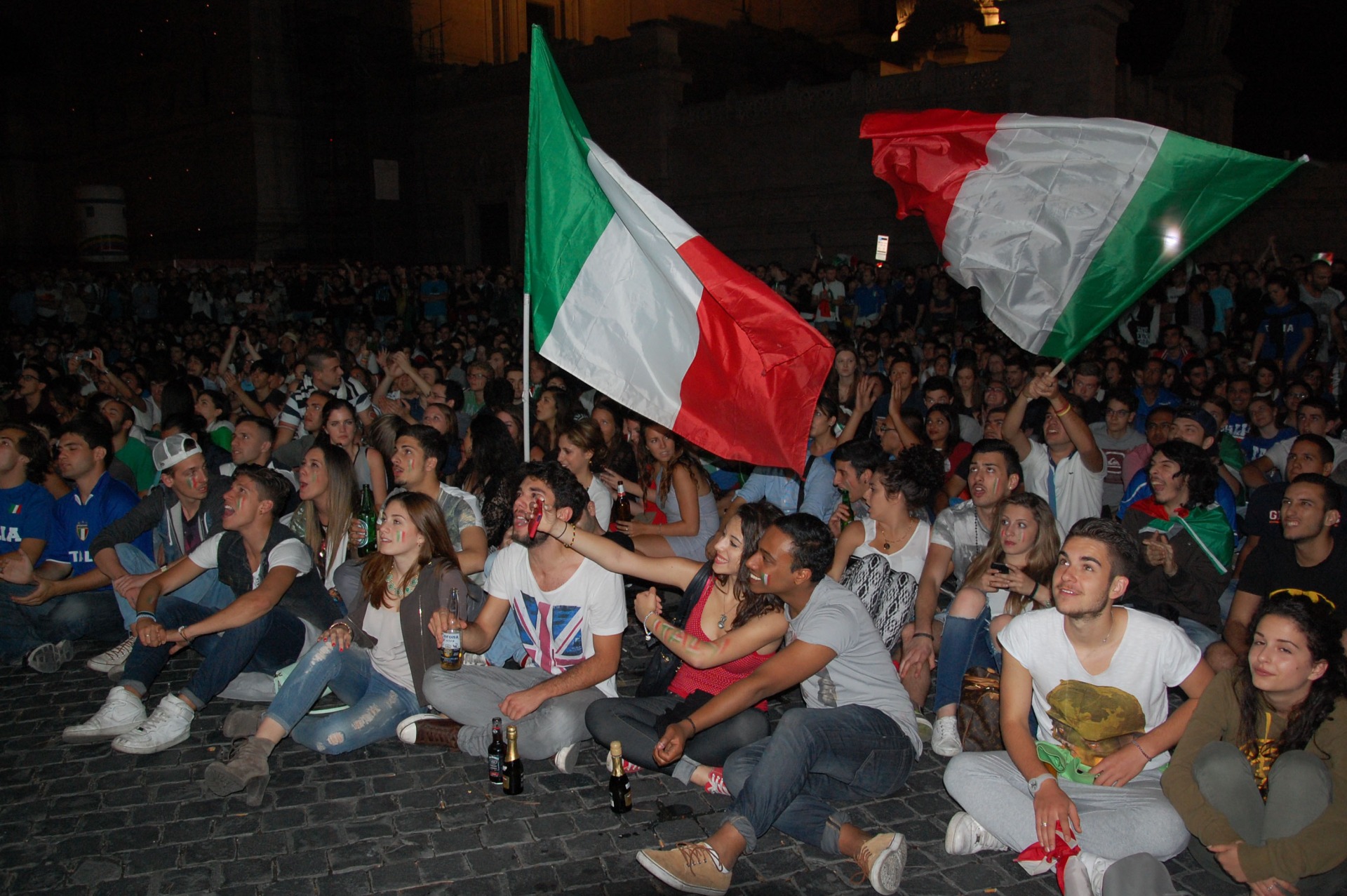
In the summer of 2014, Italy was buzzing with the excitement of the national team qualifying for football’s biggest tournament. Having reached the final of Euro 2012 just two years prior, there was genuine hope that the Azzurri would deliver another strong showing in Brazil, building on the foundations of their continental success.
The time difference meant matches were broadcast either in the heat of the afternoon or late into the European night. Over just ten days, the public mood in Italy’s major cities shifted rapidly from quiet optimism to an immediate footballing crisis.
Here’s how it played out in Italy’s biggest cities.
Rome: Late nights in Piazza Venezia
In the capital, municipal authorities and private organisers created outdoor viewing areas to accommodate the late-night schedules.
A FIFA public fan zone was set up in the historic Piazza di Siena, located within the sprawling Villa Borghese gardens. In the centre of Rome, large crowds gathered around a massive public screen smack bang in Piazza Venezia, drawing thousands of local supporters out into the warm June streets.
The opening match, a midnight kick-off in Italy on Sunday, 15 June, fired up fans across the globe. Goals from Claudio Marchisio and Mario Balotelli secured a 2-1 victory over England, prompting late-night celebrations across the capital’s piazzas.
However, by Friday, 20 June, there was a stark shift. For the afternoon kickoff against Costa Rica, dense crowds packed into Piazza Venezia under intense heat, only to watch a 1-0 defeat in complete silence. By the final whistle, the initial tournament momentum had completely evaporated from the city’s streets.
Milan: Navigli Crowds
In Milan, the main hub for public viewing was along the Naviglio Grande. Local bars and cafés lined the canal pavements with outdoor television screens, turning the waterfront into a long, crowded corridor of fans in Azzurri shirts.
By the time the critical final group match against Uruguay kicked off on Tuesday, 24 June, these canal-side venues were completely packed for the afternoon broadcast.
However, the lively atmosphere quickly collapsed. Italy suffered a 1-0 defeat in a match overshadowed by the controversial incident where Uruguay’s Luis Suarez bit Italian defender Giorgio Chiellini, bringing a sudden, bitter end to the city’s World Cup summer.
Around Italy
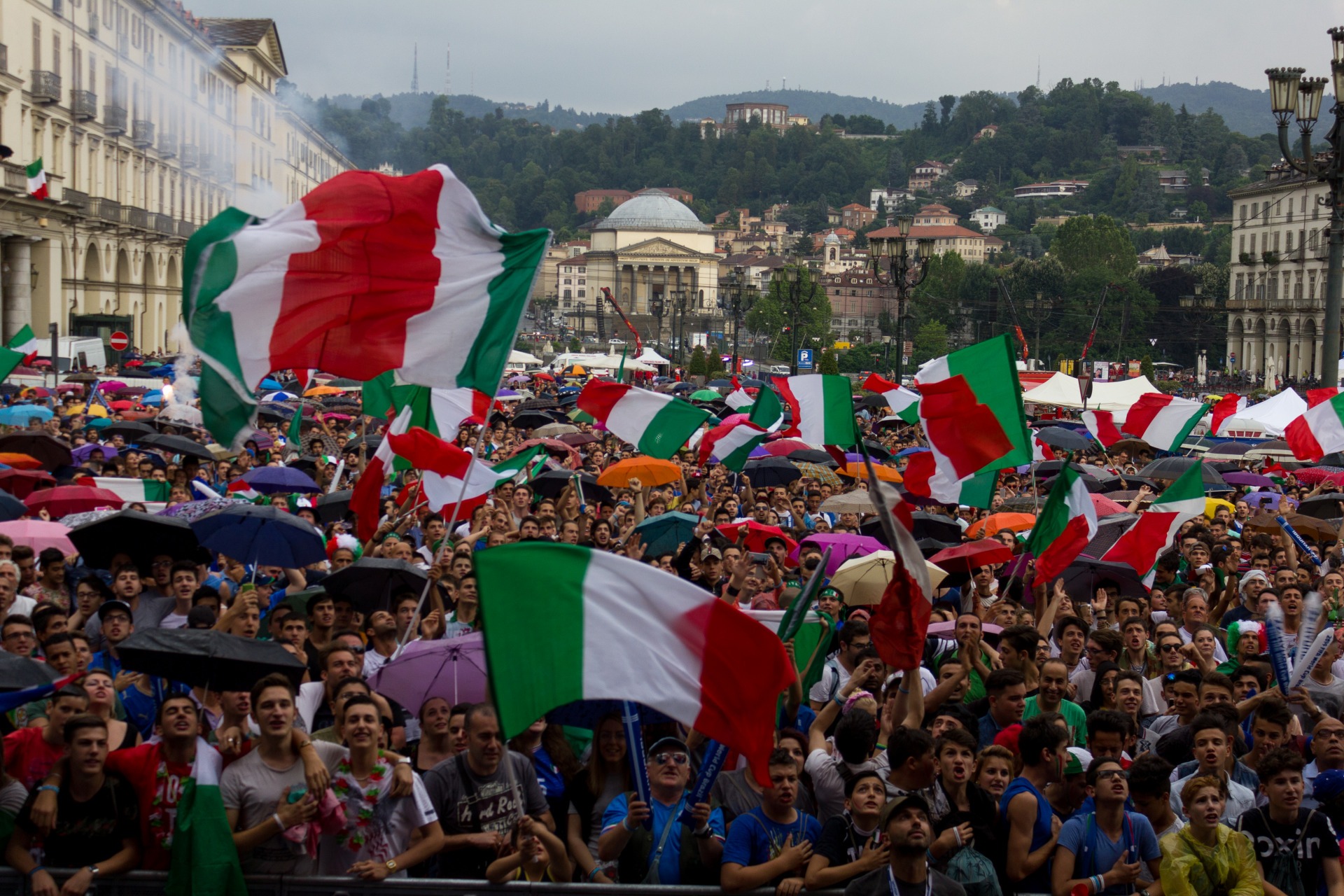
Turin was also a hub of patriotism as a sea of green, red and white covered the Piazza Vittorio. It had all started so brightly, with flares and firecrackers lighting up the city’s main square after the victory over England.
But it was a damp squib come the end, as locals watched on in disbelief following defeat to Uruguay.
In Florence, Mercato Centrale stayed open late specifically for the England clash, with the first floor of the sprawling venue packed with locals and tourists alike.
However, throughout the city areas also stayed open to showcase the game, with both Giardino dell’Orticoltura and Parco dell’Anconella meeting points in the city for fans to gather, as was OffBarat the Fortezza da Basso, which set up multiple screens outside to make sure fans got a great view of the action.
Meanwhile, in Bari, Showville Cinema converted its parking spaces on the outskirts of the city into a fan zone for locals. Those in Bologna watched in the garden of King Phillip in the heart of the university area, with hundreds of fans sitting on the grass.
Related Topics
Related Articles
Related Articles
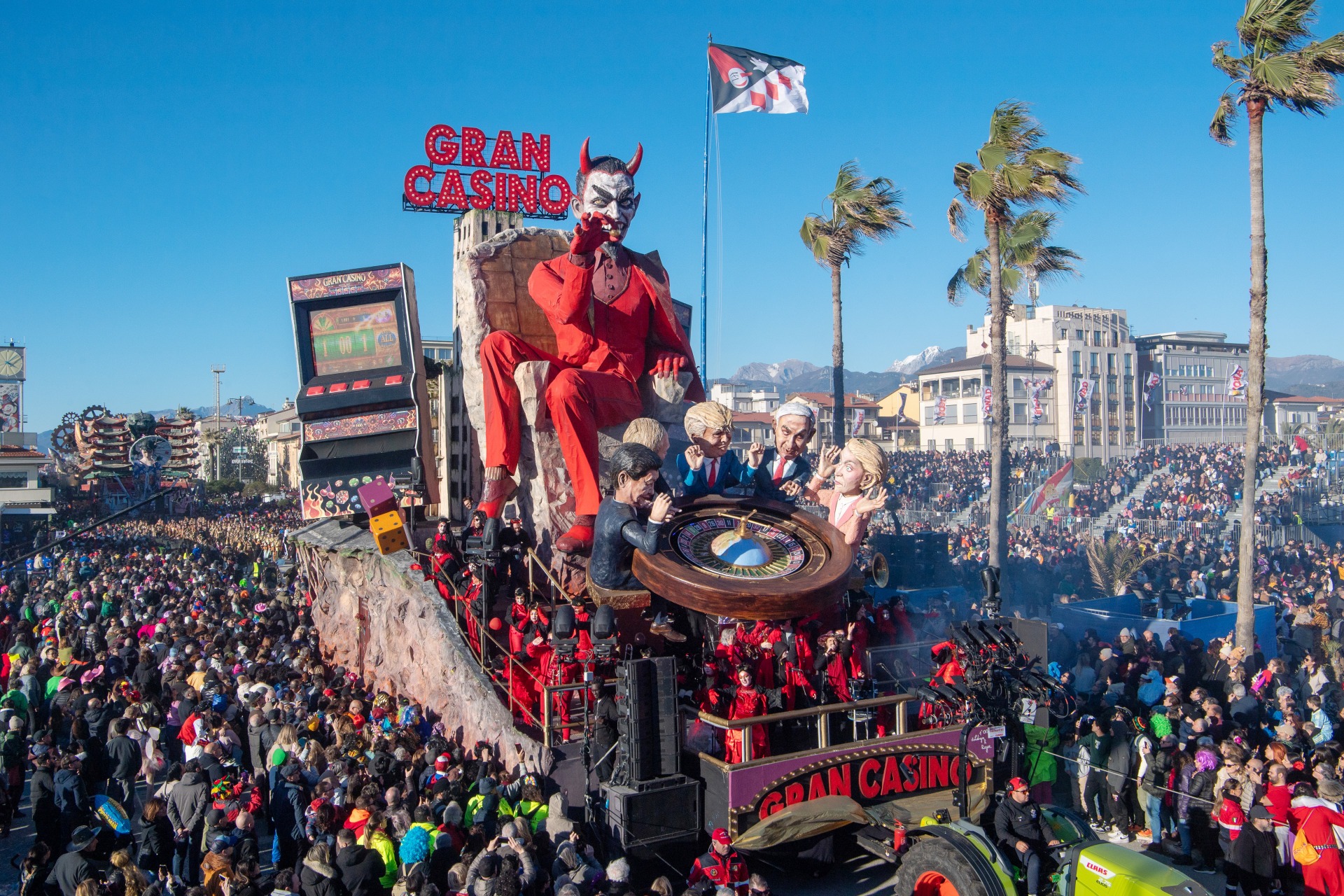
From fruit fights to festivals, check out the wonderful events in the sixth part of our 49 Italian Trips You Must Make series.
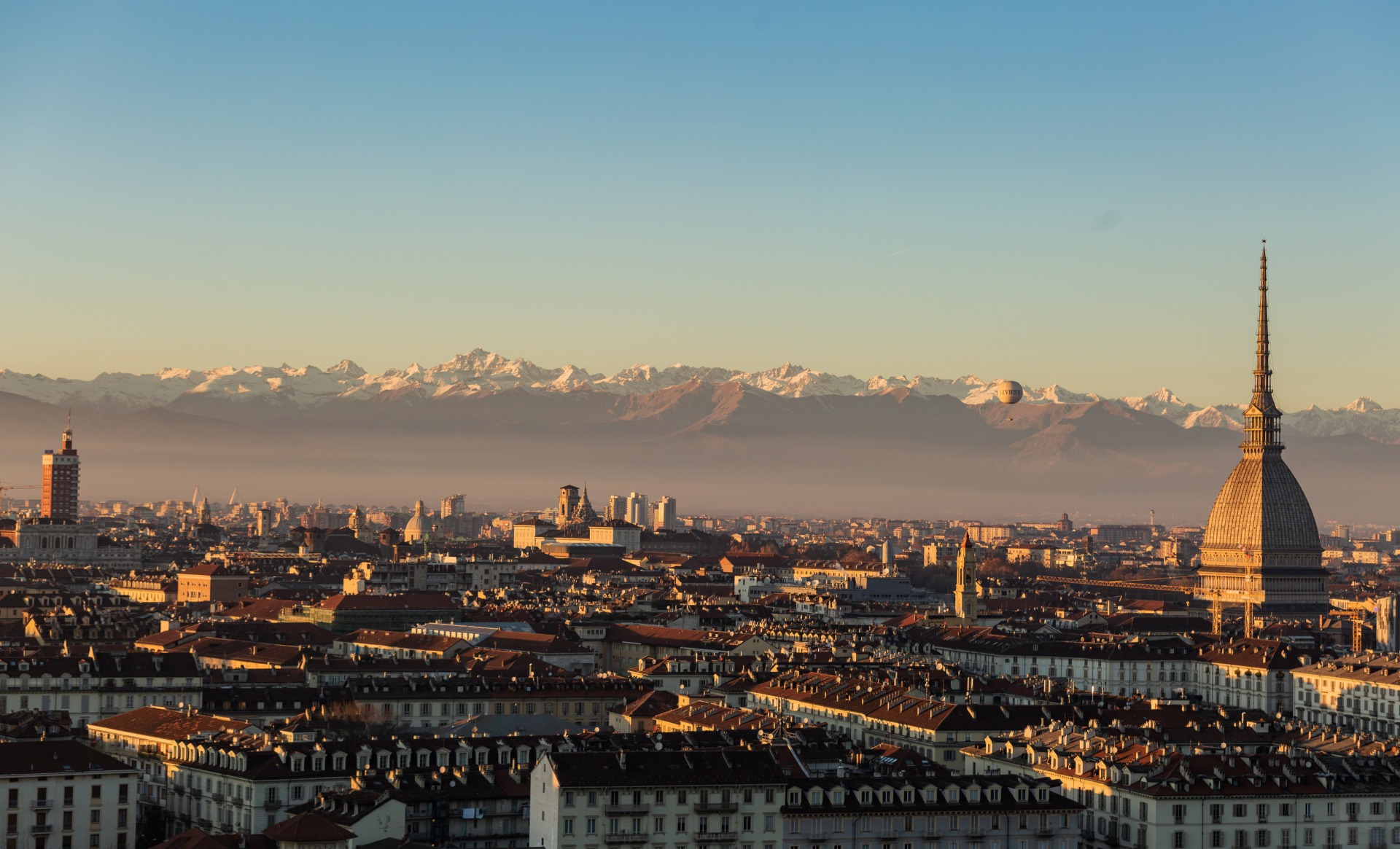
From top-flight derbies to neighbours leagues apart, here are seven Italian cities with two teams and so much more.
Pristine beaches, dramatic clifftops and crystal-clear waters. Italy's coastline varies enormously depending on the region.