
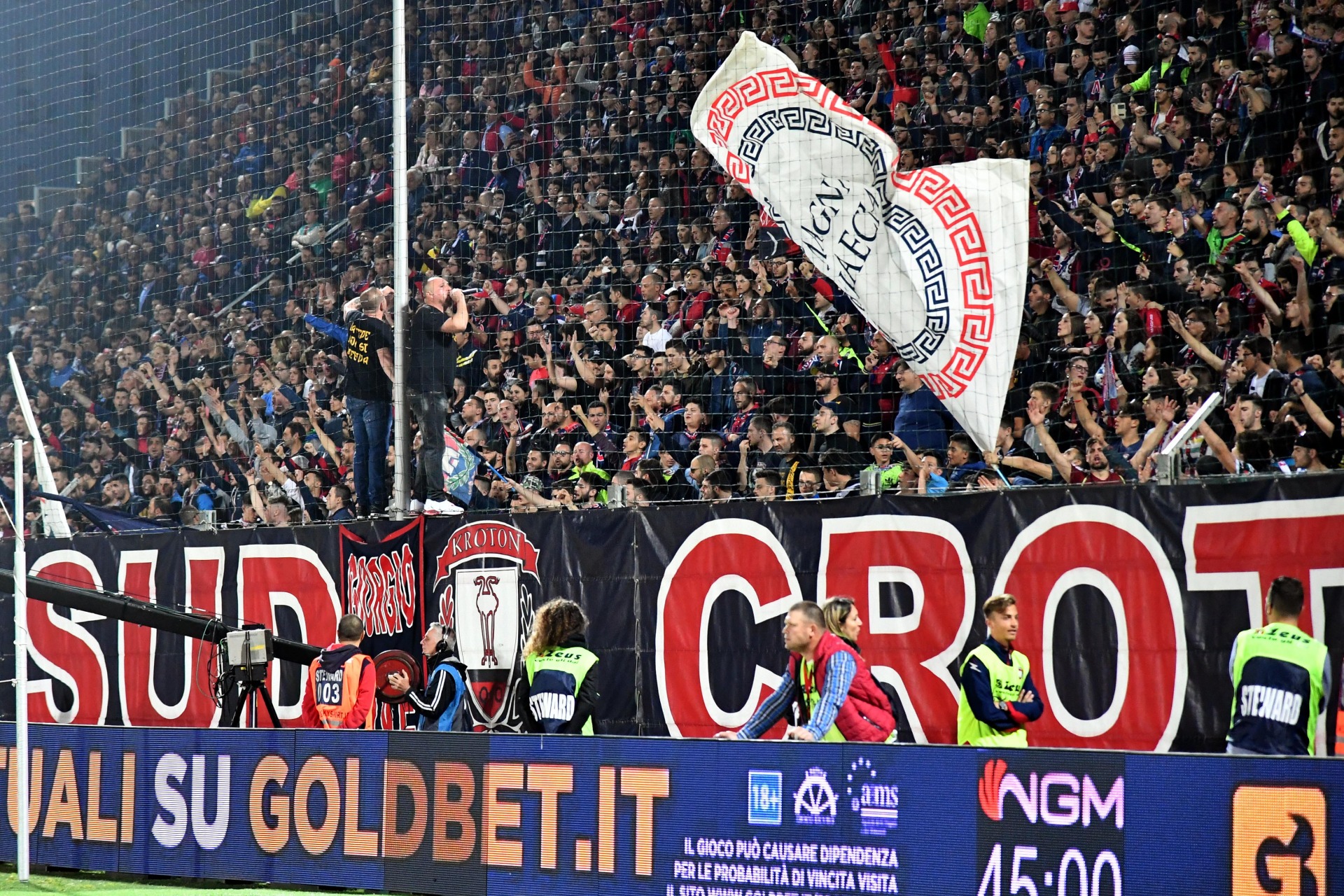
Crotone in the past was Kroton, one of the great cities of Magna Graecia, where Pythagoras set up his school.
The city also has a claim to the oldest football club in Calabria.
For decades, the club’s birth was dated to 1923, until a local journalist, Giovanni Monte, found a letter from September 11, 1910 in the city archives. In it, the board of the Società Sportiva Crotona asked the mayor to lend them the municipal theatre to inaugurate the club on September 20.
The colours came from the city. The first official kit took the red and blue of the civic coat of arms, and its badge was a shield with a Delphic tripod, the symbol of the city.
Until the mid-1980s, the club and the city shared the same crest. The sharks came from the stands, the first appearing on a fans’ banner in 1976, at a derby against Cosenza that Crotone won easily.
President Raffaele Vrenna later put two sharks on the badge, and since 2006 the official mascot has been PaSqualo, a blue shark.
Today the Pitagorici are rebuilding from Serie C.
Their home, the Stadio Ezio Scida, sits between the old town and the sea. It carries the name of Ezio Scida, a Crotone-born midfielder who wore the No 4 and was the club’s captain and symbol in the 1940s. He died in January 1946, aged 30, in a road accident on the way to a friendly in Castrovillari.
The club lists the stadium capacity at 12,307. The home support is in the Curva Sud, which is dedicated to Giorgio Manzulli, a historic Crotone fan.
The ground is built on ancient Kroton. When Crotone reached Serie A in 2016, the archaeological authorities slowed down the works to expand the stadium, and the club had to play its first home games of 2016-17 at the Stadio Adriatico in Pescara. The first Serie A game at the Scida was on October 23, 2016, against Napoli, after five months of work.
Here is everything you need to know.
Where To Stay
Crotone is compact. Stay in the centre around Piazza Pitagora, where the old town meets the new, or on the seafront along Viale Gramsci and Lungomare Cristoforo Colombo.
The old town climbs through narrow lanes up to the Castle of Charles V. The seafront is livelier, especially in summer, when evening traffic restrictions can make parking hard.
The stadium is only about a kilometre from Piazza Pitagora, so you can walk to the game from either area.
Civico 56 House Room on Via Cutro 56 is a small, newly renovated guesthouse in the centre, with large, spotless rooms and a good breakfast. The Scida is within walking distance.
B&B A un passo dal mare on Viale Cristoforo Colombo is a small B&B on the seafront, a few steps from the beach and close to the bars and restaurants of the Lungomare. Book early, as it has only a few rooms.
Where To Eat
Crotone’s table starts with the sea. Look for sardella, a spicy preserve of baby fish and chilli, cavatelli with meat sauce, pecorino crotonese, and a glass of Cirò, the red wine from the province.
Zio Emilio on Via Mario Nicoletta is a local restaurant with a menu that changes with the day’s catch. It is closed on Sundays, so if the game is on a Sunday, go on Saturday night instead.
In the old town, La Pignata in Vico Orfeo is a small stone-walled room with no printed menu: staff read out what is fresh.
A’ ra gghiazza on Via Silvio Messinetti serves fish and good pizza, and in summer you can eat in the courtyard at the back, under the balconies of the old houses.
For breakfast, I Dolci di Hera on Via Venezia, near the seafront, makes its own pastries, while Bar Moka on Viale Regina Margherita serves traditional Calabrian sweets.
Where To Drink
Crotone’s bars are coffee bars first. For an aperitivo with a sea view, go to Bar Florida on Piazza Gramsci. Closer to the ground, American Bar on Via XXV Aprile is a pastry shop and bar that opens very early every day.
Bar Dello Sport is a proper local bar and a good stop for a pre-match coffee, but it closes at 8.30pm, while The Bounty is an old-style pub near the seafront where locals go to watch the football, with craft beer on tap and generous plates of food.
Don’t Forget
Tickets are sold online through TicketOne and at TicketOne outlets. For the Coppa Italia Serie C game with Cosenza in August, the Curva Sud and away section cost €10, with seats in the main stand from €15 to €40. On matchday there is also an official ticket point on Via G. Di Vittorio, open from 9am until kick-off. A fidelity card is no longer needed for home games, but tickets are issued in your name and can only be used by you.
Did You Know?
The miracle of 2017. In their first Serie A season, Davide Nicola’s Crotone had nine points at the halfway mark. In the era of three points for a win, no team had ever stayed up from there. Crotone took 25 points in the second half of the season, beating Inter along the way. On the final day they beat Lazio 3-1, while Empoli lost in Palermo. Crotone were safe. Nicola had promised to ride a bike from Crotone to Turin if they stayed up, and he did: 1300km in nine days.
Getting There
Crotone is hard to reach by train, and the car is the easiest way to arrive. Crotone’s small airport has a limited schedule, while Lamezia Terme, just under a couple of hours away, is the main airport for Calabria. Check flights to both.
Need Another Football Fix?
Catanzaro is the obvious pairing, and Cosenza complete the Calabrian set. The derby with Cosenza is where the shark was born.
Related Topics
Related Articles
Related Articles
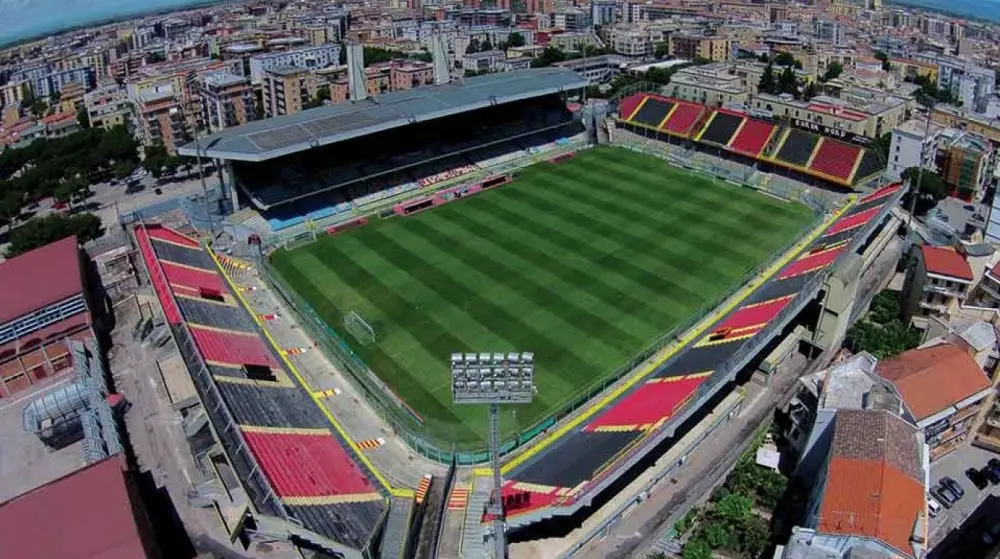
It is in Foggia that you can truly live and breathe the slow-paced, southern Italian way of life.

The home kits looked to tradition and the away kits went retro. The third kits are where Serie A clubs take more risks.
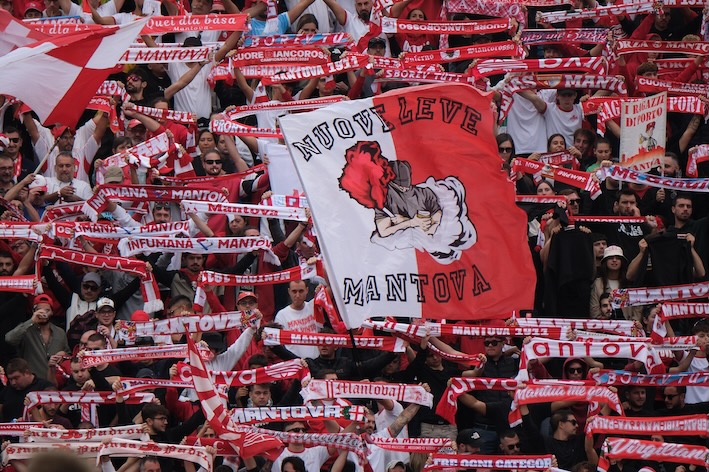
A top-of-the-table clash between Mantova and Palermo headlines the latest triple-header of Serie B fixtures live on Destination Calcio TV.