
Milan is the only city in Italy with three professional football clubs, and if you count the reserve sides in Serie C, it has five teams playing league football inside the metropolitan area.
Almost all of them are reachable on public transport, so here is the 2026-27 football map of Milan, and how to move around it.
San Siro: Inter, Milan and a stadium counting down the days
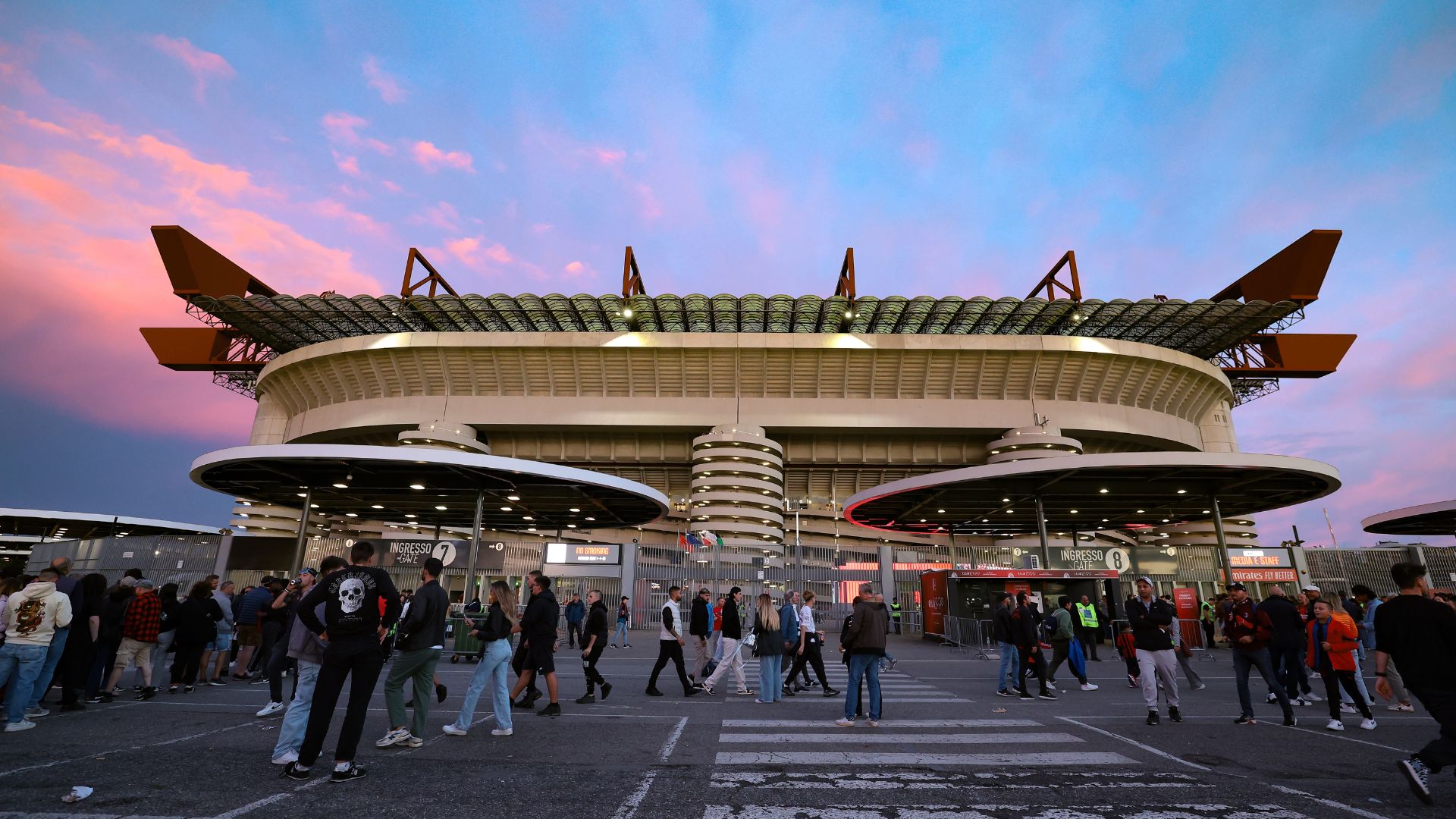
The two big clubs share the Stadio Giuseppe Meazza, in the San Siro district on the western edge of the city. Inter were founded in 1908 by a breakaway group from AC Milan, the older club who were founded in 1899 by Englishmen, and who still carries the English spelling of the city’s name.
They have played in the same building since 1947 and, sadly, that building now has an end date. In November 2025 the two clubs bought the stadium and the surrounding land from the city council for €197million, and they plan to build a new 71,500-seat ground on the car parks alongside it.
Work is set to begin in 2027, with the new stadium opening in 2030 or 2031, ahead of Italy co-hosting the European Championship in 2032. The Meazza stays in use throughout the construction, and only afterwards will most of it come down, with a section of the second tier kept standing.
In February 2026 it hosted the opening ceremony of the Milano Cortina Winter Olympics. If you want to see the old San Siro, the next few seasons are the last comfortable window.
Getting there: The M5 lilac line goes to San Siro Stadio. The first glimpse of that iconic calcio cathedral as you leave the station really is something special.
The M1 red line to Lotto Fiera leaves you a 15-minute walk. Tram 16 runs from the centre out to the stadium and is slower but far more pleasant, especially on the way back when the metro is full. On big matchdays give yourself an hour from the centre, not 30 minutes. If you want to see Italian football at its highest level, in the building that defines it, this is the trip to make first, and to make soon.
Giana Erminio: the club at the end of the line
Take the M2 east and stay on it. Past Cascina Gobba the line comes out of the tunnel and runs above ground through flat farmland, and about 20 minutes later the doors open at a station called Gorgonzola. Yes, that Gorgonzola. AS Giana Erminio play a kilometre from the platform, in a town of 20,000 people, and they are the only club in Italian professional football named after a person, surname first. They play in Serie C and ticket costs €10 wherever you sit.
Getting there: M2 to Gorgonzola, then either 10 minutes on foot down Via Milano or, much better, pick up the towpath of the Naviglio della Martesana behind Piazza della Repubblica and follow the water. The canal path runs all the way back into Milan from Via Melchiorre Gioia, and the floodlights appear over the trees after a quarter of an hour.
While you’re there: Piccola Champagneria, on the bridge over the canal, is an aperitivo bar that opens in the morning and has tables by the water. Bar Guzzi Bistrò in Piazza Italia opens at seven every day. If you want to see how a small town carries its club, €10 and a metro ticket buys you the cheapest day out in Italian football.
Inter U23: the reserve side in the factory town
Inter’s second team arein their second season in Serie C, and this year they play in Girone C, the southern group, which means most away trips are 800km. Home games have moved from Monza to the Stadio Ernesto Breda in Sesto San Giovanni, on Via XX Settembre. The Breda is a good ground to know. Built in 1939 by the Breda engineering company for its workers, it now belongs to the Parco Nord authority and is shared with Pro Sesto.
Alcione played there for two seasons before moving north. Sesto San Giovanni itself was the industrial heart of Lombardy, home to factories such as Breda, Falck and Marelli, and was known for decades as the Stalingrad of Italy.
Getting there: M1 to Sesto Rondò or Sesto Marelli, then about 15 minutes on foot; M5 to Bignami, which puts you in the park. If you want to watch young talent, this is where you will find it.
Alcione Milano: Milan’s third club (not in Milan)
Alcione were founded in 1952 on the western edge of the city, took their name and their orange from the kingfisher, and spent 70 years in the amateur leagues before going up to Serie C in 2024. For 2026-27 they play at the Stadio Ferruccio in Seregno, in Brianza, waiting to move into their new ground in Settimo Milanese. The target is early 2027.
Getting there: Trains to Seregno leave from Milano Porta Garibaldi and Centrale on the S11, S9 and RE80, roughly every 10 minutes at busy times, and take about half an hour. The ground is a 10-15-minute walk from the station through the town centre. Do not go looking for an ultras bar. Alcione have no organised supporters’ group, crowds rarely reach a thousand, and the club are openly aiming at students and families rather than competing with Inter and Milan.
Worth knowing before you go: the Ferruccio was built in 1934 by the industrialist Umberto Trabattoni in memory of his son, who died at seven. Trabattoni was president of Seregno, and later president of AC Milan. The square outside is named after Aldo Boffi, who came through at Seregno and was Serie A’s top scorer three times for Milan. If you want football at conversation volume, close enough to hear the bench, Alcione on a Sunday afternoon is the right choice.
And if you have another day…
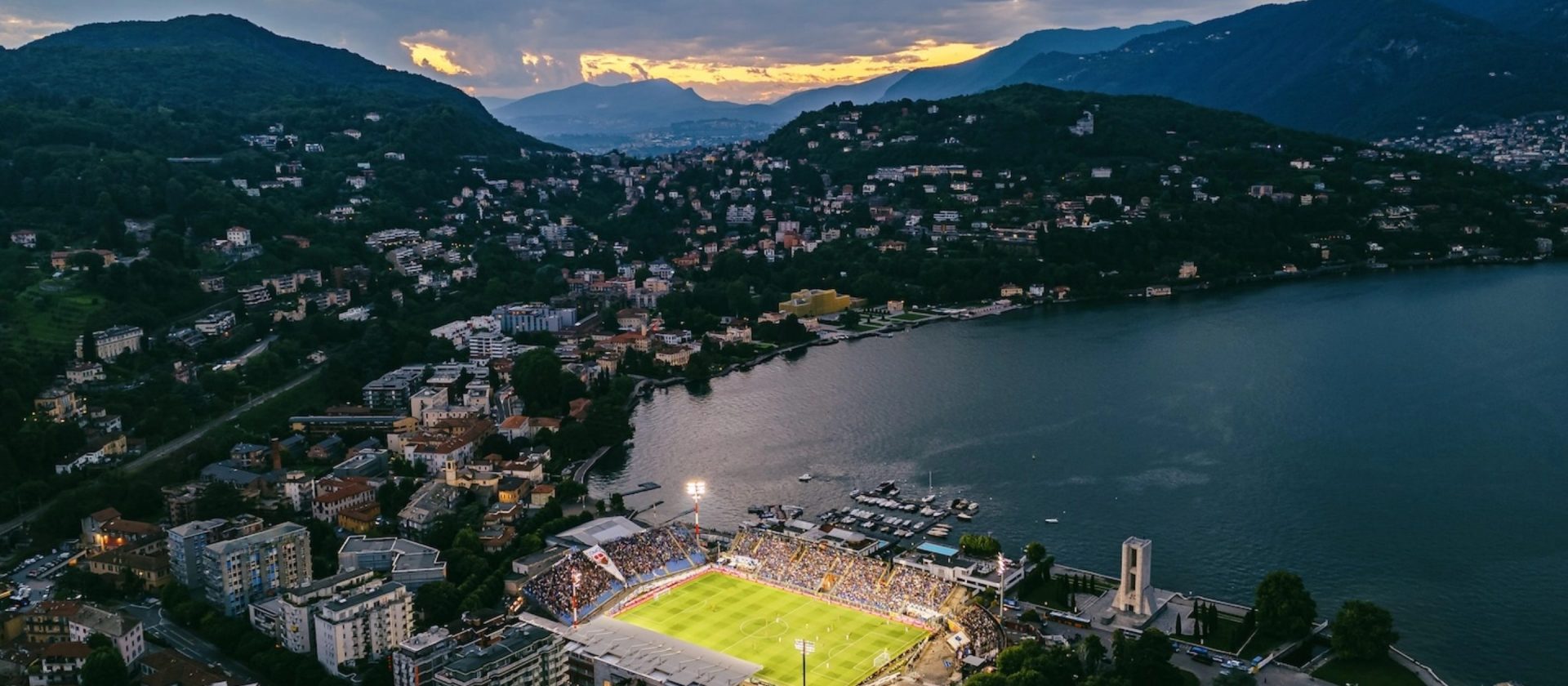
Everything above sits inside the metropolitan area, but the regional train network puts several more clubs within an hour. Monza is less than 20 minutes from Centrale. Renate play at Meda, on the Ferrovienord line out of Milano Cadorna. Lecco, on Lake Como under the Resegone, is about 40 minutes by train and the ground is a short walk from the lakefront. Pergolettese in Crema is roughly an hour to the southeast, and Como 1907 are less than an hour north on a line that ends beside the lake. Pick two in a weekend and you will have seen more of Lombardy than most people manage in a week. If you want to turn a weekend into a proper tour, the regional trains do the work for you. No car, no planning, just a timetable and a ticket.
Related Topics
Related Articles
Related Articles
From a Geordie takeover to Belgian fans kicking off a global phenomenon, here are five memorable nights under the lights at San Siro.
Fans of PSG and Manchester United can look forward to football by the lake after the Champions League draw was made in Monaco.
Two of football's greatest arenas? Easy. Three Champions League teams in one weekend? No problem. This is a brilliant calcio weekender.