The World’s Most Violent Sport and the Centre of the Musical Universe… Italy’s Best Festivals
By Emmet Gates
It’s not every day you find a famous rapper serving coffee. Or a horse race slap-bang in the middle of a historic town square.
Whether it’s the world-famous Umbria Jazz Festival, Tuscany’s Palio di Siena, the centuries-old Calcio Storico in Florence, or Sanremo becoming the centre of the musical universe, Italian festivals have something for everyone.
Here are six of the best.
Sanremo Music Festival (February)
Sanremo has, over the course of 75 years, blossomed into Italy’s biggest and most-loved music festival, attracting an audience of tens of millions every year. Established in the town of the same name in 1951 to help its failing economy, it is the showcase event that catapulted Italian musicians to superstardom, including the likes of Laura Pausini, Andrea Bocelli and Eros Ramazzotti.
Held every February, tickets are like gold dust owing to the small capacity of the Teatro Ariston, and you must register to be in with a chance. The city itself comes alive during the festival. Music is everywhere, bars and restaurants stay busy late into the night, events take place in the main piazzas and it is the perfect setting for star-spotting.
Italian rapper Sayf now has 2.7 million monthly listeners on Spotify, but at the 2026 festival he flashed back to his life as a barista, serving coffee to fans and members of the media at Bar Santissimo.
Andrea Bressan, a 23-year-old journalist, said: “Sanremo is a whirlwind, in every sense. The focus should obviously be on the music, but in reality it’s about pretty much everything else. There are huge crowds all over the city: stands, flash mobs, artists stepping out onto their hotel balconies to greet fans or just wave to the curious onlookers below.
“I was served coffee by Sayf and it was chaotic. He was supposed to serve coffees to the press but word got out, and curious locals, many of them elderly, squeezed into this tiny bar. It’s a wonderful experience.”
Adrian Caporrella is 25 and has covered the festival for university radio. He said: “I don’t think people realise just how much the city changes during festival week. Sanremo is a small city with just over 53,000 people, and every year it welcomes three times that number of people every day. Sanremo has magic. Sanremo is magic. It’s the one time of the year when aspiring musicians and people hoping to build a career in the industry get the chance to connect with well-known artists, industry professionals, press offices and so many other people working behind the scenes.”
Italian state broadcaster RAI, who televise the event every year, hold a random draw for tickets in the weeks leading up to the festival, as does Vivaticket. Hotel prices, as expected, are at the higher end due to the demand and it is worth booking early.
The local football team, Sanremese Calcio, have been making headlines of late due to the presence of World Cup winner Christian Karembeu as part-owner. The team ply their trade in Serie D, so mixing music and football over a weekend is entirely possible.
The best way to get to Sanremo from the UK is to fly into Nice in France, with the town close to the French border on the Ligurian coast. From there, a train or bus will get you there in around two-and-a-half hours.
Calcio Storico (June)
Italy’s most brutal sport has been a regular feature of Florentine life since the 16th century. Calcio Storico is played in June during the feast of Saint John the Baptist, the city’s patron saint, and is, as strange as it may sound, a mix of rugby, football and martial arts.
It is fascinating. Netflix featured it as part of the Home Game series in 2020, while a YoutTube feature branding it The Most Savage Sport in the World has been viewed more than five million times.
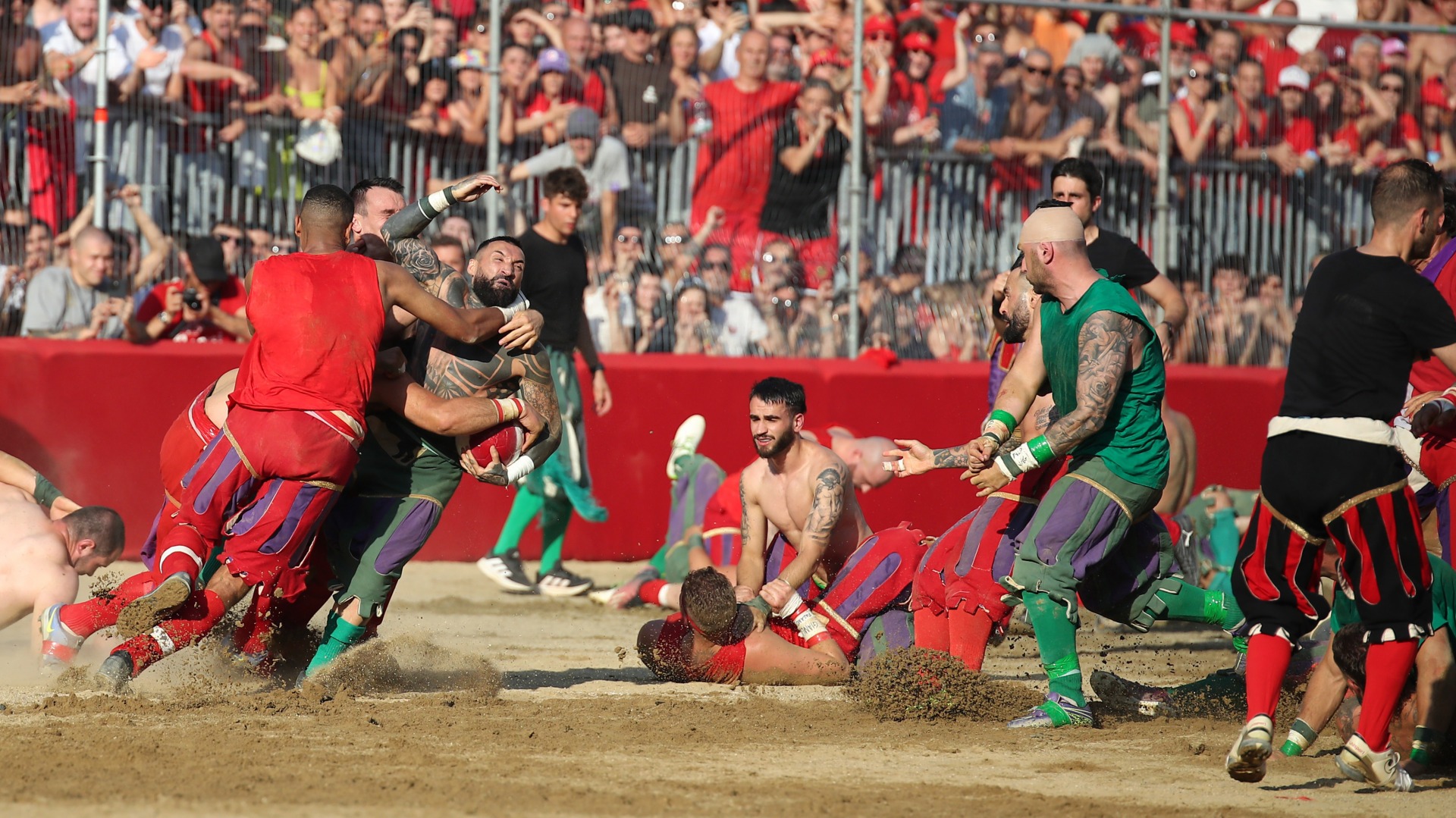
Each quartiere (district) of the city is represented during the games, with the matches taking place in Piazza Santa Croce. A game lasts 50 minutes and there are 27 players on each team.
“It means a lot for the city, it adds to its specialness and uniqueness and makes Florence even more desirable,” said Giacomo Peggion, a player for the Bianchi (Whites) team, in an interview with The Guardian. “We choose to play this game for the same reasons a man climbs the highest mountains and sails the most tempestuous seas.”
Interest in Calcio Storico had waned by the early 20th century, but it was revived by Benito Mussolini in 1930 and has been played more or less every year since. Tickets for the games usually sell out pretty fast. The easiest way to snap them up is through TicketOne, with the release usually a few weeks before the event.
The best route to Florence from the UK is to fly to Pisa. From there, the train ride to Florence takes less than an hour.
Umbria Jazz Festival (July)
The Umbria Jazz Festival is one of the biggest on the circuit as each July, the stars descend on Perugia, with established acts and street performers coming together.
The festival has been running since 1973 and has hosted the likes of George Benson, B.B. King and Earth, Wind and Fire down the years. It would take all day to list the acts who had sprinkled their stardust on this part of the peninsula.
Festival-goer Vladimiro Cupido is a trumpet player and music teacher. He said: “How could I ever forget the night when Miles Davis played at the Giardini del Frontone? I get a shiver just thinking about the ethereal sounds of his trumpet. Or the day Michel Petrucciani gave one of his extraordinary concerts? A man so small in stature, yet so immense in musical talent; a man brimming with creative energy, drawn from who knows where.
“Herbie Hancock, Lester Bowie… I could tell countless stories to convey what Umbria Jazz has meant over all these decades.
“Many legends are no longer with us, but Umbria Jazz has evolved to such an extent that it gives the city of Perugia, Italy and the entire world, two weeks that visitors can immerse themselves in a musical atmosphere alive with the colours of modern jazz, ready to witness more pages of history being written. And all this unfolds through a kaleidoscope of sounds and images, overflowing with art and summer dreams.”
Events take place across Perugia, at the Santa Giuliana Arena, an open-air theatre in the heart of the city, the more intimate Teatro Morlacchi, and at Piazza IV Novembre, the main square which is free for everyone.
Tickets can be bought through the official website and at outlets such as TicketOne, Vivaticket and Ticketmaster months in advance. There is also a winter edition of the festival, which takes place in nearby Orvieto at the end of December and into early January.
Perugia has its own airport, so getting to the city is quite easy from the UK. However, the service tails off during the winter months.
Venice Carnival (February)
One of the premier festivals in Italy, the Venice Carnival has been held continuously since the end of the 1970s and attracts about three million people each year. Yet, the festival’s roots can be traced back as far as the 12th century.
The Carnival is most famous for its masks, which can also be dated back to the Middle Ages and were reportedly used to shield people’s identities from a rigid social class hierarchy.
The event runs for two weeks at the beginning of each year, usually between January and February. At the heart of the action is Piazza San Marco. The iconic square in the middle of the city is the place to be during the carnival for celebrations and events, not to mention the Rio di Cannaregio and its water parades.
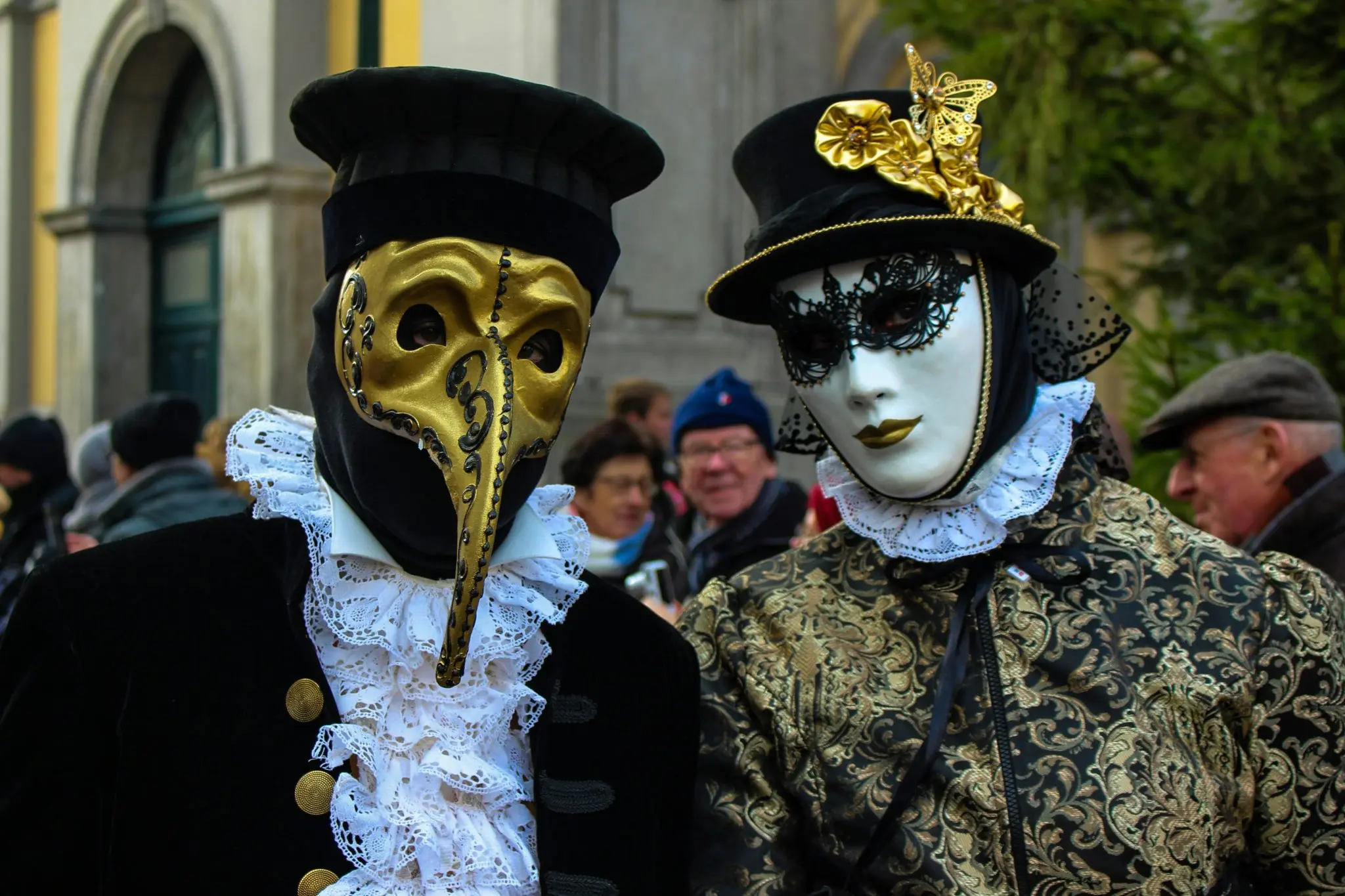
The final weekend of the festival is the best time to visit, with the whole thing ending on Shrove Tuesday.
Because most of the events take place in public spaces, entry to the festival is free. However, this also means more expensive accommodation and bigger crowds. Taking in a Venezia game over the same weekend is also a possibility, just be prepared to pay more for a hotel. Keep up to date with the latest news on the carnival’s official website.
The city is served by Marco Polo Airport, but Treviso is also close.
Palio di Siena (July and August)
The Palio di Siena is an historic horse race held twice a year, once in early July and again in August, in the picturesque medieval town of Siena in Tuscany. It has to be seen to be believed.
This is one of the region’s most eagerly anticipated events, it brings everyone together, and has origins dating back centuries.
The race itself, with jockeys riding bareback, is wild and quick, but the days around it involve neighbourhood feasts, church blessings and a festival atmosphere that takes the whole year to organise. There are trial runs, warm-ups, open-air dinners in each contrada (districts) around the city, and parades.
The winner of the race receives a drappellone – a hand-painted silk banner depicting the Virgin Mary. The Palio has been part of the town’s life since the Middle Ages and was born as a consequence of bullfighting being banned by the Grand Duke of Tuscany in 1590. The initial Palio races were on buffalo, before horses took over.
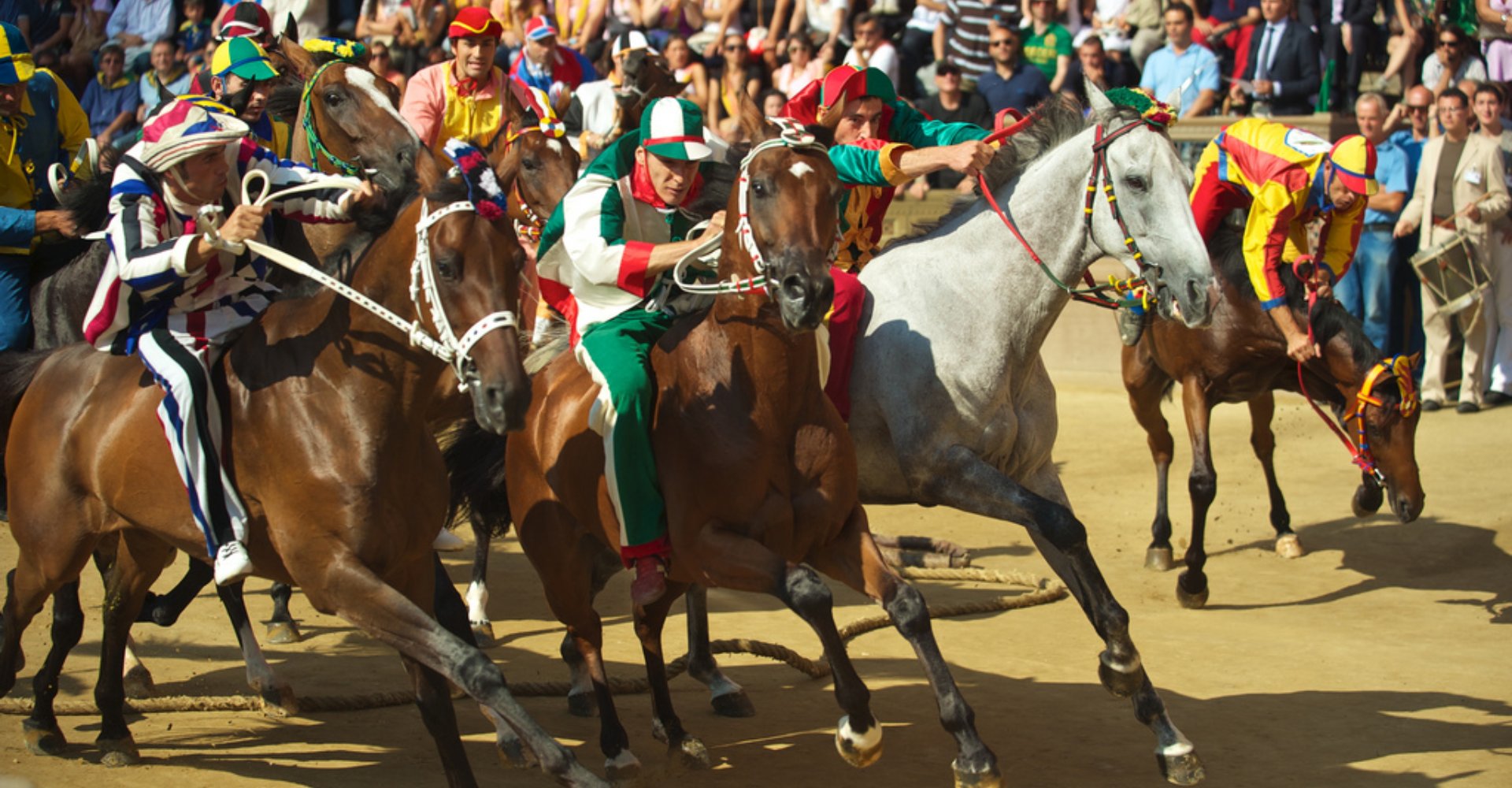
It is free to watch the Palio, but you will need to stand in the sun in Piazza del Campo for some time to beat the crowds and get a good view. Tickets for the grandstands and tribunes can be bought from specialised companies, with prices ranging from around €320 to more than €600.
The summer staging means combining this with a proper calcio weekender is not an option, but it is worth keeping an eye on Siena’s pre-season fixtures. A game at the Stadio Artemio Franchi ahead of the Serie D campaign could be possible.
Pisa Airport is about 90 minutes away.
Venice Film Festival (September)
Italy has several film festivals, but Venice is the original and biggest of the lot.
Established nearly 100 years ago, the Venice Film Festival takes place in August or early September and is often the launchpad for major Hollywood movies heading into the busy awards season.
One of the ‘Big Five’ film festivals (along with Cannes, Berlin, Toronto and Sundance), the Venice Film Festival is on the island of Lido.
The Golden Lion (Leone d’Oro) is the main prize at the festival, awarded to the best film. Recent winners have included Joker, Roma, Nomadland and Poor Things.
You can buy tickets through the event’s official website and Vivaticket, with single tickets and passes available once the daily screening schedule is published. Tickets for high-profile premieres and Sala Grande events sell out fast.
Venezia are back in Serie A, although the early signs in 2026-27 point towards a quick return to the second tier. However, they are about to move into a new 18,500-seat stadium.
Related Topics
Related Articles
Related Articles
Destination Calcio TV is showing three games during every round of fixtures, including all the crunch clashes at both ends of the table.
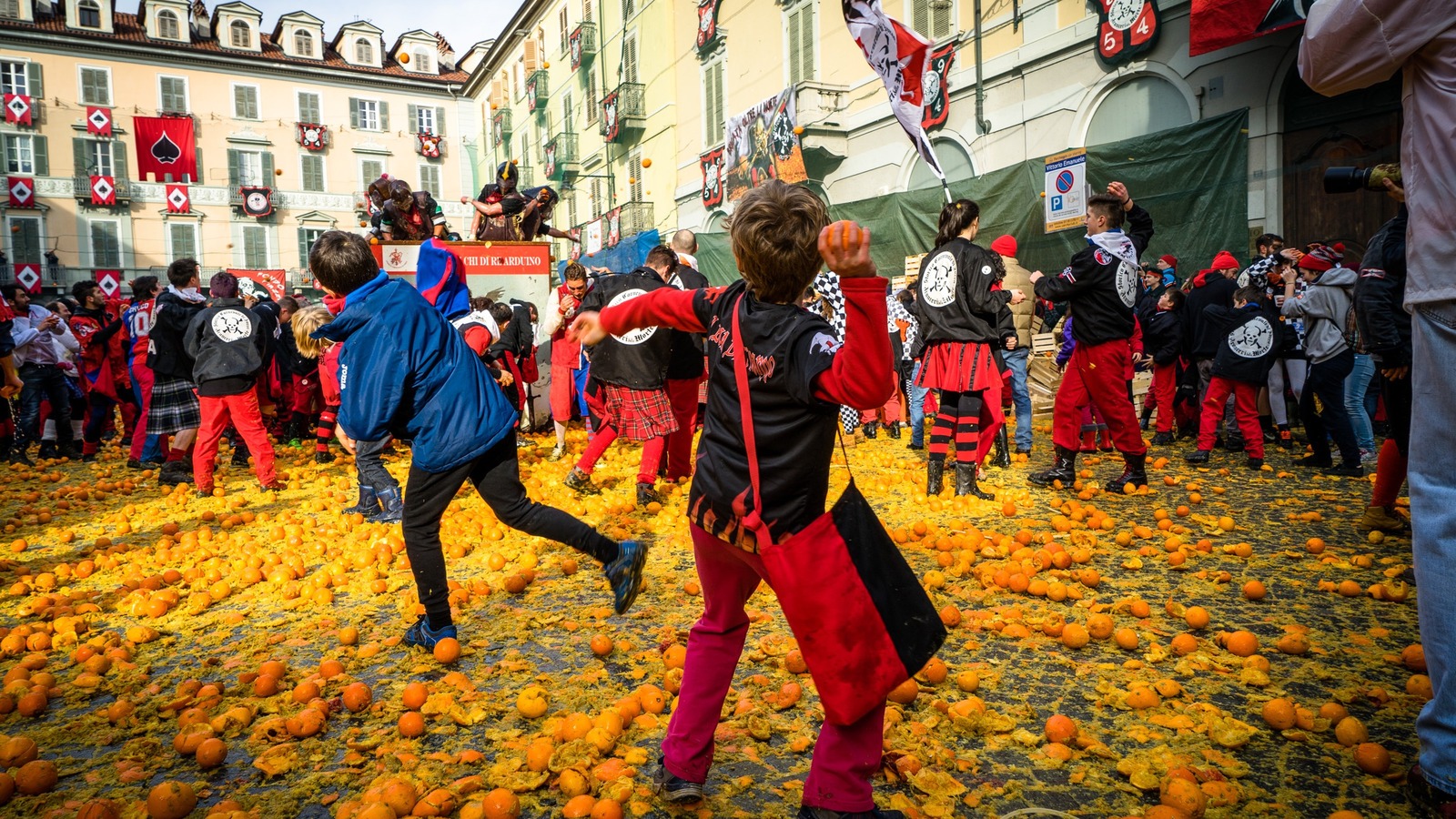
Away from the world-famous events in the biggest cities, there is an entire universe of smaller, more local festivals.
League leaders Palermo headline the latest triple-header of Serie B fixtures live on Destination Calcio TV, when they travel to face Ascoli.