
The Beautiful Game… Stunning Città Sant’Angelo and its Part in Italy’s 2006 World Cup Win
It might seem hard to believe, but a tiny village perched on a hill in rural Abruzzo played a huge role in securing Italy’s 2006 World Cup triumph.
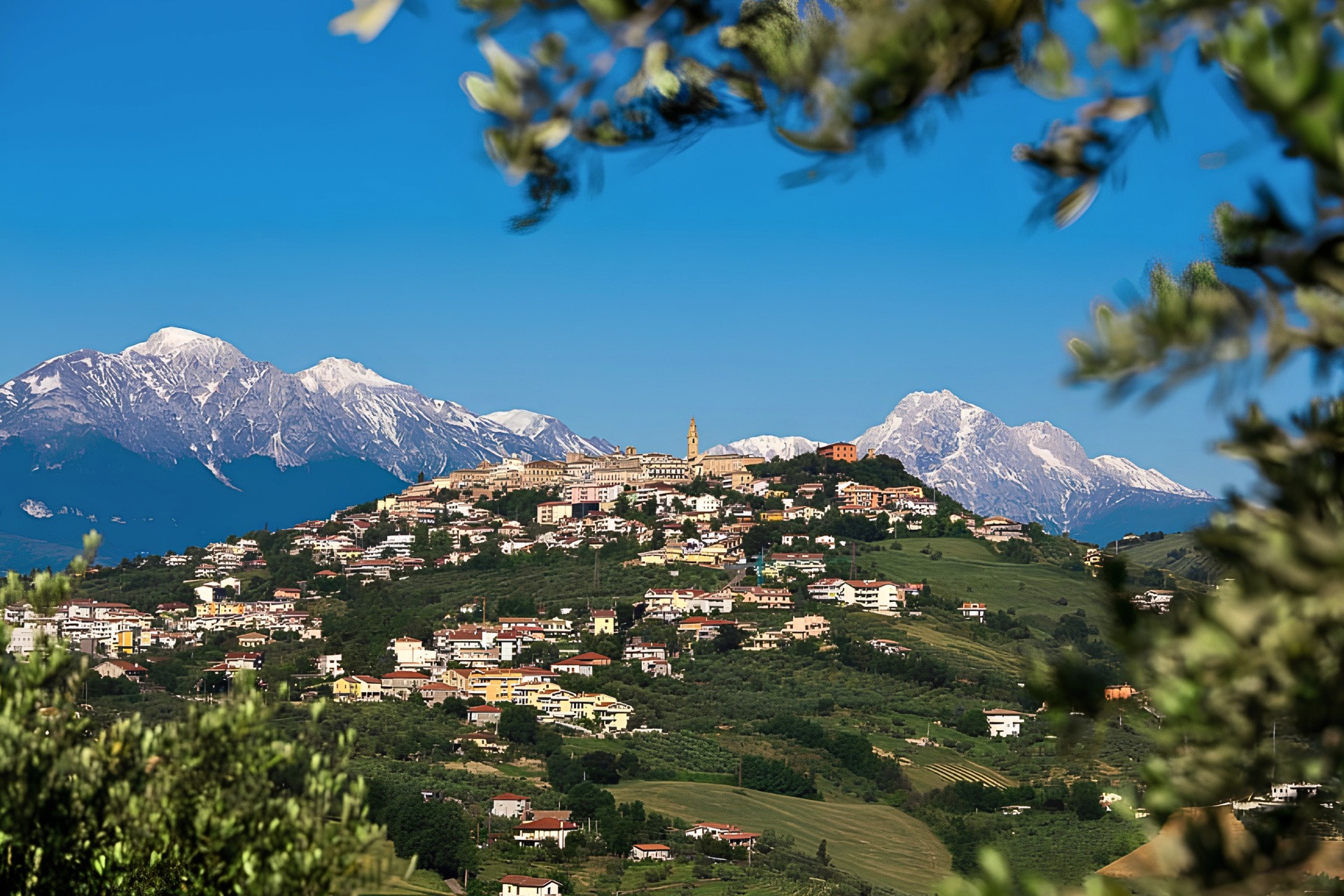
The historic town of Città Sant’Angelo boasts incredible panoramic views of the Maiella and Gran Sasso mountain ranges, all the way down to the Adriatic coast. It features a classic medieval urban layout, stone fortification walls, and ancient architectural landmarks dating back to 1240.
Because of this astonishing preservation, Città Sant’Angelo is officially designated as one of I Borghi più belli d’Italia (The Most Beautiful Villages in Italy). This non-profit association is a nationally and internationally recognised institution dedicated to protecting, promoting, and highlighting small, historic Italian towns that possess exceptional artistic, cultural, and environmental heritage.
Yet, beyond its architectural history and authentic Italian culture, this village holds an unusual distinction in modern football history: its local club helped nurture two members of Italy’s 2006 World Cup-winning squad.
The Early Days
Fabio Grosso and Massimo Oddo began their footballing journey at their local club, Renato Curi – a Pescara-based outfit founded in 1978 and named in memory of the Perugia midfielder who collapsed and died during a Serie A match against Juventus the previous year.
In 1998, the two local clubs – Renato Curi and Angolana – united to form Renato Curi Angolana, establishing their home ground at the Stadio Leonardo Petruzzi in Città Sant’Angelo.
Oddo was born in Città Sant’Angelo in 1976. As a youth, his craft was honed in the primavera team of Renato Curi before he joined the AC Milan youth academy in 1993. After two years, he was loaned to a handful of teams in Serie C, including Fiorenzuola, Monza, Prato, and Lecco. He returned to Monza in 1998-99, again on loan, but this time in Serie B. A year later he signed for Napoli.
Grosso followed a different route. He came through the youth ranks of the original Renato Curi side in the mid-1990s, and continued throughout the 1998 merger with Angolana, relocating to Città Sant’Angelo. After playing for Chieti and Perugia, Grosso made his breakthrough during his two seasons as a left-back with Palermo, which earned him a move to defending Serie A champions Inter Milan in 2006.
From Abruzzo to World Cup Immortality
The development system of this small Abruzzo community had a direct hand in the success of the 2006 World Cup in Germany under manager Marcello Lippi.
Oddo did not get as many minutes as he would have wanted but he was a squad member and featured in the 3-0 quarter-final victory over Ukraine in Hamburg.
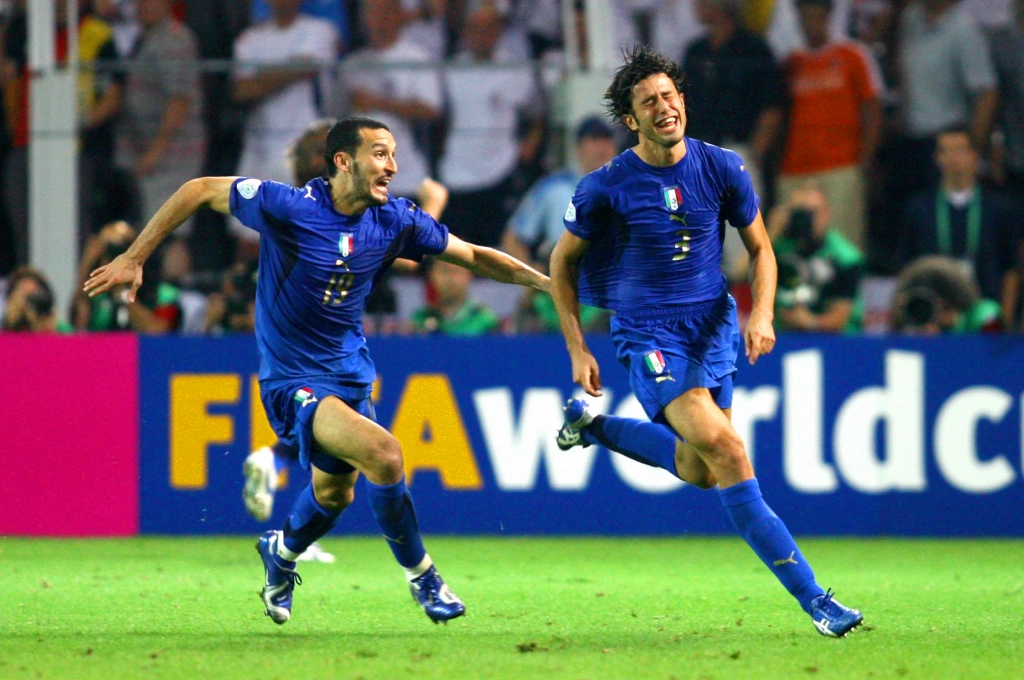
Grosso, meanwhile, emerged as the definitive protagonist of Italy’s march to the trophy. He won the crucial injury-time penalty against Australia in the round of 16, scored in the 119th minute against the hosts Germany in the semi-final, and converted the decisive penalty in the shootout against France in Berlin.
Because of these highly publicised, era-defining moments, Grosso attained a unique status in Italian sporting culture. To this day, he remains an instantly recognisable figure across the country, regularly stopped by football supporters in every region of Italy who continue to recall his exact contributions to the nation’s fourth World Cup triumph.
The Legacy Left Behind
Today, Città Sant’Angelo operates primarily as a cultural, agricultural and quiet residential hub with fewer than 1000 people living directly within its historic medieval centre.
The town is an official member of Cittaslow, an international organisation that grew out of the Slow Food movement. Membership requires strict adherence to guidelines aimed at preserving local traditions, reducing noise and traffic, maintaining historic buildings, and prioritising a slower, traditional pace of life.
The surrounding hills are heavily cultivated with olive groves that produce Aprutino-Pescarese DOP extra virgin olive oil, alongside vineyards producing Montepulciano d’Abruzzo, Trebbiano, and Pecorino wines. As a result, the town holds dual national titles as a Città dell’Olio (City of Oil) and a Città del Vino (City of Wine).
While the hilltop village continues to preserve its medieval heritage and prestigious standing among I Borghi più belli d’Italia, the legendary academy that once fueled Italy’s greatest footballing triumph reached a sudden end.
Following severe financial distress and a subsequent judicial liquidation ruling by the Tribunal of Pescara, the Italian Football Federation (FIGC) officially revoked Renato Curi Angolana’s sporting affiliation.
While local football in the village faces the bleak reality of rebuilding from the bottom of the amateur pyramid, the legacy established by Grosso and Oddo is a reminder of a golden era when this quiet Abruzzo community reached the very pinnacle of the global game.
Related Topics
Related Articles
Related Articles
League leaders Palermo are again in action in the latest triple-header of Serie B fixtures live on Destination Calcio TV.
Italian teams have, over the years, been involved in some epic encounters on the continental stage. Here are seven of the best.
Up and down the country, each stadium is unique and every single one has its own charm. This is our top nine.