Foggia sits in the middle of the Tavoliere, the great wheat plain of northern Puglia.
Most travellers pass through on the way to the Gargano. Only a few stop for the football. Those who don’t are missing a lot.
Football in Foggia goes back to 1909, when a club called Daunia started playing in the city. The club as we know it was born on May 12, 1920, when three local sides, US Atleta, Maciste and US Pro Foggia, merged to form the Sporting Club Foggia.
The red and black came from Milan. The Tiberini brothers, two Milanese who had moved to Foggia for work and were AC Milan fans, chose the colours. The nickname came later.
In the 1930s a local journalist and musician, Mario Taronna, started calling the team the Satanelli, the little devils, and the name stuck. The devils on today’s badge were drawn at the end of the 1980s by Savino Russo, a design born in a single night.
Foggia were relegated to Serie D in April 2026. In July, the federation readmitted them to Serie C in place of Ternana, who had gone bankrupt.
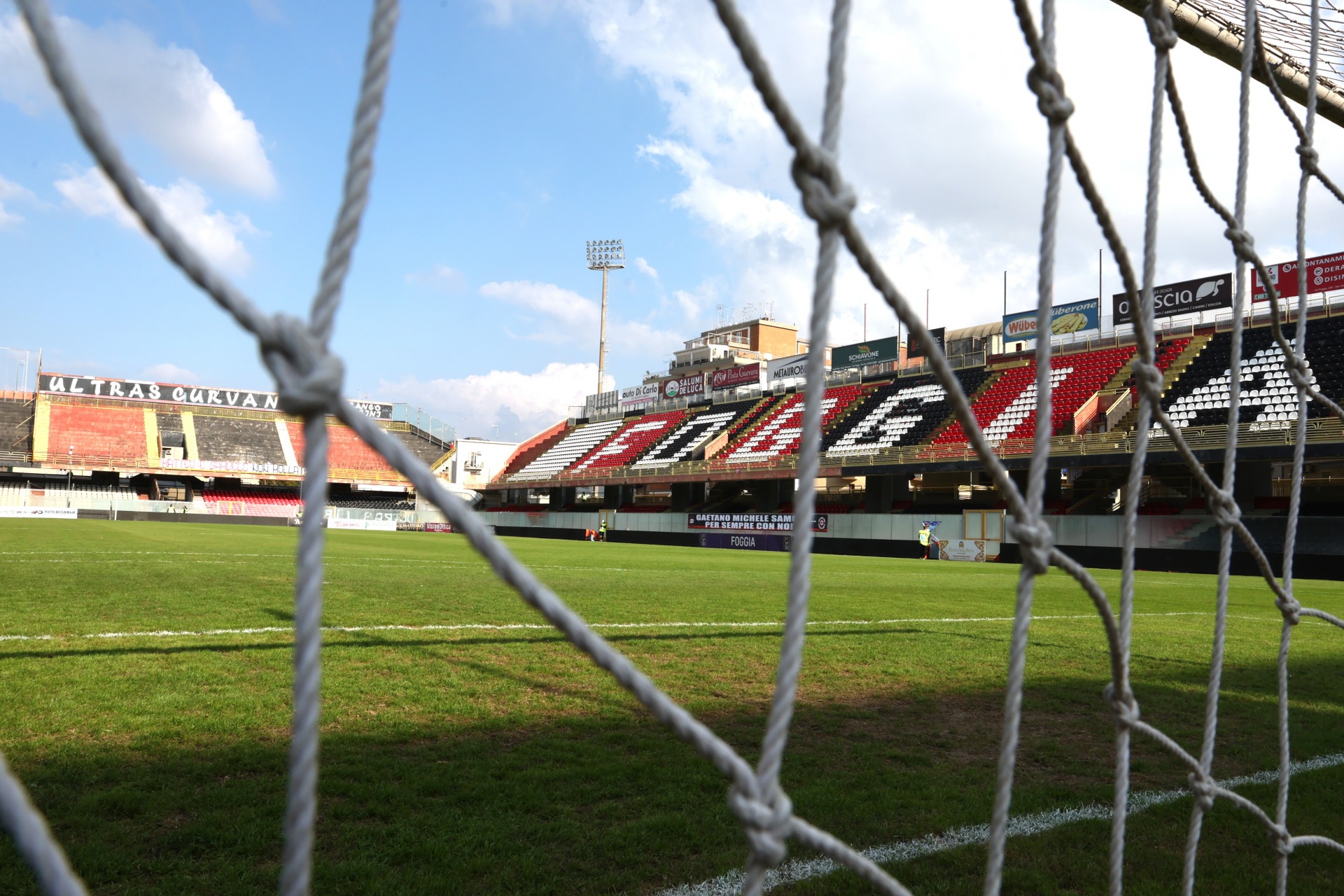
Foggia’s home, the Stadio Pino Zaccheria, turned 100 in November 2025. It was built by the fans themselves: in January 1925, six directors of the Sporting Club raised the money and bought the land in instalments. When the debts grew, they hosted the finish of a Giro d’Italia stage inside the ground in 1926.
Since 1946 the ground has carried the name of Zaccheria, an athlete and pioneer of basketball in Foggia and a second lieutenant, who was killed in combat in Tirana in 1941.
The Curva Nord remembers the goalkeeper Franco Mancini. The Curva Sud remembers Piero La Salandra, a historic leader of the Foggia ultras. The organised support was born in autumn 1977, from neighbourhood groups with flags and flares. The curve as they look today were built in 1980-81. In November 1981 the groups joined together under one name, the Regime Rosso Nero, behind a 30m banner.
Here is everything you need to know.
Where To Stay
Foggia is compact and flat, and everything important is walkable. Stay in the historic centre, between Piazza Umberto Giordano, Corso Vittorio Emanuele and Via Arpi, if you want to walk out to dinner.
The area between the station, Piazza Cavour and Viale XXIV Maggio is the practical choice: close to the trains, with the centre 10 minutes away. If you are driving, pick a place with a garage, because parking in the centre is not easy.
Hotel Up on Via Trieste is a small boutique hotel, close to shops, cafés and restaurants, with good value rooms and a generous breakfast. The spa costs extra.
DEMSI Palace Hotel on Via Piave is modern, quiet and has a rooftop restaurant. It’s 10-minute walk from both the station and the centre.
Palazzo Sant’Elena on Via Vincenzo della Rocca is a small, three-star hotel in a historic building in the centre, on one of the streets that lead off Piazza Cavour. It has a restaurant serving regional food and the Zaccheria is just over a kilometre away, an easy walk on matchday.
Where To Eat
Foggia eats wheat. Look for orecchiette and cavatelli, often made with grano arso (flour from burnt wheat), and served with cime di rapa. Osteria del Grano Arso on Via Trento, near the station, takes its name from that flour and serves burnt-wheat orecchiette and pizza. It is closed on Tuesdays.
Ciciri e Ttria on Corso Vittorio Emanuele serves home cooking: skip the menu and let them bring you a series of traditional plates. It is closed on Mondays and only serves lunch on Sundays.
Italo dal 1966 La Trattoria on Via Fiume has no written menu. The kitchen cooks a few dishes a day from what came in that morning. It is closed on Sunday evening and Monday evening.
Trattoria Giordano in Vicolo al Piano has been run by the same family for more than 50 years.
Where To Drink
For a glass of wine in the centre, Uvarara on Via Mastrolillo is a small wine bar with a large list. It opens in the evening and is closed on Sundays.
Near the ground, have a coffee at the counter. Bar Tabacchi Café de Paris on Viale Ofanto is right by the stadium. Gocce di Caffè on Via Guido Dorso, a few minutes from the ground, is a bar, a tobacconist and an official ticket outlet in one.
Don’t Forget
Tickets are sold online through Vivaticket and at authorised outlets across the province.
The stadium is being rebuilt with more than €2million from Italy’s post-pandemic recovery plan. Capacity will increase to about 15,800, and the away section has tripled from 500 to 1500.
Did You Know?
Foggia beat the Grande Inter. The club reached Serie A for the first time in 1964, under Oronzo Pugliese, known as the Mago di Turi. The promotion campaign included a 24-game unbeaten run. On January 31, 1965, Foggia beat Helenio Herrera’s Inter, then champions of Europe, 3-2 with two goals from Cosimo Nocera, still the club’s all-time top scorer with 102 goals.
Two of the most important coaches in Italian football passed through Foggia. Zdeněk Zeman took the club to Serie A in 1990-91, winning Serie B with the best attack in the league: 67 goals in 38 games. Those years became known as Zemanlandia. In 2014, sporting director Beppe Di Bari found Roberto De Zerbi coaching in the amateur leagues of Lombardy and brought him back to Foggia, where he had played, for his first real job on the bench. His side played spectacular football. In 2015-16 they won the Coppa Italia Lega Pro and lost the promotion play-off final to Pisa.
Getting There
Foggia is at the crossing of the Naples–Bari and Bologna–Lecce railway lines, so you can reach it by train from all over Italy. The nearest major airport is Bari, and the Pugliairbus runs from the airport to Foggia. Foggia’s own airport, the Gino Lisa, reopened to passenger flights in 2022 and has a small schedule.
Need Another Football Fix?
Puglia has never had more clubs in Serie C. Seven sides are in the league this season: Foggia, Cerignola, Barletta, Bari, Monopoli, Altamura and Casarano. Audace Cerignola are the closest, a short drive south, and the Derby di Capitanata is the local game of the year. Bari and the Stadio San Nicola are about an hour away.
Related Topics
Related Articles
Related Articles
It is a long, long time since Sicily had three teams strutting their stuff in the top flight of Italian football.
Salernitana have spent just five seasons in the top flight but their corner of Campania is the perfect setting for a proper calcio experience.
This working town of around 22,000 people, built on metal and manufacturing, has a club with a local, loyal fanbase.