
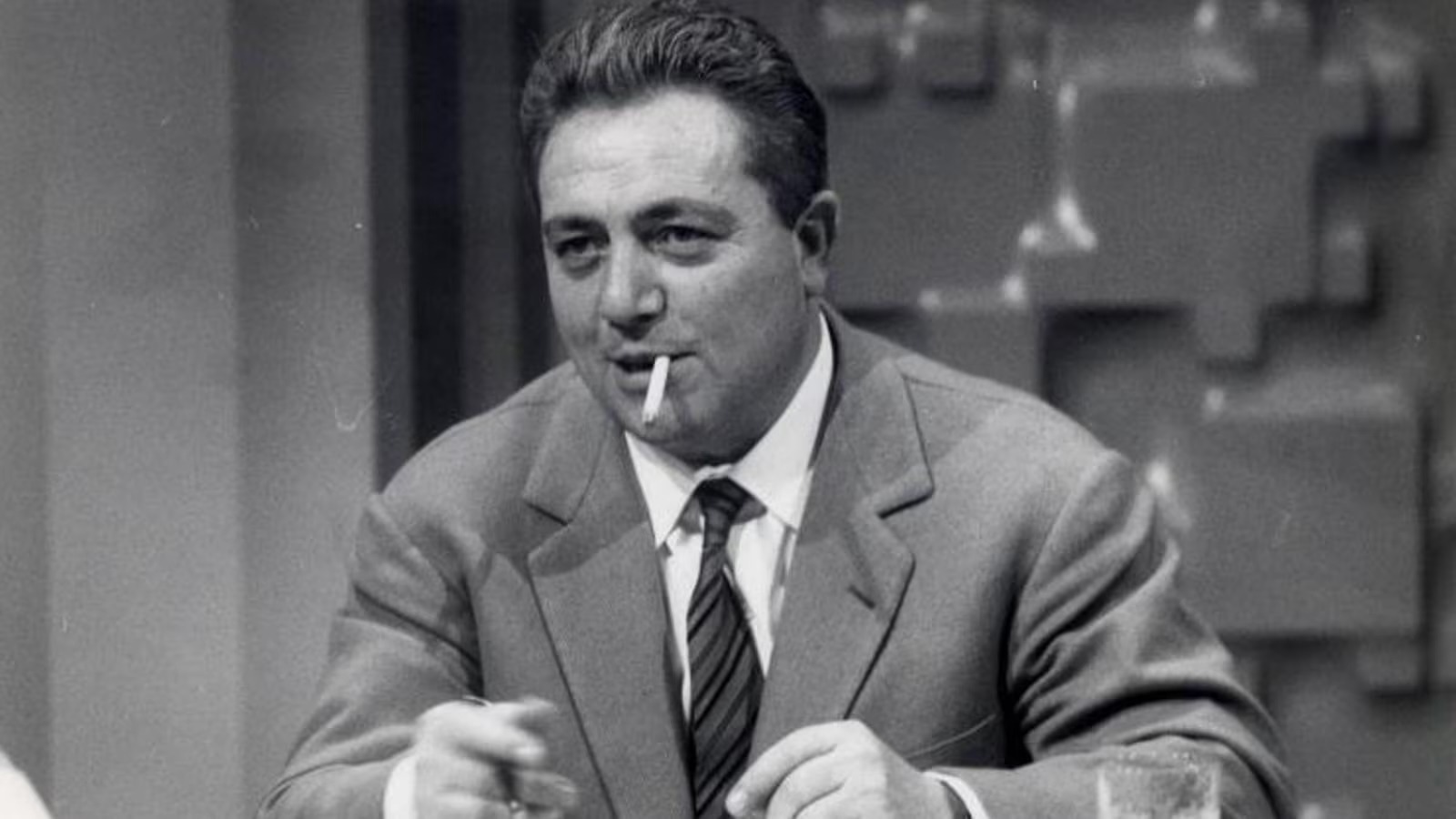
The Godfather of Italian Football Writing: Gianni Brera was More than a Journalist
By Emmet Gates
The Italian Football Hall of Fame was established in 2011 to recognise the country’s rich history in the beautiful game.
Every year, the event would be hosted at the Museo del Calcio in Coverciano (it hasn’t run since 2024, however), near Florence, awarding honours to players, coaches, referees and directors.
After seven years, the FIGC (the Italian football federation) promoted a new category, a ‘Special Award’ given to those who made a valuable contribution to the Italian game without having played or worked in it professionally.
It came as no surprise that the first recipient was the late Gianni Brera. Brera was, and still is, considered the doyen of Italian football journalism, the pinnacle of the profession and the measuring stick for all future writers and reporters.
To put into a British context Brera, a journalist and later the editor-in-chief of La Gazzetta dello Sport, would be considered the Italian equivalent of Hugh McIlvanney or Brian Glanville. Even more than 30 years after his death, his influence can still be felt over the very fabric of calcio.
Born in the town of San Zenone al Po, near Pavia, in northern Italy in 1912, Brera was the son of a tailor and later fought in World War II as a paratrooper for the Folgore unit, while also writing for the paratroopers’ propaganda office. He would later join the resistance and spoke of surviving without ever shooting his gun.
After the war, Brera began working for the famous pink paper, but instead of writing about football or boxing, two sports he knew well, he was handed the task of covering athletics. Brera, who knew little of the sport, came to love it, to such a degree that he penned multiple essays on the topic and held a position of councillor within FIDAL (the Italian athletics federation) in the 1950s.
Yet his lasting impact would be within football, to the point where his name was as well known in Italy as the stars he often wrote about. So many Brera-isms and nicknames he handed players have remained in the Italian football lexicon.
One of his most famous nicknames was for the rising star at AC Milan, the great Gianni Rivera. Upon seeing one of Italy’s greatest No 10s play for the first time, Brera gave him the nickname ‘Abatino’, translated into English as ‘Little Abbott’.
This was, according to Brera, a reflection on Rivera’s boyish looks and clerical or bookworm appearance, in a time when most football players looked tougher and more robust. However, many observers viewed the nickname as a slight, with Rivera famous for his reluctance to track back and engage in the dirtier side of the game.
Brera was a champion of the more defensive side of football and had a love for the combative players of the era. Yet Rivera always maintained he never harboured any bad feeling for Brera, with a mutual level of respect between the pair and the odd glass of Barbaresco wine often shared.
Cagliari striker Giga Riva was another who was handed a moniker from Brera. Due to his powerful left foot, Brera nicknamed Riva ’Rombo di Tuono’ (Roar of Thunder). This one, unlike with Rivera, was out of nothing but admiration for one of Italy’s greatest-ever strikers.
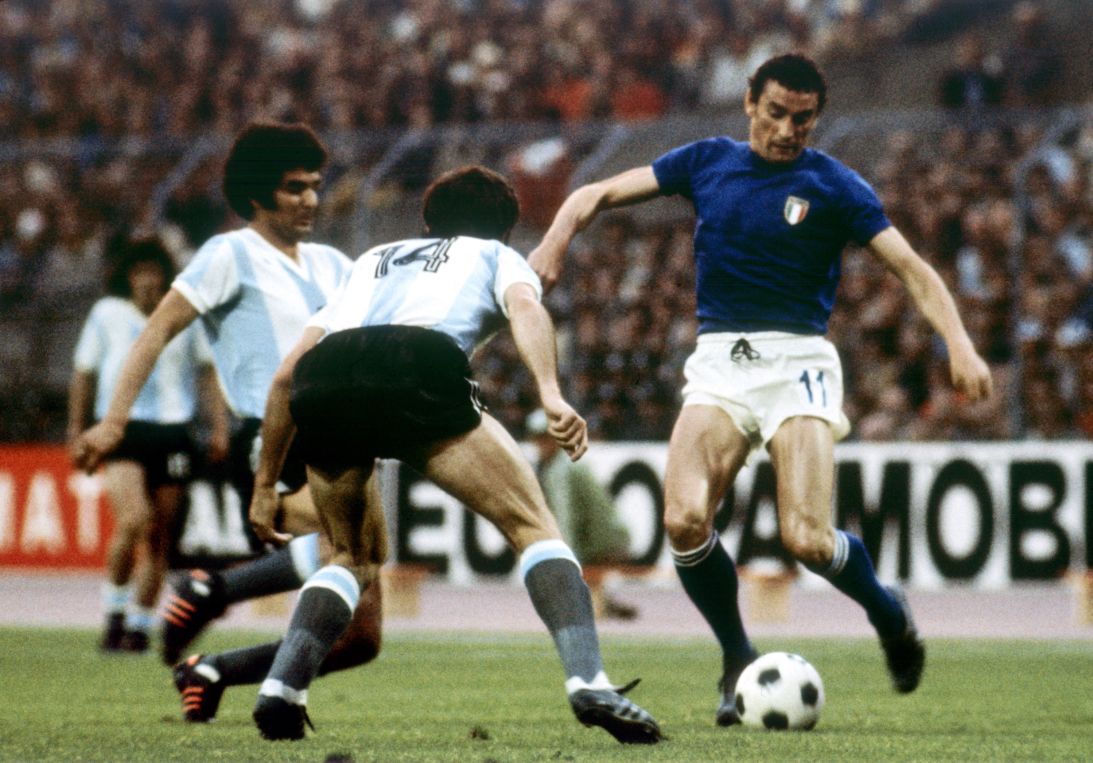
Brera is also credited with introducing the word ‘libero’ into the game, essentially renaming the traditional sweeper role, then a staple in Italian football tactics. The word permeated calcio at all levels to the extent that no one referred to the position as anything but libero which, in Italian, means ‘free’.
Words like centrocampista (midfielder), goleador (goalscorer), rifinitore (creator of attacking plays) and forcing (pressing), among others, were all introduced by Brera. While many didn’t survive the passage of time, a midfielder in Italy is called centrocampista to this day. One of Inter Milan’s nicknames – La Beneamata (The Well-Cherished One) was another Brera invention that is still attached to the club.
But perhaps Brera’s biggest contribution to Italian football was his ideological thinking. He believed that Italy, and Italians by extension, were tailor-made for catenaccio and defensive tactics. The system had taken hold in Italy through Nereo Rocco and his successes with Triestina and then with Milan. Brera argued that it was the perfect tactical solution for mid-20th century Italians as they were – shaped by post-war nutritional deficiencies – lacking in the stamina and size to play attacking football.
His writing would often trumpet defenders, such as Inter’s Giacinto Facchetti, and belittle attacking talent, with Rivera often the target. Even Diego Maradona wasn’t immune to criticism from Brera, who called one of the greatest players to ever kick a ball a ‘divine abortion’ shortly after his arrival in Serie A.
Brera often found himself at the centre of the fight for Italy’s football soul. His influence was such that Italy’s obsession with catenaccio remained embedded throughout all levels of the game long after the system’s heyday. When Arrigo Sacchi arrived on the scene and heralded his 4-4-2 high press in the late 1980s which, as a consequence, killed off the libero – the very role Brera christened – he naturally took a disliking to him. When Milan subsequently conquered the world, Brera gave the credit to the Dutch trio of Marco van Basten, Frank Rijkaard and Ruud Gullit instead.
“He was a great writer, but we had two very different ideas of football and of an Italy that was incompatible between us,” said Sacchi in an interview with La Repubblica.
Brera has often been credited for uttering the famous line that ‘the perfect game of football would end 0-0’, with the implication that a goalless draw represents both teams being perfect and making no mistakes. Yet it was actually Annibale Frossi, coach of several Italian teams during the 1950s, including Genoa, Torino, Napoli and Inter, and someone who loved defensive solidity as much as Brera, who made the remark. Yet given Brera’s stance, he likely agreed.
Unlike many sports writers of the age, Brera had a singular obsession with tactical systems in football and would hold court with the likes of Rocco and other coaches and journalists, theorising over an array of ideas in some of his favourite restaurants – usually A’Riccione or Alfredo Gran San Bernardo – in the centre of Milan in what was dubbed the ‘Thursday club’.
Brera tragically died in the winter of 1992 when he was involved in a car crash in the early hours of the morning. He was 73 years old. However, his legacy as Italy’s greatest sports journalist, and one of the country’s greatest-ever writers, will live on.
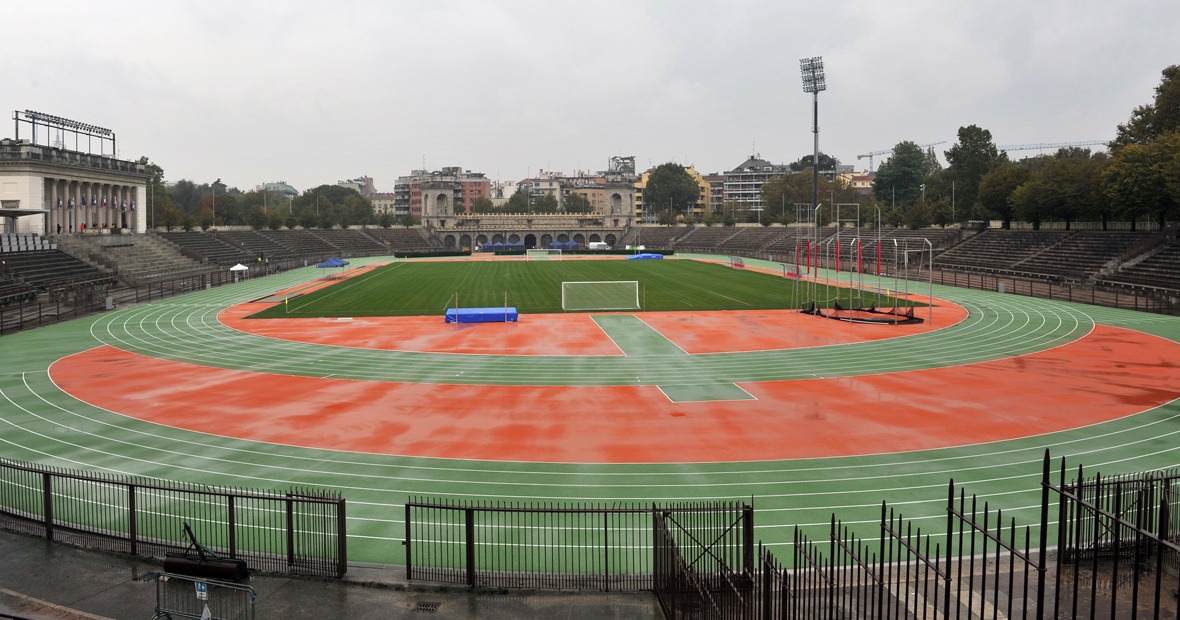
The Arena Civica in Milan, which hosts the Inter women’s side, was renamed in his honour in 2003 because, despite hailing from Pavia, Brera is as closely associated with Milan as any individual could be.
Many football journalists have come after Brera, but none have come close to shaping the language of football in Italy quite like he did. If you’re talking about influential figures in calcio’s history then Brera, as much as Sacchi, Rocco, Helenio Herrera, Marcello Lippi or any player, is in the conversation.
In 2018, the FIGC rightly recognised that fact.
Related Topics
Related Articles
Related Articles
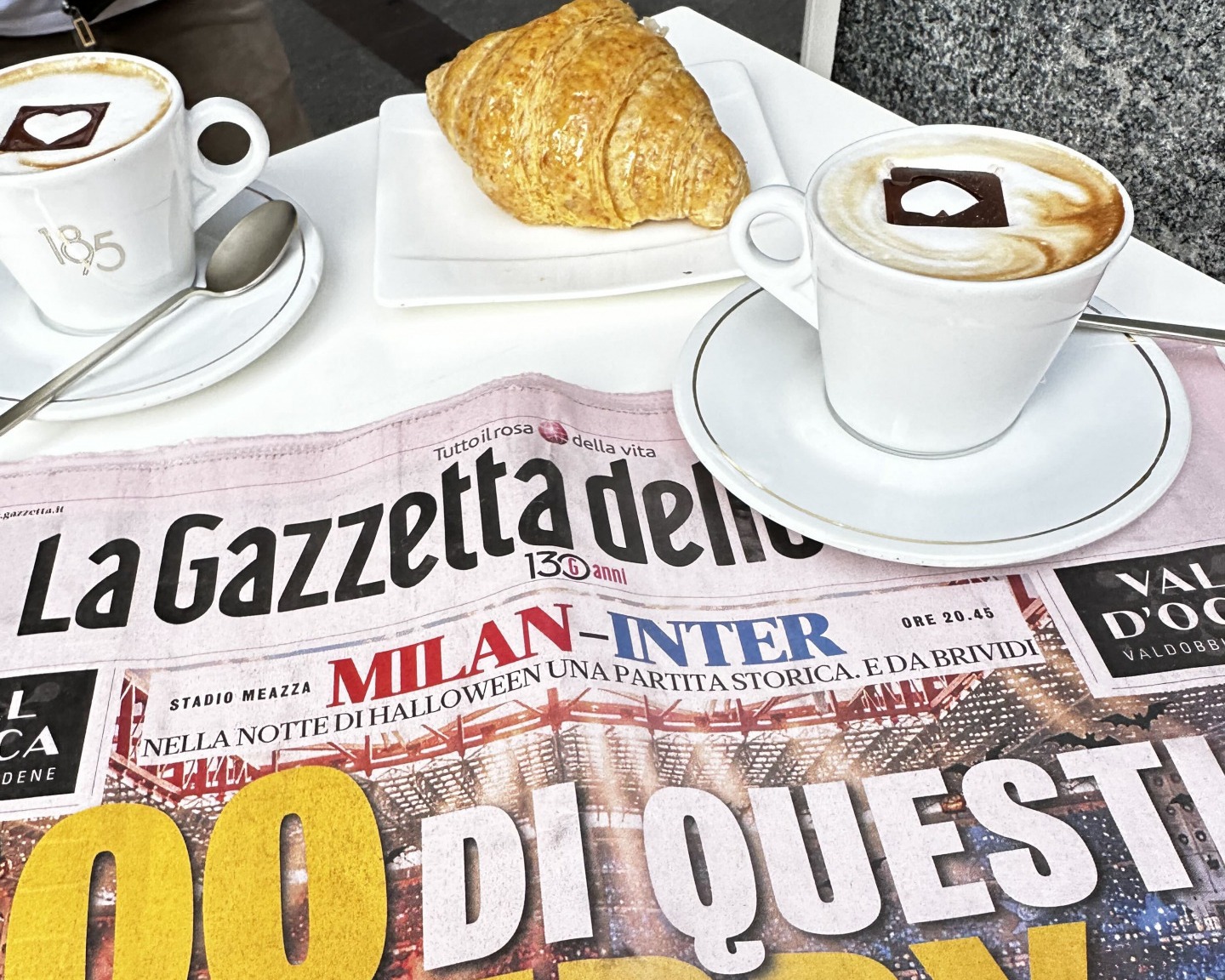
Gazzetta is now the biggest-selling sports newspaper in Italy and the third-biggest selling daily in the country.
Promotion-chasing Modena and Pisa headline the latest triple-header of Serie B fixtures live on Destination Calcio TV.
A few steps from the old town, Pro Vercelli's stadium carries as much history per square metre as any ground in the country.