
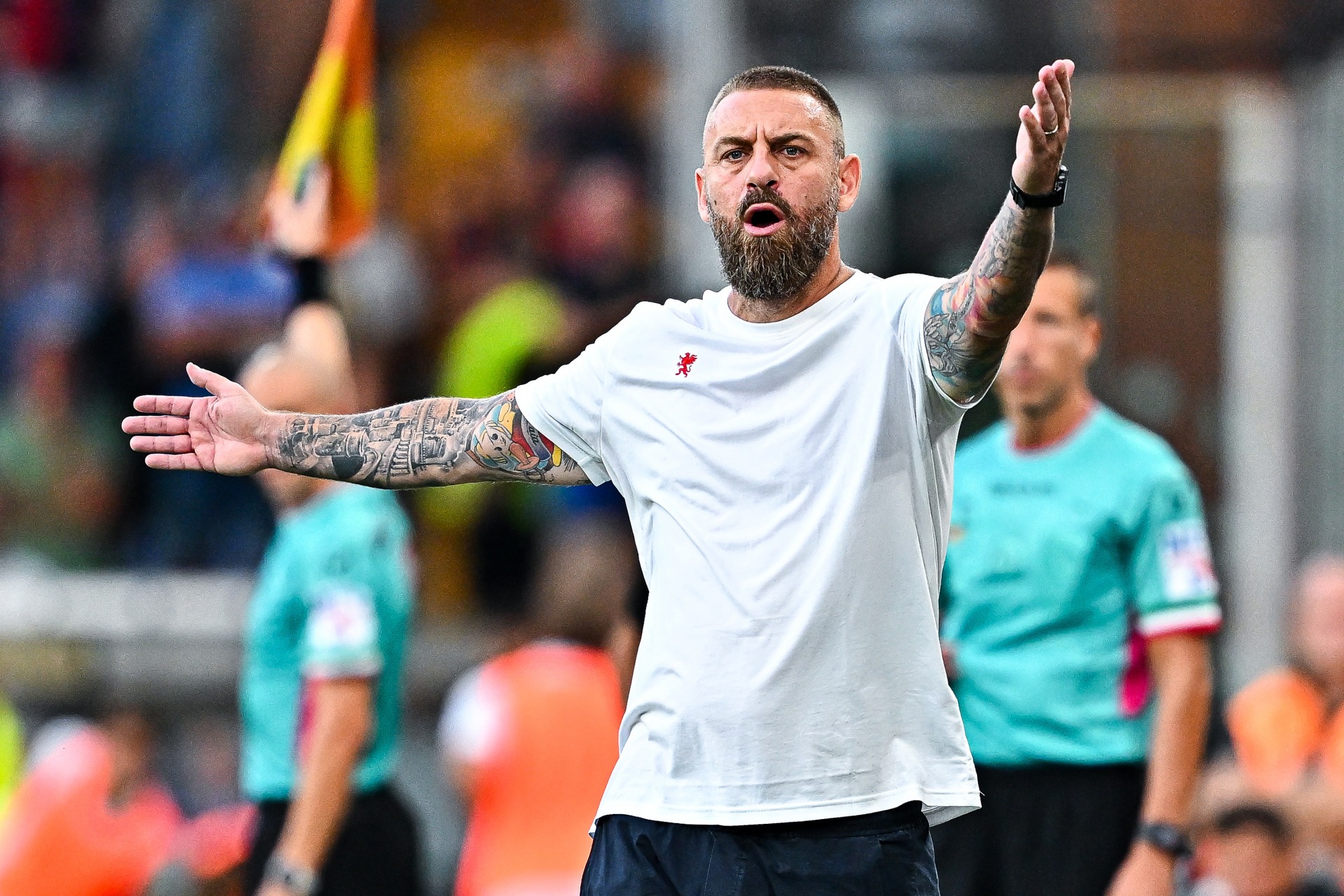
There is a version of this story that reads like a script.
A boy from Ostia begins his football life at the local club, turns down a call from a big city team at nine years old because he does not want to leave his friends, eventually joins that same big club anyway, becomes a World Cup winner and a one-club legend, and then, decades later, buys back the team where it all started. That is, more or less, what has happened at Ostiamare.
Daniele De Rossi was born in Ostia in 1983 and spent his early years in the club’s youth ranks, before moving across town to Roma as a teenager, where his father Alberto was coaching the Primavera side. In January 2025, Daniele bought Ostiamare outright, and on April 26, 2026 they beat Termoli 1-0 at home to win Serie D Group F with a round to spare, sealing the first promotion to Serie C in its 80-year history and putting professional football back in Ostia after a 35-year absence.
Alberto De Rossi has since taken over as club president, running the football side while his son remains the owner, these days alongside his own coaching career at Genoa.
Founded in 1945, with roots stretching back to 1923, Ostiamare play in white and purple, known locally as biancoviola, and has traditionally called the Stadio Anco Marzio on the Lido home, a modest ground holding around 1000 people.
For this first season in Serie C, the club and Rome’s city council raced to bring the historic Stadio Pasquale Giannattasio, an Olympic-era ground from 1960, better known locally as the Stella Polare, up to professional standards, with capacity expanding to around 1500.
Where To Stay
Ostia is a seaside quarter of Rome, so accommodation runs from beachfront hotels to short-term rentals, and most of what matters for a football weekend sits within walking distance of the lungomare.
Fly Decó Hotel is a four-star option right on the seafront, well placed for the beach, the shops and an evening out afterwards.
Hotel Sirenetta sits directly opposite the beach and offers a straightforward, classic base for a short stay.
Hotel La Scaletta, also on the seafront, is a useful choice if you are travelling in by train, close to both the beach and the Lido Centro railway station.
As in most Italian coastal towns, Ostia also has a wide range of apartments and short-term rentals through Airbnb and Booking.com.
Where To Eat
Ostia’s food identity is built around fish, landed daily by the small fleet that still works out of the old harbour, and a weekend centred around Ostiamare is a good excuse to eat properly.
Ugo al Villaggio, on Via Litoranea, is one of the more talked-about seafood restaurants on this stretch of coast, with a menu that changes through the season and leans on whatever has come in that day, from fried paranza to raw crudo and pasta with clams.
Officina Culinaria, on Via degli Acilii, takes a similarly seasonal approach with a more contemporary presentation and suits a proper sit-down dinner rather than a quick plate.
For more history and atmosphere, head to the Borghetto dei Pescatori, Ostia’s old fishing village, where Il Confine has built a long-standing reputation for classic, unfussy seafood in a setting that still feels like a working harbour rather than a tourist strip.
Ostrica Pazza, right on the seafront, is more upscale, with a strong crudi and oyster selection and a dining room built around sea views, good for a more polished pre- or post-match dinner.
Mamaflò is another solid seafood option with a view over the water, more relaxed than Ostrica Pazza but reliable for fresh fish without too much fuss.
Prices along the seafront run from mid-range to fairly expensive at the better fish restaurants, so book ahead on weekends, especially once Ostia fills up as Rome’s beach in the warmer months.
Where To Drink
Matchday in Ostia still tends to flow around the pedestrian streets near Piazza Anco Marzio and Piazza Tor San Michele, where most of the town’s bars and cafés are clustered.
Vittoria Beach Bar, known locally as il Fungo (the mushroom) for the shape of its structure on the beach, is the classic spot for a sunset aperitivo, with an easy, unpretentious feel that suits an afternoon before an evening kick-off.
Open Bar Ostia, right in the pedestrian centre, is a reliable stop for a coffee, a spritz or a longer evening, drawing a mix of locals and visitors.
La Drogheria, on Piazza Tor San Michele, sits in the same pedestrian pocket and works well for an early aperitivo before heading to the match.
Bar Sisto is one of the area’s older, more established cafés, well known among Ostia regulars and a good option for a pre-match coffee or a late pastry on the way home.
Fly Bar, the rooftop bar at Fly Decó Hotel, is open to non-guests too and makes a good option for a calmer drink with a view over the Lido, away from the busier lungomare spots.
Don’t Forget
Tickets – Serie C tickets in Italy are generally sold through TicketOne, online and at authorised outlets.
Prices and sale arrangements for Ostiamare’s own home fixtures have not settled into a fixed pattern, given the stadium situation was only resolved at the end of August, so check the club’s official channels close to the match. Other newly promoted Serie C sides this season have priced lower-tier and away sectors somewhere in the €10 to €20 range.
Bring a valid ID document, as with all professional football in Italy.
Official Ostiamare merchandise, including the new 2026-27 home kit, is generally available through the club’s official channels; check ahead if you want to collect items in person around a matchday.
Did You Know?
The 2026-27 home shirt, built around a concept called Radici e Ali (which means Roots and Wings), was designed by Daniele De Rossi in partnership with Macron, keeping the club’s traditional purple with black and white detailing.
An Italian documentary series called Radici, following De Rossi’s return to Ostiamare and the relationship between the club and the city, is expected later in 2026.
The Stadio Pasquale Giannattasio, the ground at the centre of the club’s return to Ostia, was originally built for the 1960 Rome Olympics and is named after Pasquale Giannattasio, Italy’s national 100m record holder in the late 1960s and early 1970s; for years it has also been used for rugby and athletics.
Getting There
Ostia is technically part of Rome, connected to the centre by the Roma-Lido railway line, also branded Metromare, which runs from Porta San Paolo, next to Piramide metro station, to Ostia in around 30 to 40 minutes.
By car, the most direct route from central Rome is the Via del Mare (SS8), a drive of roughly 30 to 40 minutes depending on traffic, and Rome-Fiumicino Airport is about 20 minutes from Ostia, which makes the area a genuinely convenient base if you are flying in.
Need Another Football Fix?
Given Ostia’s place inside greater Rome, it is entirely possible to combine an Ostiamare fixture with a bigger occasion in the capital: Roma and Lazio are roughly 40 minutes away by public transport, and given De Rossi’s history as a Roma player and captain, the connection between the clubs is hard to miss.
Within Ostiamare’s own Serie C group, Latina and Guidonia Montecelio offer nearby fixtures that Italian media have taken to framing as regional derbies, given the shared group and short distances involved, even if neither carries the weight of a genuinely historic rivalry. Ostiamare’s most historically felt rivalries have traditionally been with sides from Monterotondo, Isola Liri and Sora.
For a completely different kind of day out, Ostia Antica, one of the best-preserved Roman archaeological sites outside Pompeii, sits just inland from the stadium area and makes for an easy add-on before or after a match.
Related Topics
Related Articles
Related Articles
The biggest derby in Veneto headlines the latest triple-header of Serie B fixtures live on Destination Calcio TV.
The U23s play a full professional season in the same division as clubs founded in 1900 with ultras, debts and towns behind them.

Milan has five teams playing league football inside the metropolitan area and all of them are reachable on public transport.