20 Years on from Cannavaro, the Towns and Tales Behind Italy’s Ballon d’Or Winners
By Emmet Gates
Twenty years have passed since an Italian name was engraved on the Ballon d’Or trophy.
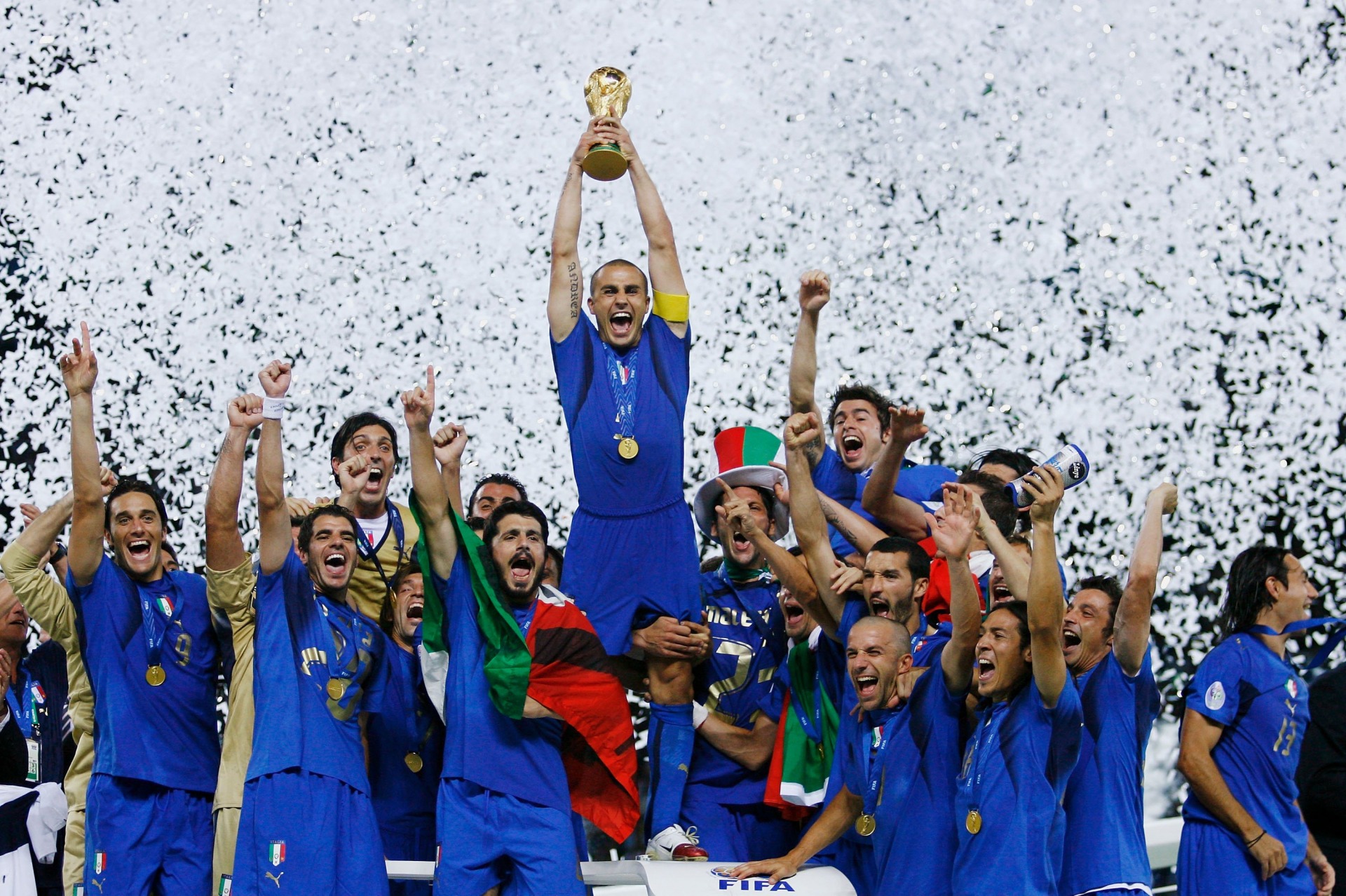
Fabio Cannavaro was the last player from the peninsula to claim the award, while this year, at the ceremony in London where Harry Kane was crowned the winner, Inter Milan’s Argentina forward Lautaro Martinez was the only Serie A representative in the top 30.
Five Italians have taken the prize since its inception in 1956, and here we take a look at them and where they came from.
Fabio Cannavaro (2006)
Central defender Cannavaro won the award for his towering performances at the 2006 World Cup in Germany, which earned him the nickname the Berlin Wall.
His display against the hosts in the semi-final has gone down as one of the greatest individual performances in the competition’s history. As captain of Italy, Cannavaro would lift the trophy at the end of the year, having switched clubs just weeks after winning the World Cup, moving from Juventus to Real Madrid in the aftermath of the Calciopoli scandal.
Cannavaro beat fellow Italian stalwart Gianluigi Buffon and French striker Thierry Henry to lift the gong. Born in Naples, Cannavaro was a product of the streets, a boy who played football in and around the Soccavo and Fuorigrotta areas of the city, with what was then called the Stadio San Paolo as his playground.
A man who has never forgotten his roots, Cannavaro bought Napoli’s old training centre in 2023 and intends to restore it, offering the next generation of Neapolitans somewhere to play and hone their skills, just like he once did.
Roberto Baggio (1993)
The Divine Ponytail sauntered to the award at the end of 1993, winning a landslide vote ahead of Dennis Bergkamp and Eric Cantona.
Baggio had produced a brilliant year for Juventus, scoring 30 goals in 1992-93 and playing a leading role in demolishing Borussia Dortmund in that year’s UEFA Cup final.
Despite the Bianconeri finishing only fourth in Serie A, Baggio’s performances in Europe were enough to land him the Ballon d’Or. In what was a simpler time, the No 10 was told he had won in Coverciano, while staying there with the Italy national team just before Christmas. He was flown to Paris a few days later and handed the award by Juve legend Michel Platini in a television studio .
Born in Caldogno, a small town near Vicenza, Baggio is one of two Italian players (Paolo Rossi is the other) who came to prominence while wearing Biancorossi colours before lifting the Ballon d’Or at Juventus.
Despite being highly regarded as one of Italy’s greatest players, Baggio’s involvement in football since retiring has been fleeting. A stint as president of the Italian Football Federation’s technical sector in the early 2010s lasted just over two-and-a-half years, and he has mostly shied away from football since.
Nowadays, Baggio can mostly be found between Argentina, where he owns a ranch, and his farm in Caldogno.

Paolo Rossi (1982)
Another Italian to win the prize off the back of a strong World Cup showing, Rossi scooped the award ahead of Frenchman Alain Giresse and Juventus team-mate Zbigniew Boniek after finishing Espana 82 with the Golden Boot, having helped Italy secure the most unlikely of triumphs.
Rossi’s win was all the more remarkable given that he had been banned from the game for two years for his involvement in the 1980 Totonero scandal and only started playing professional football again several weeks before the World Cup.
Yet he was transformed following a hat-trick in Seville against Brazil in the second group stage, in one of the greatest World Cup games of all time. He finished the tournament with six goals, a winner’s medal, having also claimed the Golden Ball and returned home a national hero.
When he added the Ballon d’Or later in the year, he became the only player to win all four honours in a single year, a record he still holds.
Rossi, who was born in the Tuscan city of Prato, died of lung cancer in December 2020 at the age of 64. In 2024, a massive mural was unveiled in Vicenza in his honour. Painted by Brazilian street artist Eduardo Kobra, the 60-metre high mural can be found on Via Torino.
Prato, meanwhile, recognised its famous son with a sculpture that sits in Piazzale della Cipresseta in the Santa Lucia area of the city, while a plaque is also mounted outside the house where Rossi lived as a child.
Gianni Rivera (1969)
One of AC Milan’s most elegant players, Rivera was their star at the end of the 1960s and into the 1970s. A No 10, he had played an instrumental role in securing Milan’s second European Cup of the decade.
Rivera edged out fellow Italian, the great Gigi Riva, for the award by just four points, one of the tightest margins ever seen in a Ballon d’Or ranking. The award was something of a personal triumph, having finished second in 1963 behind Lev Yashin.
Rivera stayed at Milan for 19 years and retired in 1979. In 2015 La Gazzetta dello Sport ranked him as the greatest Italian footballer of all time. Born in Alessandria, his long-term association with the Rossoneri has seen the city honour Rivera with a mural on Via Tucidide, on the walls of the Centro Scarioni sports club, located in the east of the city in Ortica.
Rivera would be the first of eight Milan Ballon d’Or winners over the years. They are tied with Juventus and behind only Spanish giants Real Madrid and Barcelona for total number of winners from a single club.
Omar Sivori (1961)
The first Italian to win the Ballon d’Or, Sivori was among the first Oriundi – a term used to describe South American footballers who used their Italian ancestry to gain citizenship – to play for the Azzurri after being banned from representing Argentina.
Sivori joined Juventus in 1957 and formed part of a legendary trio with Giampiero Boniperti and John Charles. By the time he won the Ballon d’Or in 1961, he had already been in Serie A for four years. Sivori scored a ludicrous 25 goals in 27 league games in 1960-61 as Juve won the Scudetto.
The forward was born in Buenos Aires and qualified for Italian citizenship through his paternal grandparent, who hailed from a hamlet in the province of Genoa, while his mother’s side also had Italian ancestry. Possessing a deft touch and lightning turn of pace, Sivori beat Luis Suarez of Barcelona and Fulham’s Johnny Haynes to lift the award.
He stayed in Turin until 1965 when, at the age of 30, he joined Napoli, where he enjoyed four years before retiring in 1969.
Sivori’s legacy is remembered best at Juve’s Allianz Stadium, where a corporate VIP suite is named in his honour. In addition, he has his own star on the club’s Walk of Fame on the outer concourse of the ground.
Related Topics
Related Articles
Related Articles
Italy welcome some of world's sport biggest stars this month, with the ATP Finals and rugby's Nations Championship.
League leaders Palermo headline the latest triple-header of Serie B fixtures live on Destination Calcio TV. Fresh from a thrilling 3-3 draw away at Pisa, the Rosanero host Vicenza on Sunday night looking to maintain their four-point lead over Modena at the top of the table as they continue their quest to return to Serie
Thanks to its phenomenal setting of Stadio Giuseppe Meazza, no other derby in Italy produces a better visual spectacle.