Livorno was invented. In the 16th century, the Medici built a port here and issued the Leggi Livornine, laws that invited anyone — Jews, Greeks, Armenians, Moors, the persecuted and the bankrupt of half of Europe — to come and trade without being asked who they were.
The city that grew out of that has never much resembled the rest of Tuscany, and it has never wanted to.
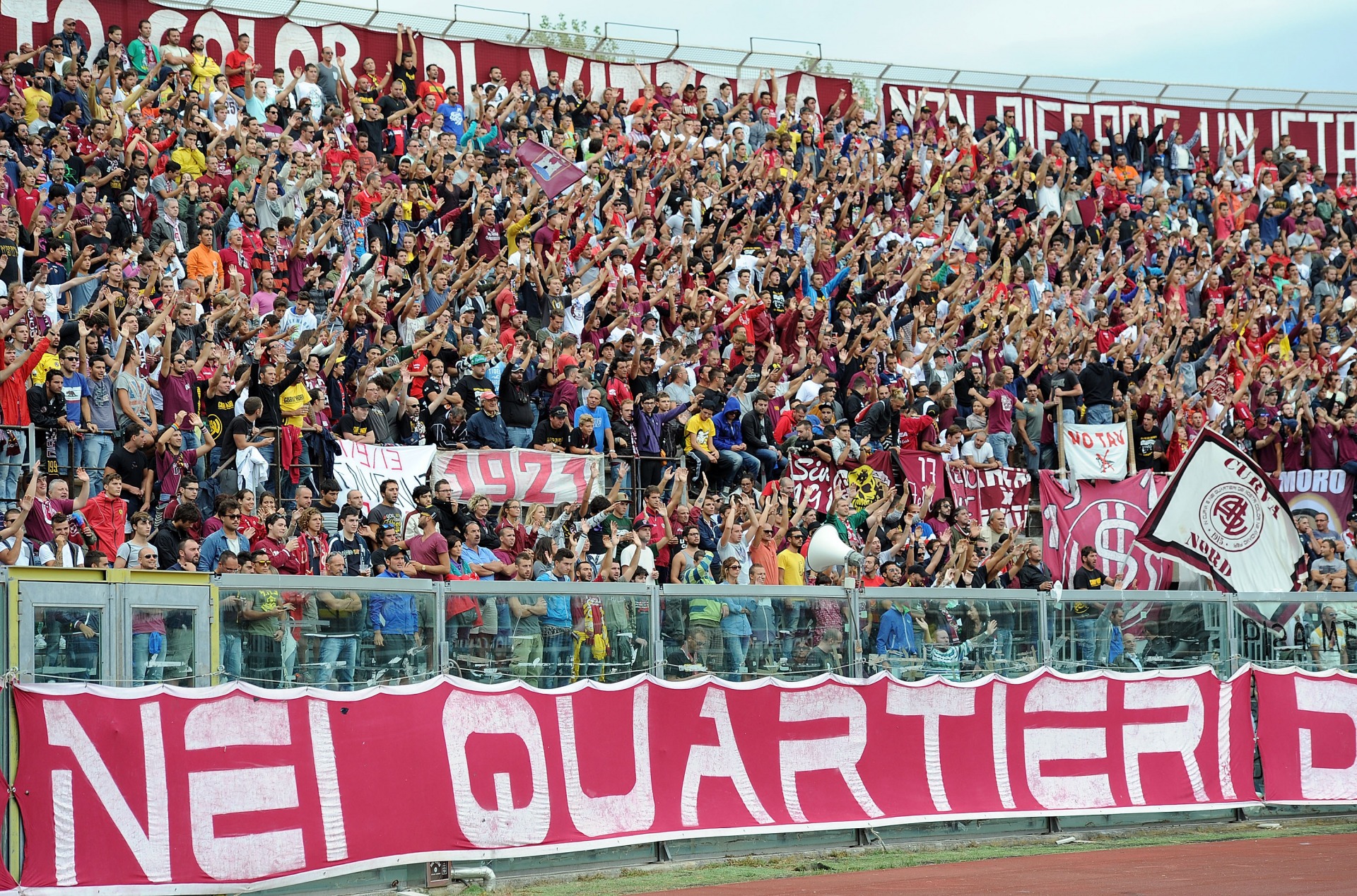
Football arrived the way everything arrives here: through the port. And the club that grew out of it wears the city’s own colour — amaranto, a deep dark red.
They are in Serie C, back in the professional game after a collapse that took them all the way down to Eccellenza, and this season they are managed by Cristiano Lucarelli — their own centre-forward, the man who scored 111 goals for them.
Here is everything you need to know.
Where To Stay
Livorno is long and flat, laid out along the sea. Three areas make sense. The centre, around Piazza Grande and the Mercato Centrale, is the practical base: walkable, close to the station and the food.
Venezia Nuova, the canal quarter built by the Medici with Venetian labour, is the atmospheric choice — bridges, warehouses, bars on the water, and the best evenings in the city.
And Ardenza, south along the seafront, is where the stadium is, a quiet residential district of villas next to the Naval Academy.
Where To Eat
Livornese food is port food, and every dish comes with a shipwreck attached. The flagship is cacciucco — a stew of many species of fish, molluscs and crustaceans, each added in sequence because each cooks at a different speed, all of it bound in tomato and poured over garlic-rubbed toasted bread. The folklore says the five Cs in the name stand for the minimum five kinds of fish; the old recipe books say the full version wants as many as 13.
Trattoria Da Galileo on Via della Campana and Trattoria Il Sottomarino on Via Terrazzini are the two names people argue over. Both are honest, both serve enormous portions, and neither is cheap. Red wine, not white — that is not negotiable here.
The everyday classic is the cinque e cinque: torta di ceci, a chickpea-flour tart baked in a wide copper pan, stuffed into a bread roll, ideally with spicy preserved aubergines. The name is 1930s pricing — five lire of torta, five lire of bread.
Pizzeria e Torta Seghieri on Via Ernesto Rossi is the reference point — order it standing, eat it hot. For a sit-down meal beyond the cacciucco, the two dishes to know are triglie alla livornese — red mullet cooked simply in tomato with garlic, parsley and a touch of chilli — and baccalà alla livornese, salt cod fried and then finished in the same sauce.
For something you will not find elsewhere, Melafumo on Via Mentana is a seafood trattoria where the volume is loud, the mussels are the order, and the room sings along with the stereo — partisan songs, mostly. It is not a performance for tourists. It is simply Livorno.
Start any morning at the Mercato Centrale on Via Buontalenti, a vast covered market that is still a working food hall rather than a tourist project. It closes at three and does not open on Sundays.
Where To Drink
Let’s start with a local choice: The ponce livornese. This drink was born, the story goes, when a battered ship limped into port with a cargo of rum and coffee that had mixed together during the crossing. The merchants had to sell it cheap; the city discovered it liked that. The drink that survives is coffee, rum and sugar heated together and served scalding in a small thick glass, with a twist of lemon peel that originally had the humbler job of disinfecting the glass. It was once prescribed for fevers and low spirits. It still works for both, and it is the correct way to end a matchday in any month of the year.
Bar Civili on Via del Vigna is its home: no table service, football memorabilia on the walls, cards on the tables, and a crowd that stays late. One important detail — it closes on Sundays, so if the fixture is a Sunday one, go on the Saturday night.
For the rest, head for the Venezia Nuova and the bars along the canals, or the seafront around the Terrazza Mascagni.
Don’t Forget
Tickets – The Picchi is far bigger than Serie C crowds fill, so tickets are straightforward for most fixtures. The sector you want is the Curva Nord, where the organised support is. Bear in mind that Livorno away days and certain home fixtures are frequently restricted by prefecture order, so check before booking.
Did You Know?
Igor Protti was the captain who took Livorno from the third tier to Serie A, the man whose number 10 the club retired. He died on June 19 2026, aged 58; the city declared a day of mourning and more than 10,000 people came to the Picchi to say goodbye. Three weeks later, Cristiano Lucarelli was presented as the club’s new manager and opened his press conference by saying it was Protti who, shortly before he died, had asked him to come back and take the job.
Lucarelli’s own story is the one the rest of Italy knows. In 2003 he left Torino for the club he had supported since childhood, taking a significant pay cut to do it, and chose the number 99 — the year his eldest son was born, and the year the Brigate Autonome Livornesi were founded on the Curva Nord. He went on to score 111 goals in amaranto.
Getting There
Pisa Airport is a short hop by train via Pisa Centrale, which makes Livorno one of the easiest lower-league away days in Italy to reach from northern Europe. Livorno Centrale is on the main Tyrrhenian line, with Pisa, Florence, Rome and Genoa all direct. The stadium is in Ardenza, about 3km south of the centre along the seafront — a long walk with a very good view, or a short bus ride on the coastal routes.
Need Another Football Fix?
Everything here is measured against Pisa, 20 kilometres up the road. The rivalry is one of the most bitter in Italy and predates football by several centuries; the two cities are stereotyped locally as the cultured one and the rural one, and the insults still run along those lines — right down to the argument over what to call a chickpea tart. The clubs rarely meet these days but the graffiti does not care. Empoli and Pontedera are both under an hour inland. Grosseto are down the coast and now in the same Serie C group. Florence is 90 minutes by train if you want a Serie A fixture on the same weekend.
Related Topics
Related Articles
Related Articles
The three brothers all grew up in Castellammare di Stabia, a city around half an hour's drive from Naples.
Some of the biggest grounds in the country must be replaced or renovated before the European Championship kicks off.
There is a buzz in Pescara ahead of Italy's U21 clash with Poland, and not just because it could be a winner-takes-all decider.