
Some of the greatest players in the history of the game playing in the most iconic stadiums in the world in a country whose league was, at the time, the pinnacle of club football.
Italia 90 had it all. Yes, at times the football left a bit to bit desired, but so what? How could anyone really complain when you had Toto Schillaci living the summer of his life and Barry Davies screaming “Caniggia” as Argentina knocked out Brazil in the round of 16?
And then, of course, there were the shirts. Gone were the skinny fits that had dominated the two previous World Cups. While positively tight for contemporary standards, Italia 90 kits were looser than their predecessors.
Gone too were the heavy cotton blends that were all the rage at Spain 1982 and Mexico 1986, replaced by lightweight, synthetic polyester.
But the biggest change was in the patterns as manufacturers embraced bold geometric designs which were, in the case of adidas designer Ina Franzmann, the result of working with a computerised graphic design programme for the first time.
“Italia 90 felt like the start of a new era in so many ways,” Classic Football Shirts founder Doug Bierton wrote in his book Classic Football Shirts.
“In terms of shirt design the age of graphics and outlandish patterns was really about to kick off. This World Cup gave a glimpse of that future, with 16 shirts featuring graphics or stripes.”
He goes on: “Twenty-nine of the 44 shirts worn at the tournament were made by adidas. This could have made for a regimented look with two out of three shirts potentially being the same template. But instead adidas provided an incredible 13 different models for this World Cup. And only three of them were shared by two teams.”
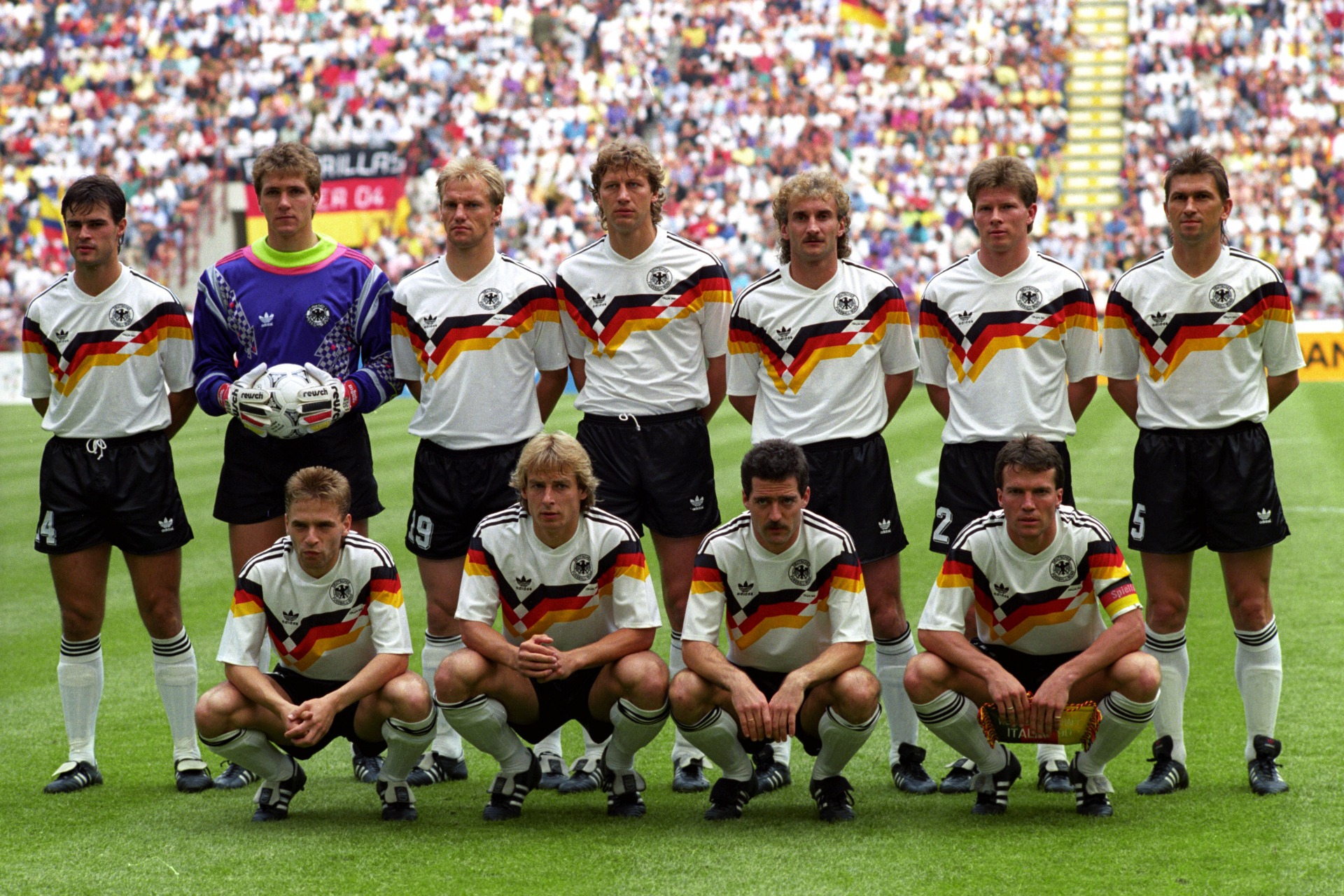
West Germany’s iconic shirt for their last major tournament before reunification was a bespoke number. Designed by Franzmann for Euro 1988, the shirt featured the iconic flag-pattern design across the chest, which had come directly from company supremo Horst Dassler.
The hosts of Euro 1988, West Germany were knocked out of their own tournament, but manager Franz Beckenbauer insisted the design be kept for the 1990 World Cup. In hindsight, it was a watershed moment as West Germany’s triumph made the shirt into an instant classic.
Only Umbro and Puma produced shirts for more than one team, with the former famously decking out England. Sir Bobby Robson’s men wore their white kit throughout their seven matches, but it was the third shirt that became a cult classic.
With its navy collar and white-and-blue sleeve trims the shirt replicated some of the same features of the first kit, but against a bold sky-blue background featuring geometric patterns.
England never wore the shirt at Italia 90 and only wore it once in a competitive fixture – away against Turkey in a Euro 92 qualifier – but New Order frontman Bernard Sumner wore it in the video for World In Motion.
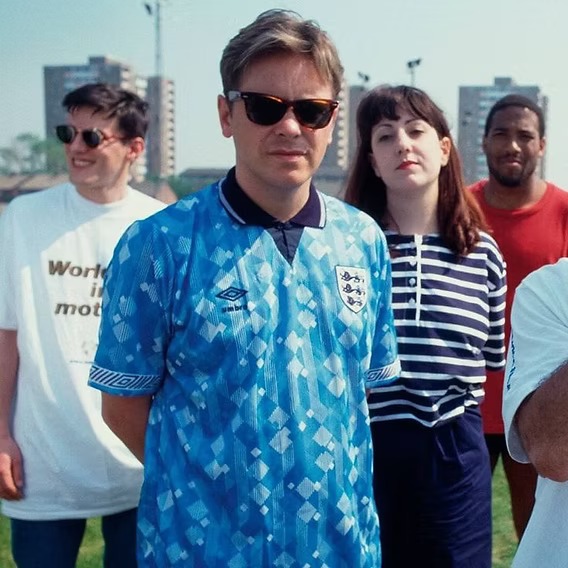
The track, featuring Liverpool legend John Barnes, was the official England song for Italia 90 and was the catalyst behind the shirt’s enormous popularity.
Italy, meanwhile, were fitted by Diadora, who had taken over from Ennerre following its short stint in 1985 and would serve as the Azzurri’s kit manufacturer for the following nine years.
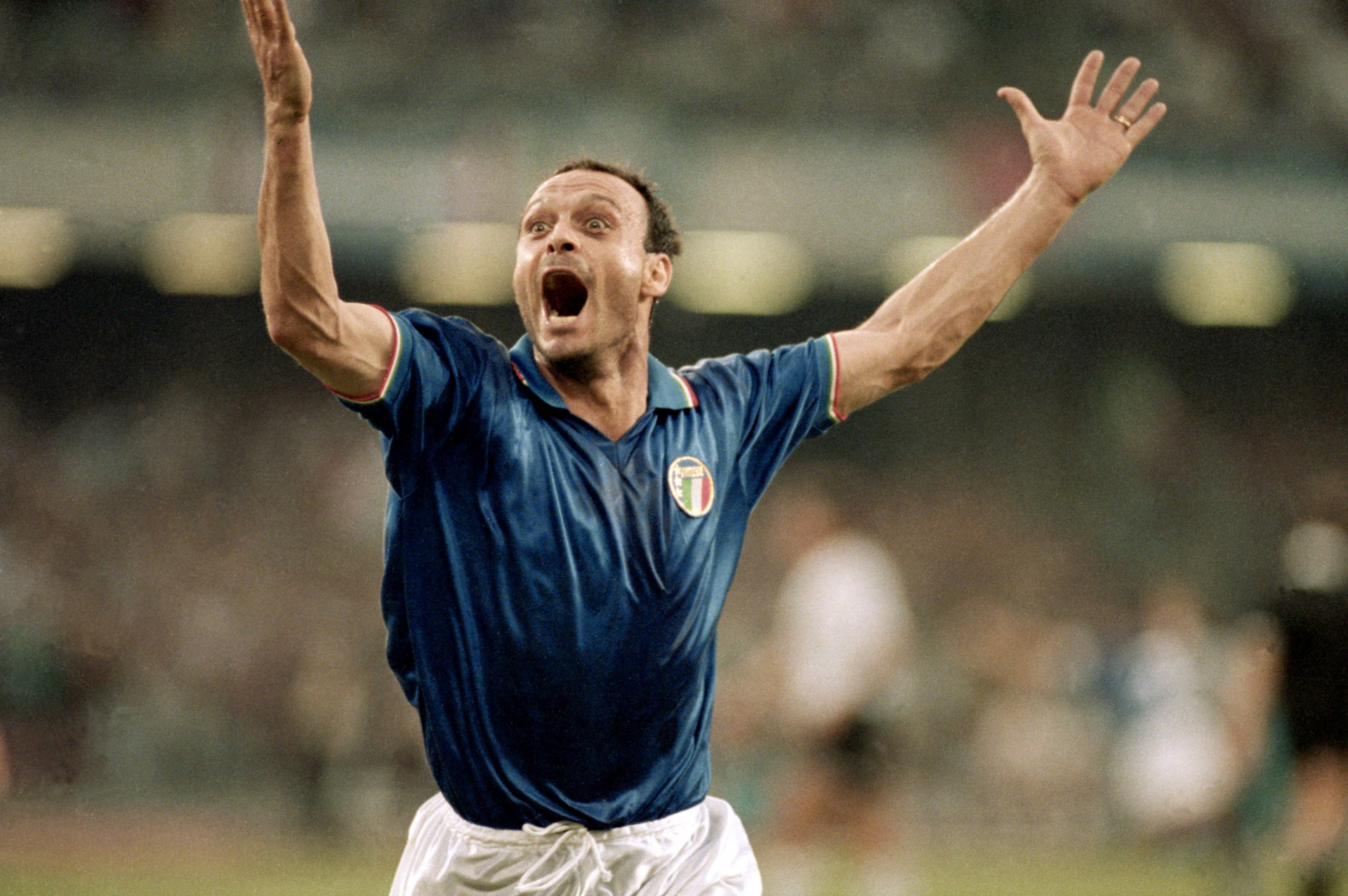
At Italia 90, Diadora stuck with the shiny effect it had unveiled in Mexico four years earlier. The top was another classic deep blue, while the trim on the collar and the sleeves featured the colours of the Italian flag.
The hues of the tricolour, however, were inverted on the players’ shirts, meaning the red stripe was on the outside with the green stripe on the inside. Bizarrely, this was not reflected in the kits sold to the public. Diadora’s logo was also not displayed on the kits either.
The circular Italian crest featured the national tricolor and the word ‘Italia‘ in matching gold, all sitting beneath three golden stars – a nod to their World Cup triumphs.
In a tournament full of iconic shirts, Italy’s was among the best and was undoubtedly the greatest from Diadora’s decade-long association with them.
The Veneto-based company was not the only Italian manufacturer at the World Cup, with its regional neighbour Lotto producing kits for Costa Rica in the brand’s international tournament debut.
It was a World Cup to remember for Lotto, as Los Ticos were one of the surprises of the tournament, beating Scotland and Sweden to finish second behind Brazil in their group as they reached the knockout stages for the first time.
Italia 90, as Bierton points out in his book, had “the perfect blend of football shirts: the right level of variation, innovation, traditional elements and obscurity.”
And it’s not just the shirts that have stood the test of time either. Tracktops and shorts are just as treasured by collectors and fans.
It’s no surprise the wave of nostalgia that has swept over the football shirts market over the past decade has been driven largely by Italia 90, a tournament which has often felt like existing on a grander scale in terms of colours and style.
“People grow up and they get on with their lives and they kind of get into their thirties and forties and they get nostalgia for their youth,” kit collector John Blair told Destination Calcio last year.
“And for a lot of people, football is a big part of that. And so that’s when the demand side kicks in, people wanting to create a physical reminder of that period.
“They go out and they buy the shirts. Now, the nostalgia comes from seeing moments. So it’s seeing goals, seeing players, seeing tournaments.”
A football enthusiast who has collected more than 500 shirts for over three decades, Blair’s debut book, A Culture of Kits: The Definitive Guide to Classic Shirt Collecting was nominated for the William Hill Sports Book of the Year in 2024.
His second book, Football Kit Italia, hit the shelves last August and covers that fascinating decade of Italian football from 1992-2002.
Football Italia, of course, owes its very inception to Italia 90. The shirts are a vehicle for nostalgia, one which has been increasingly commercialised and commodified, but which ultimately is largely about feelings for a lot of fans.
“It (seeing a vintage shirt) triggers and almost instantly takes you back to that moment, who you were with, what you were doing,” explains Blair. “And so it’s not just a football shirt, it’s not just the design, it’s that kind of feeling and the emotion that comes with it as well.”
Related Topics
Related Articles
Related Articles
Stadiums worth visiting because of their stunning backdrop, where tickets are ridiculously affordable and the local cuisine superb.
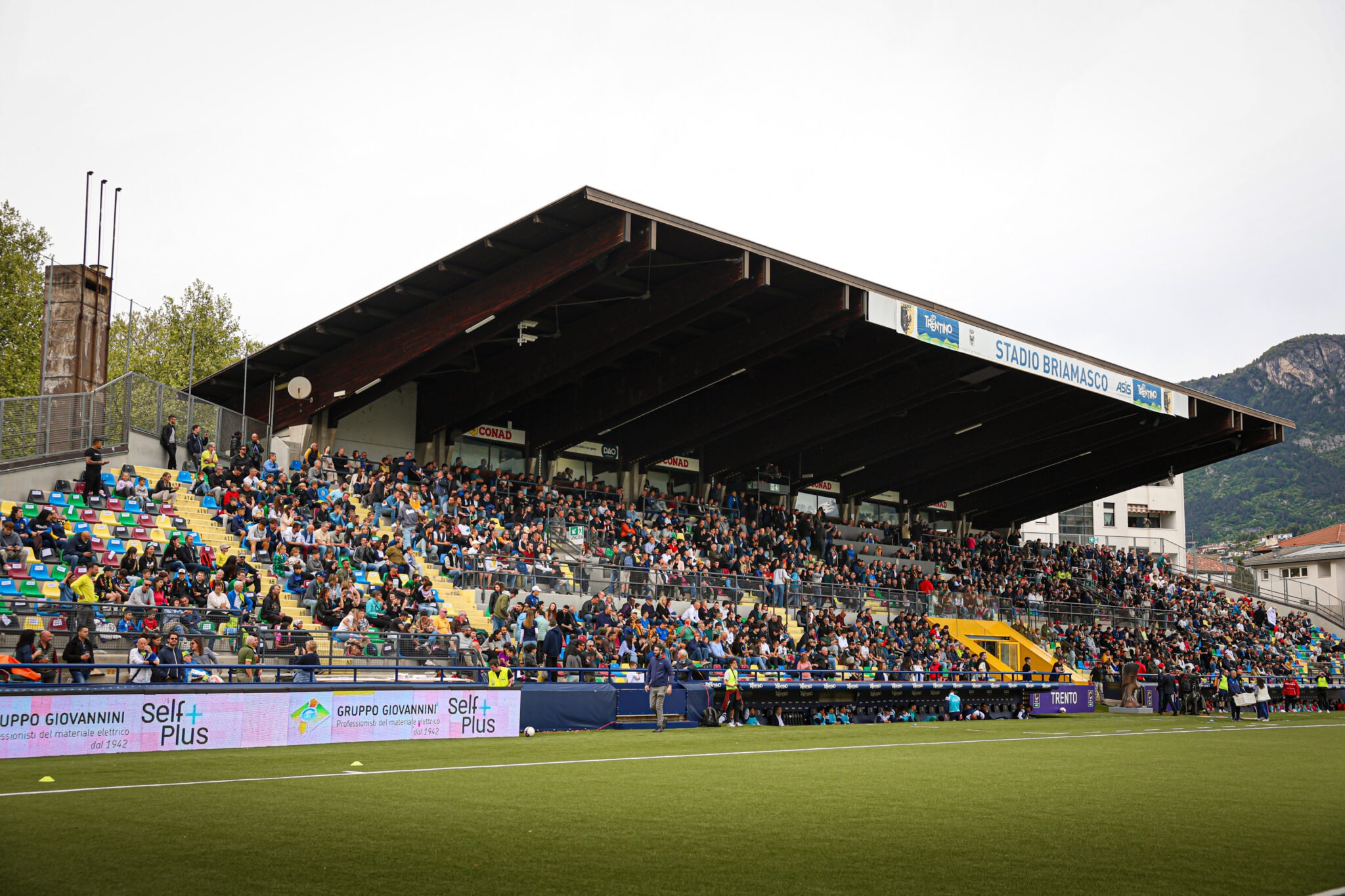
Fancy some calcio action in a quiet city better known for skiing and volleyball? Here's all you need to know before you go.
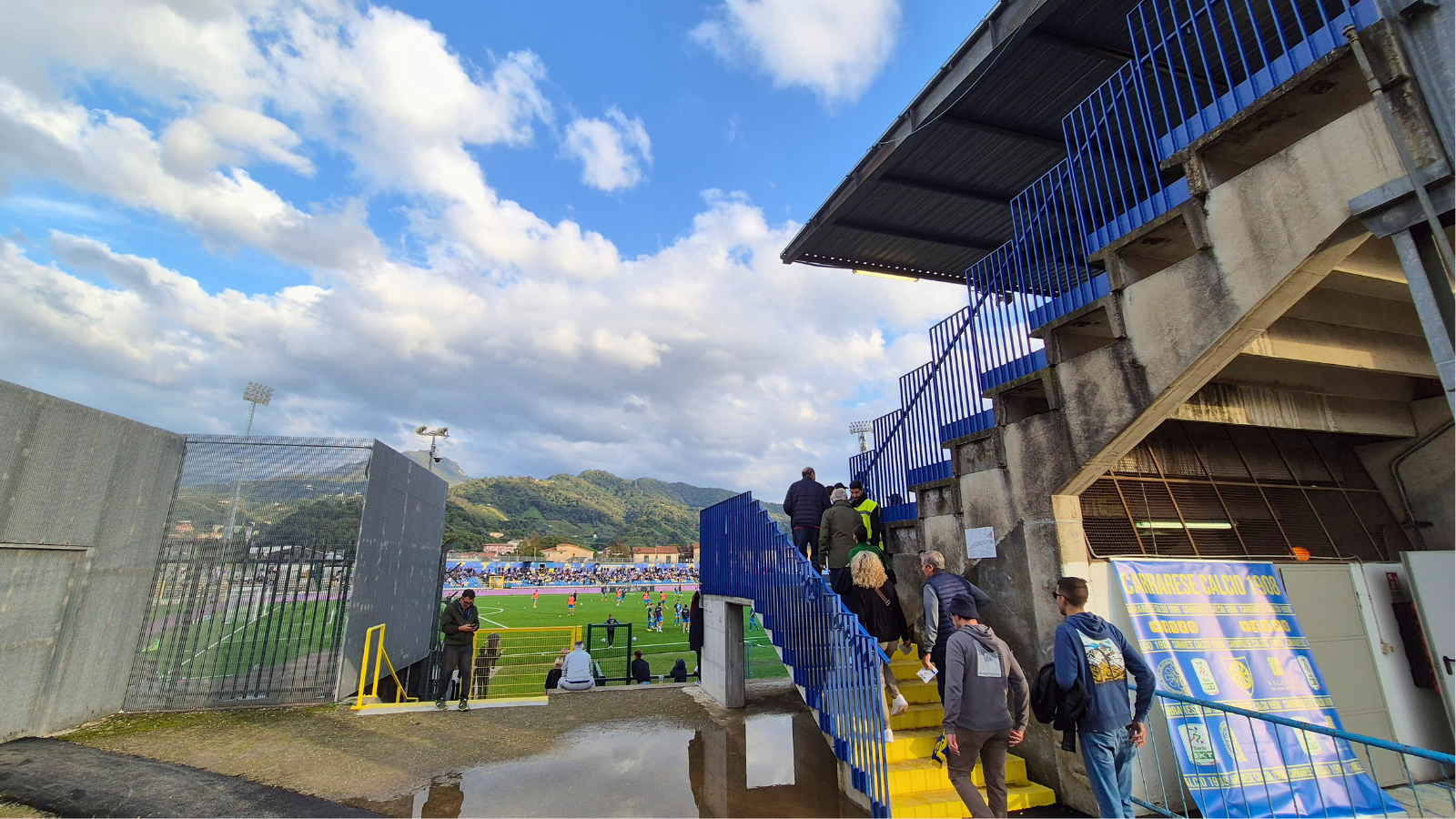
When you watch Carrarese at home, the mountains sit in your eyeline for the full 90 minutes. Here is all you need to know.