
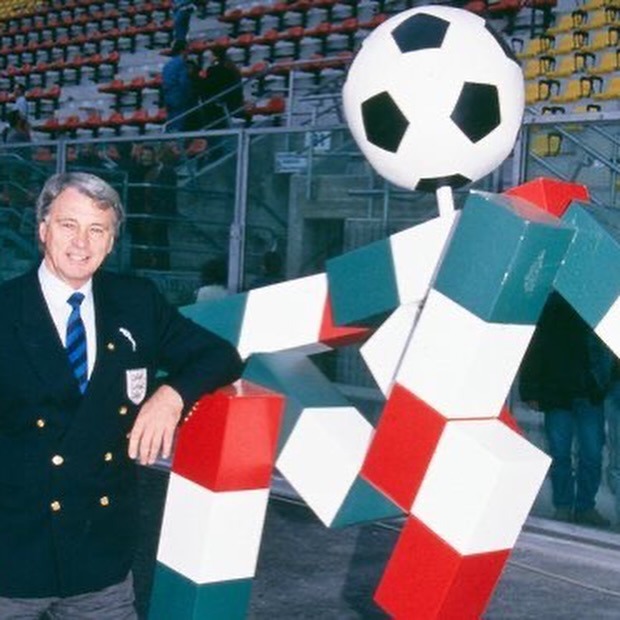
How Ciao Never Said Goodbye… Italia 90 Mascot is Still on Show all Over the Country
By Dan Cancian
Mention Italia 90 and the mind immediately starts to race to a gallery of moments – Toto Schillaci’s bulging eyes, Paul Gascoigne’s tears, Diego Maradona hissing out an insult live on TV in front of a worldwide audience and Luciano Pavarotti bellowing out Nessun Dorma.
Snapshots that defined a tournament, which existed on a grander scale. One which no other World Cup reached before or since.
But a list of Italia 90 icons would not be complete without the main character. And that would be Ciao, the tournament mascot.
Ever since Willie, a cuddly bipedal lion, became the first World Cup mascot in 1966, successive tournaments raced to up the stakes. There was Juanito in 1970, a kid wearing a Mexico kit and a sombrero, and Gauchito eight years later, effectively the Argentinian take on the theme.
In between, came Tip and Tap, two cartoon children wearing Germany kits with the number 74. Fast forward to 1982 and Spain delivered a real showstopper in Naranjito, an anthropomorphic orange in the kit of the national team.
Four years later Mexico had Pique, a Jalapeno pepper with a moustache and wearing a sombrero.
How could Italy follow suit? With a lengthy process and a design inspired by standing still at a traffic light. Both in their unique ways essential parts of life in Italy.
Awarded the tournament in May 1984, 18 months later the Italia 90 organising committee announced a competition to design the World Cup mascot. The regulations were stringent: the mascot could not evoke local architecture or well-known figures.
Instead, it “should represent a typical yet universal characteristic” of Italy – an element of folklore or tradition that belongs to everyone.
Over 50,000 entries were received, with the winner the brainchild of self-taught graphic designer Lucio Boscardin.
“I came up with the idea in front of a traffic light,” Boscardin recalled to La Gazzetta dello Sport years later.
“It made me understand that the Italian flag was an element to be valued. I made some simple sketches in my car right there and, in my study, I broke the word ‘ITALIA’ into 10 tricolour sticks so that they would become an athlete. Only the head was missing and, inevitably, I put a ball.”
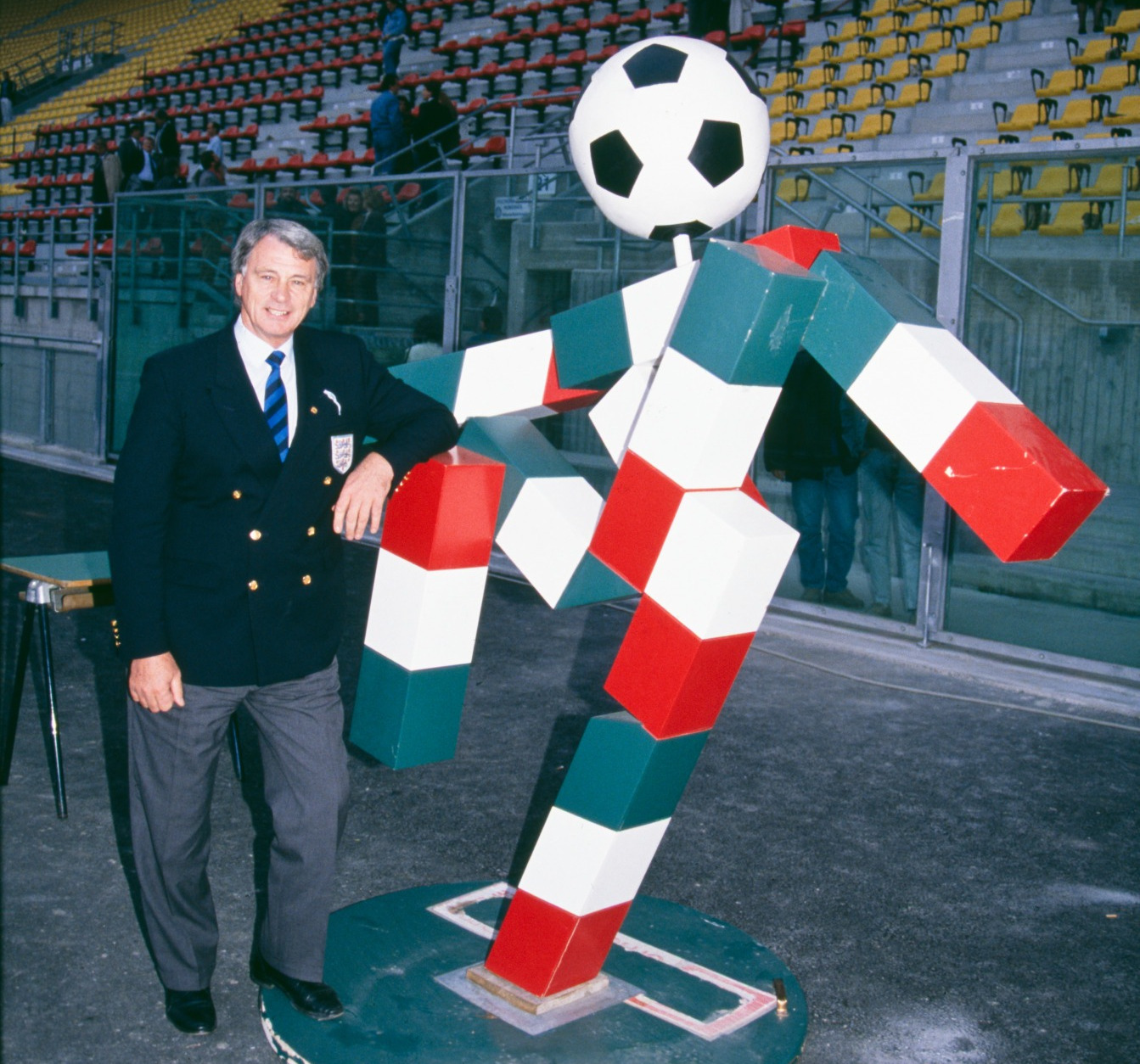
With its blocky-style and a football for a head this was a radical move away from the figures that had dominated the mascot scene for the previous quarter of a century.
But Ciao was as patriotic as its predecessors, with its individual cubes in the green, white and red of the Italian flag.
Still, could its simple design stand a chance against fierce competition and in front of a judging panel which included, among others, designer Sergio Pininfarina – the man behind a number of Ferrari models – and Minister of Tourism and Entertainment Franco Carraro?
Boscardin never had any doubts.
“Based on the restrictions imposed by the regulations, I think that the originality of my all-Italian mascot had a good chance of being chosen,” he said.
The one thing the panel could not agree on was the name. Amico (friend) and Bimbo (child) were initially floated, along with Beniamino and Dribbly.
Eventually they settled on Ciao, Italian for ‘hello after a vote conducted via Totocalcio – Italy’s state-run football betting pool – a whole three years after the mascot had come into existence.
It was a greeting everyone in Italy could relate to and the first word any non-Italian learns upon arriving in the country.
Not that the mascot was universally loved. Many Italians felt Ciao was too cold and abstract, if not downright ugly. Candido Cannavo, then director of La Gazzetta dello Sport, famously described it as ‘kind of small Pinocchio’.
Italy and Cagliari icon Gigi Riva, meanwhile, was typically blunt in his verdict.
“Riva was with me on the bus from the Quirinale – the official residence of the President of the Italy – that took us back to the hotel for the award ceremony and, with all frankness, he told me that he didn’t like it,” Boscardin said. “I asked him to be patient.”
The mascot’s style was a world away from the tournament poster, which placed the Colosseum in Rome as centre stage for the competition in a nod to Italy’s history.
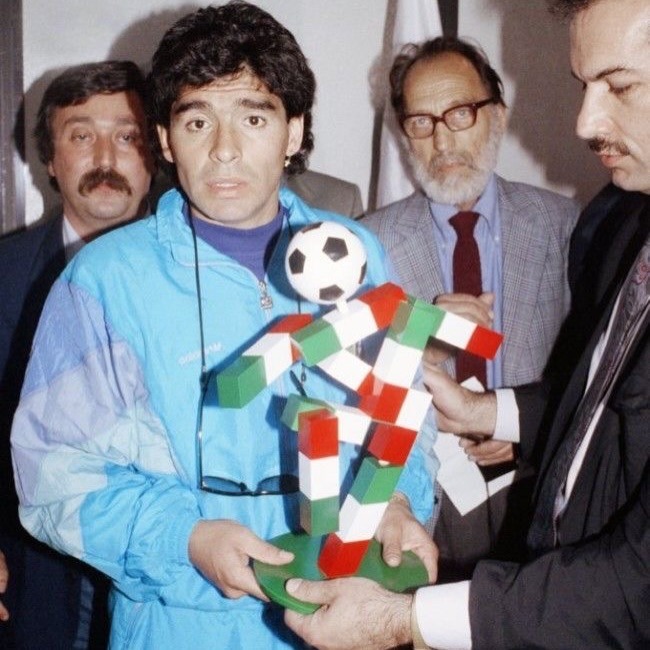
Yet Ciao was everywhere, from stickers to key rings and toys. A slightly puzzled Maradona was famously presented with one, while there were dishes, glasses and, of course, espresso cups.
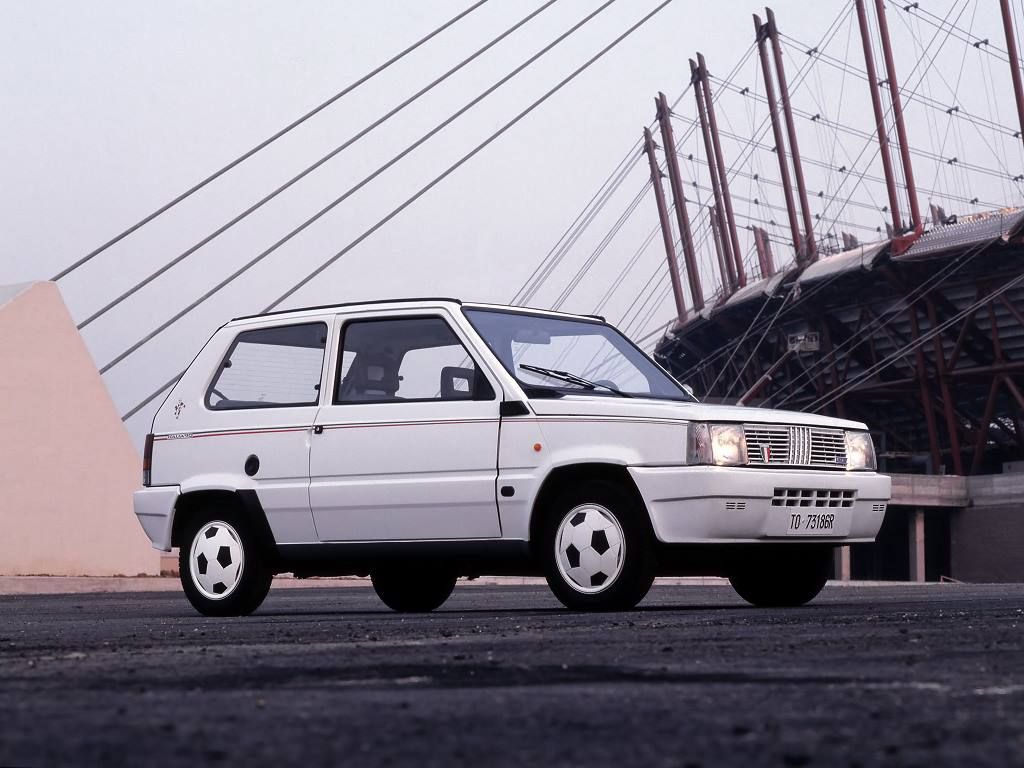
Automotive giant FIAT, one of the tournament sponsors, took the mascot to the next level, refreshing the look of its standard white 750cc Panda for the occasion. A green and red pinstripe appeared across the car on the white exterior, along with Ciao and iconic football hubcaps.
Ciao was near ubiquitous in IP petrol stations across Italy, as the oil company was the Azzurri’s main sponsor at the time. Stop in one now and even 36 years on, chances are you’ll run into a faded Ciao sticker on the wall or the mascot in some form.
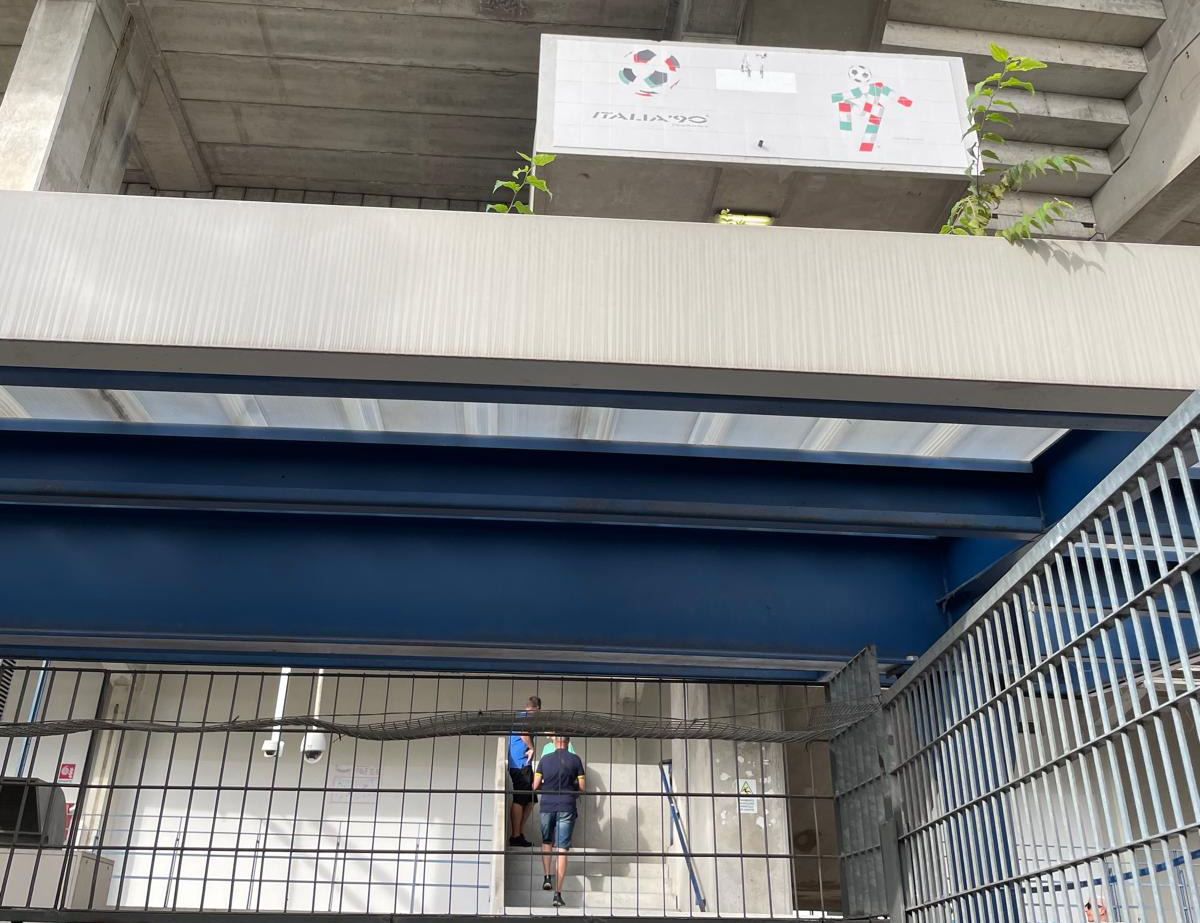
As, for that matter, is the case across a number of cafes. Tucked away on the top shelf between a bottle of Averna and Amaro del Capo or stuck to the back of the coffee machine, Ciao always looms large.
In a nod to the glacial pace of process in Italy, Ciao still features in some Italia 90 grounds too. The Stadio Bentegodi in Verona features tournament signage outside the main stand, while climbing up the stairs towards the press box at the Luigi Ferraris in Genoa one is met with a faded Italia 90 poster. We spotted one in a great little bar in Bologna.
Ahead of the 2026 World Cup, adidas dipped back into the nostalgia well by releasing a vintage collection featuring logos of previous tournaments.
Ciao, of course, features prominently.
Related Topics
Related Articles
Related Articles
League leaders Palermo are again in action in the latest triple-header of Serie B fixtures live on Destination Calcio TV.
Italian teams have, over the years, been involved in some epic encounters on the continental stage. Here are seven of the best.
Up and down the country, each stadium is unique and every single one has its own charm. This is our top nine.