Take the M2 out of Milan and stay on it. Past Lambrate, past Cascina Gobba, the line climbs out of the tunnel and runs above ground through the flat farmland east of the city.
Twenty minutes later the doors open at a station called Gorgonzola. Yes, that Gorgonzola. And a kilometre from the platform, wedged between the town and the Naviglio della Martesana, sits one of the most unusual clubs in Italy: AS Giana Erminio, the only side in Italian professional football named after a person — surname first, then first name.
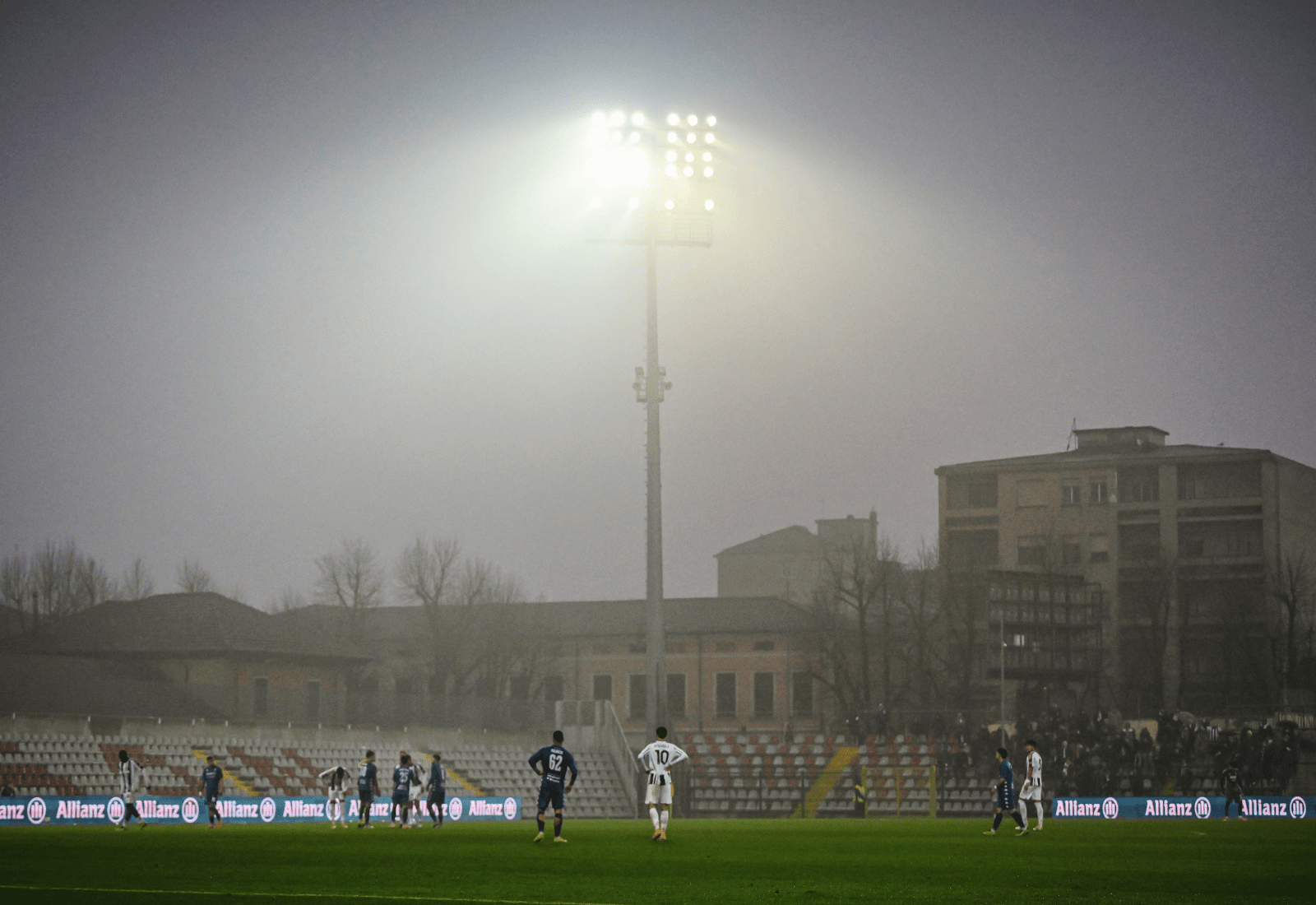
This is Serie C at its most human. A town of 20,000 people, a ground you can walk to from the metro, and a ticket that costs the same wherever you sit.
Here is everything you need to know.
Where To Stay
Gorgonzola is small. There are no areas to avoid, and everything sits close to the stadium, which is inside the town rather than on its edge. If you want to stay locally, B&B Room 40 on Via Italia puts you in the historic centre, close to the canal and about 10 minutes on foot from the metro.
Hotel Senator on Via Milano is further west, closer to the stadium end of town, though it sits among offices rather than bars.
The honest alternative is to base yourself in Milan and treat the trip as a day out. Gorgonzola is on the green line, so staying near any M2 station puts you a direct ride from the ground.
Where To Eat
It goes without saying: gorgonzola. The town gave its name to one of the world’s great cheeses, and the story is worth carrying with you. Most versions place its birth in the countryside around here between the 10th and 12th centuries, when herds came down from the Bergamo valleys to graze the autumn pastures.
Until the early 1900s it was known simply as stracchino, or stracchino verde — green stracchino — before the town’s name stuck for good.
The best date in the calendar is the Sagra Nazionale del Gorgonzola, held in the historic centre on September 19-20 this year. The whole town turns into a tasting: the cheese served on its own, and worked into local recipes across restaurants, delis, bakeries and gelaterie. The dish to look for is risotto al gorgonzola. The club presents its squad for the season during the festival weekend, which makes it the best two days of the year to come.
Outside the Sagra, Macelleria Apostolo on Piazza Cagnola is the old-fashioned counter to buy a wedge from — meat, salumi, bread, wine and cheese, vacuum-packed if you are flying home.
Next door at number 9, La bottega di Norcia e Amatrice does taglieri and wine. Both close on Sundays, so buy on Saturday if the fixture is a Sunday one.
Where To Drink
There is no fans’ bar in Gorgonzola. Supporters drift in from all over the town. The place worth knowing is the Piccola Champagneria on Via Italia, right by the canal bridge and a few minutes’ walk from the ground. It is an aperitivo bar rather than a matchday pub, with tables looking onto the water, but it is the closest thing to a natural gathering point before kick-off.
Don’t Forget
Tickets – These are €10 in every section. Reductions aside, they are the only club in Italian professional football that does it. The policy comes directly from president Oreste Bamonte, who believes football belongs to everyone, and it is backed up by a €1 ticket for under-14s and free entry for disabled supporters with a companion.
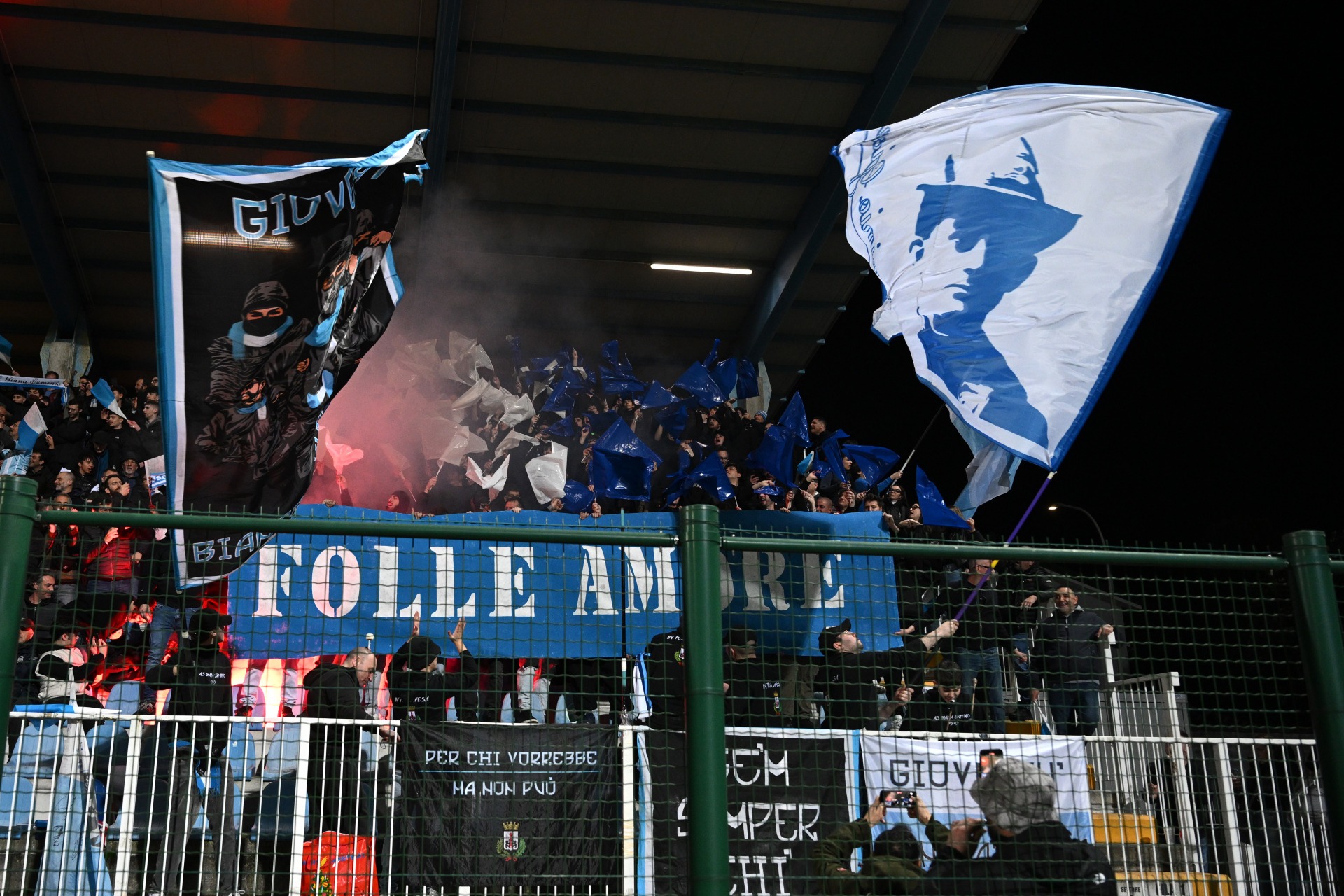
They are available online through Vivaticket, at retail outlets, or at the stadium on matchday — though the away sector in the Tribuna Est cannot be bought on the day or at the ground at all. For atmosphere, head for the Tribuna Sud. The organised support gathers in sector 6, under the banner TS 1909, the year the club was founded.
Merchandise – There is a club store under the Tribuna Sud, open for every home game, and the Sports & Wear shop on Via del Parco in town. The colours tell their own story: the historic kit was black with white trim, and when Bamonte took over in 1985 he introduced light blue alongside the white to lift what he considered a gloomy palette. The nickname followed — the biancazzurri.
One last thing – it is la Giana Erminio, feminine. Visitors reach for il and give themselves away immediately.
Did You Know?
The club began in 1909 as Unione Sportiva Argentia, named after Curte Argentia, the old Latin name for the town. It took the name Giana Erminio in the 1930s in honour of a 19-year-old local — an alpino of the Aosta battalion, killed on Monte Zugna in 1916 during the First World War. The name reverted to Gorgonzola in 1944 and returned, permanently, after the war.
Then came the rise. From 2011 the club won three consecutive promotions with essentially the same squad and the same coach, Cesare Albè, who had arrived in 1994: Promozione, Eccellenza, Serie D. By 2014 they were in the professional game, the third club in the metropolitan city of Milan after the big two at San Siro.
Getting There
Gorgonzola is served by line 2 — the green line — of the Milan metro, and the station sits roughly a kilometre from the stadium. Trains run from around 5:30am until roughly 12:30am, with night buses after that.
Linate Airport is a short drive south-west of Gorgonzola.
Need Another Football Fix?
Plenty within an hour. Renate and Alcione Milano are the closest thing Giana have to a rival. Lecco sits at the foot of the mountains an hour north, Pergolettese are in Crema to the south-east, and AlbinoLeffe play outside Bergamo. San Siro is 50 minutes away on the metro, changing at Garibaldi.
Related Topics
Related Articles
Related Articles
We will be showing 18 Serie B matches LIVE and for FREE in October and November between the two international breaks.
The biggest derby in Veneto headlines the latest triple-header of Serie B fixtures live on Destination Calcio TV.
The U23s play a full professional season in the same division as clubs founded in 1900 with ultras, debts and towns behind them.