Girone A of Serie C in 2026-27 has 20 clubs. Eleven of them are Lombard.
Spread across six provinces, they cover almost every kind of landscape Lombardy has: the metro belt around Milan, the furniture towns of Brianza, a lakeside city under the Alps, a walled hill town, four clubs in the province of Brescia, and one in the flat farmland of the Po Plain.
The distances are small. A weekend can easily hold two matches across two cities. One warning before you plan anything, though: three of the 11 clubs are not playing at home this season. Their ‘home’ matches are being staged in other towns, sometimes in other provinces.
Milan: Giana Erminio and Alcione
Giana Erminio play in Gorgonzola, about 20 kilometres east of Milan. The town is at the end of the M2 metro line, so you can reach a professional football ground in Italy on the Milan underground for the price of a standard ticket. The Stadio Città di Gorgonzola is a short walk from the station, and yes, the town gave its name to the cheese.
Alcione Milano are a Milan club without a Milan ground. Founded in 1952 as a youth club, they have moved several times since reaching Serie C, and for 2026-27 they are at the Stadio Ferruccio in Seregno, in the province of Monza and Brianza, about 25km north of the city. Their own stadium, which they plan to move into next year, is being built at Settimo Milanese, just outside Milan.
Monza and Brianza: Renate and Folgore Caratese
Brianza is the furniture and design district of Italy, a dense belt of small towns between Milan and Como where workshops sit next to fields. Renate are the smallest club story in the group. The village itself has fewer than 5000 people, and the team plays 5km away in Meda, at the Stadio Mino Favini, about 30km from Milan and reachable by train from Milano Cadorna. The ground sits on the northern edge of the Bosco delle Querce – a large park – and holds around 2500.
Folgore Caratese are the newcomers. The club dates back to just 2011, when Folgore Verano, founded in 1951, merged with Caratese, who went all the way back to 1908. They went up as champions of Group B of Serie D last season, taking Carate Brianza back into professional football after 78 years.
The club belongs to Michele Criscitiello, who owns and presents on the Italian television channel Sportitalia, and is being built around it: the ground is being absorbed into a complex called the Sportitalia Village. That ground is the problem. The Stadio XXV Aprile has been rebuilt with private money to meet Serie C standards, and it was supposed to be ready by the end of the summer. It was not. A dispute with the council over paperwork has kept it closed to league football.
The club opened its Serie C season 50km away in Zanica, near Bergamo, laying on free minibuses for supporters and selling tickets for €1. As it stands, there is no date for a return home, but watch this space.
Lecco: mountains at the end of the lake
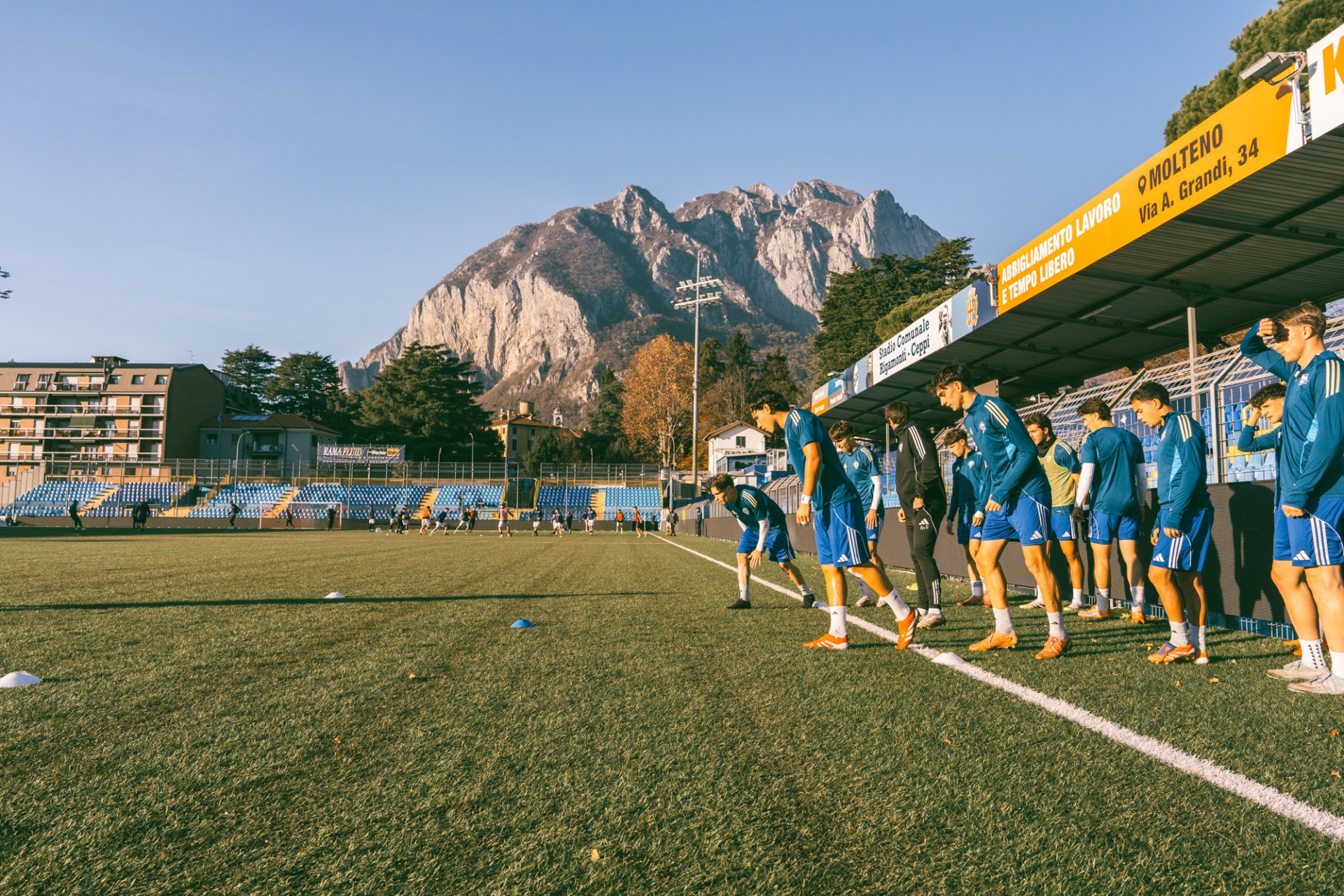
Lecco sit 50km north of Milan, about 40 minutes by train, where Lake Como splits into two arms under the Resegone Ridge. The Stadio Rigamonti-Ceppi is a short walk from the lakefront, which makes this the easiest day trip on the list: train, lake, ground, train back. The city is the setting of Alessandro Manzoni’s The Betrothed, the novel every Italian reads at school, and the surrounding peaks are walkable in a morning.
Bergamo: a club named after two towns, playing in a third
AlbinoLeffe are named after Albino and Leffe, two textile towns more than 20km up the Val Seriana. The ground is nowhere near either. The AlbinoLeffe Stadium is in Zanica, on the plain about 7km south of Bergamo and a few minutes from Orio al Serio Airport, which makes it one of the most convenient grounds in Italy for visitors flying in on a cheap fare. It is here that international teams base themselves when Italy are playing at the New Balance Arena, while Atalanta’s European opponents have also been known to use AlbinoLeffe’s facilities.
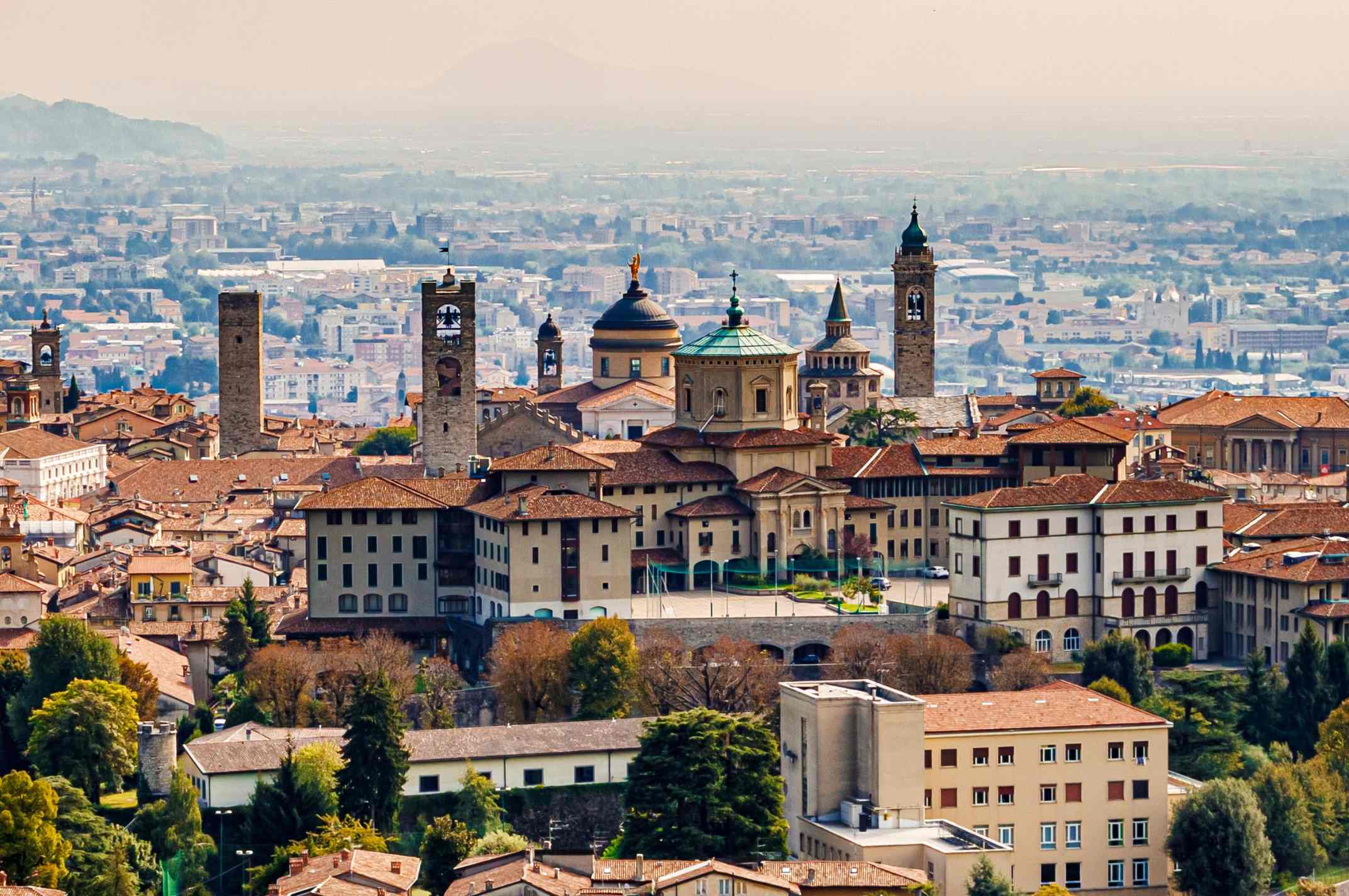
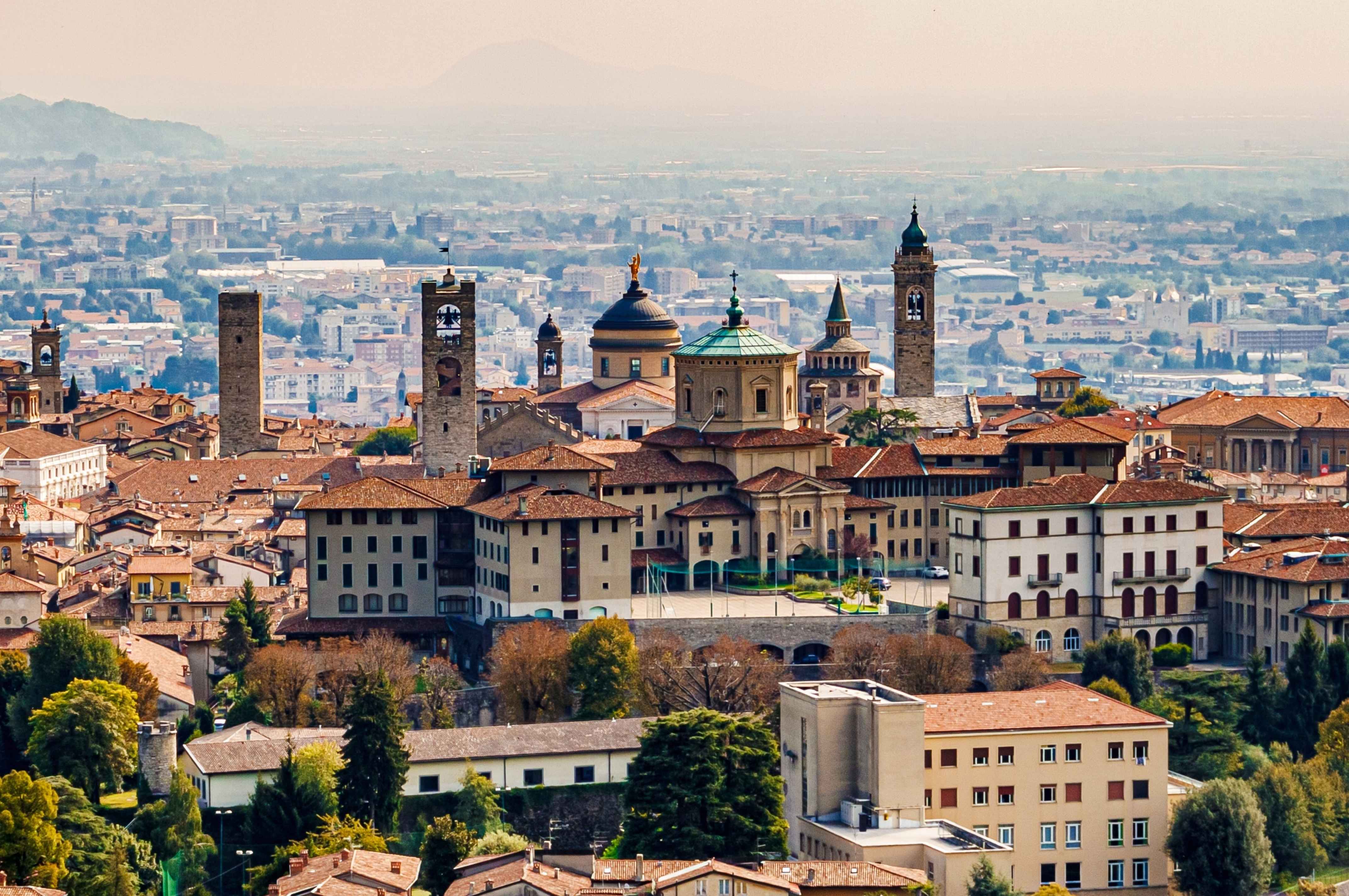
Bergamo itself is the main reason to stay: the upper town behind the Venetian walls, inscribed by UNESCO in 2017 as part of the Venetian defence works, is reached by funicular in four minutes.
Brescia: Union, Lumezzane, Ospitaletto and Desenzano
The province of Brescia alone provides four of the 11 teams. Union Brescia play at the Stadio Mario Rigamonti in the city, comfortably the biggest of the Lombard grounds in this group, and the team that plays in it are barely a year old.
Brescia Calcio, founded in 1911 and once the team of Roberto Baggio, Andrea Pirlo and Pep Guardiola, were docked points for unpaid wages in the spring of 2025, dropped out of Serie B and were then refused a licence for Serie C, ending 114 years of history.
Giuseppe Pasini, head of the steel-manufacturing Feralpi Group, moved the sporting title of his own club, Feralpisalò, from Salò into Brescia with the backing of the mayor, and Union Brescia was presented in July 2025. They kept the ground, the blue and white, and most of the squad. And they finished second in Group A in their first season.
Brescia is 95km from Milan and about 40 minutes by fast train. It was Italian Capital of Culture in 2023 with Bergamo. The Roman forum and the San Salvatore–Santa Giulia monastery complex, part of the Longobard UNESCO site inscribed in 2011, are 10 minutes apart on foot.
Lumezzane are based 15km northeast of the city, up the Val Gobbia in the metalworking valleys above Brescia. The Stadio Tullio Saleri holds 4150 and is one of the grounds in the group with a hillside behind it.
Ospitaletto Franciacorta are 13km west of Brescia, on the edge of Franciacorta, the sparkling wine region. Their Stadio Gino Corioni is one of the busiest grounds in Lombardy this season, because it hosts two Serie C clubs. The second is Desenzano, on Lake Garda, in their first Serie C season. Their Stadio Tre Stelle does not yet meet league requirements, so home matches are played 45km away at Ospitaletto while work is carried out.
Cremona: Pergolettese and Crema (in Serie D)
Pergolettese are in Crema, about 40km southeast of Milan. The name is not a diminutive: they were founded in 1932 in Pergoletto, a hamlet on the edge of town. For most of their life they were known as Pergocrema. They went under in 2012, were refounded as Pergolettese 1932 and climbed back to Serie C.
The other team, Crema 1908, are still there in Serie D, and the two share the Stadio Giuseppe Voltini, each with their own end.
The town is worth the train fare on its own. Crema belonged to Venice until 1797, which is why its porticoed centre looks amazing, and Piazza Duomo is where Luca Guadagnino filmed many scenes from Call Me by Your Name. Eat the tortelli cremaschi: sweet filling, savoury dressing, unlike anything else in Lombardy, and end your trip in style.
Related Topics
Related Articles
Related Articles

Milan has five teams playing league football inside the metropolitan area and all of them are reachable on public transport.
There are Italian clubs with bigger trophy cabinets and louder reputations abroad, but few tell a stranger story than AC Reggiana 1919.
Founded from the merger of three historic sides, Dolomiti exists to represent Bellunese football as a whole, rather than one town alone.