
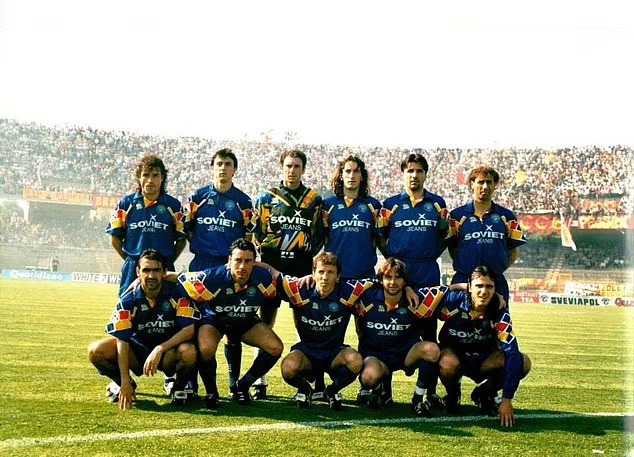
A Fake Striker, Drug Arrest and the Fairytale that Became a Farce… Castel di Sangro 30 Years On
By Dan Cancian
Have you heard the one about the American writer who was granted full access to a Serie B club and ended up telling the managers which players to pick? What about the controversial owner of a small club in Abruzzo who became boss of the Italian FA? And what of the Serie B player who was investigated for his alleged role in an international drug-smuggling operation?
Chances are that if you are familiar with one of them, you will be well versed in the others, as they are all different strands of the same story – that of Castel di Sangro’s rise to Serie B and the controversy that surrounded their stay in Italy’s second tier.
A town of just 5000 inhabitants, perched in the mountains of Abruzzo, Castel di Sangro was a footballing backwater until 1996 when the local team secured an unexpected promotion to Serie B, becoming the smallest town ever to feature in the Italian second tier.
It was nothing short of a sporting miracle for a club that had reached professional football less than a decade earlier, having bounced around regional leagues and Serie D, Italy’s highest amateur level.
Five seasons in Serie C2, then calcio’s fourth tier, followed before the Sangrini made the step up to C1 in 1995 and then secured a second consecutive promotion the following season.
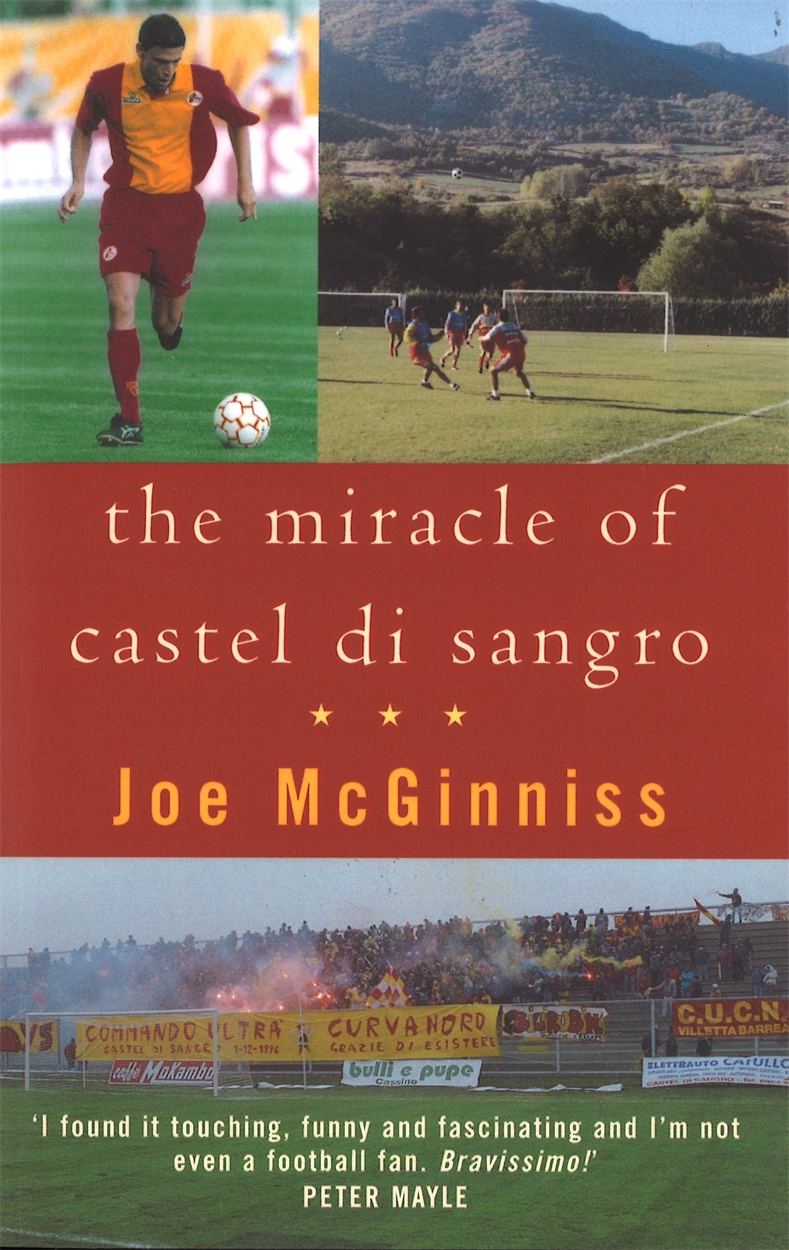
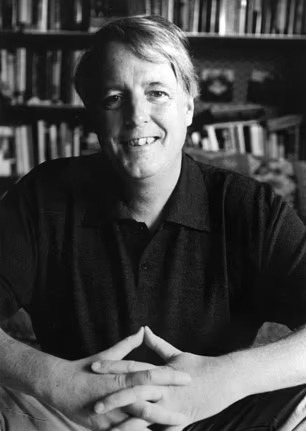
Impressive as the run was, it still warranted very little attention outside Abruzzo. Or at least it did until the arrival of American writer Joe McGinniss, whose book The Miracle of Castel di Sangro has become a staple of football literature.
The title refers to the Sangrini’s fairytale-like ascent to Serie B, which the locals swiftly christened Il Miracolo.
The author of The Selling of the President 1968, which described the marketing of then-presidential candidate Richard Nixon, McGinniss was best known for his trilogy of true-crime books – Fatal Vision, Blind Faith and Cruel Doubt – which were adapted into TV miniseries in the 1980s and 1990s.
When he arrived in Italy, McGinniss could not speak the language, had no connections with Castel di Sangro and, perhaps more crucially, had little interest in football and even less knowledge of the beautiful game.
None of this proved to be a particular obstacle to him working his way into the club’s corridors of power. In the book, McGinniss details long conversations with club president Gabriele Gravina and owner Pietro Rezza, lifting the lid on the kind of access that would be almost unimaginable in the modern game.
And while McGinniss may have been a complete neophyte to the beautiful game, he was not shy about making his opinions known. His transformation from newcomer to over-invested enthusiast, who spends most of his day with the players and gets to know the majority of them inside out, is remarkably swift.
It is also simultaneously amusing and cringeworthy, with McGinniss dispensing unsolicited advice to Gravina, Rezza and Osvaldo Jaconi.
The trio are compelling individuals in their own right. Originally from Apulia, Rezza moved to Abruzzo after marrying into one of the town’s wealthiest families and made his fortune as a building contractor.
Along with Gravina, his niece’s husband, Rezza took over Castel di Sangro in 1984 and oversaw seven promotions in 14 years, culminating in the club reaching Serie B in the spring of 1996.
Gravina, meanwhile, is portrayed as a shady character, who allegedly engages in dubious business practices and who, according to McGinniss, has affairs with players’ wives.
Does his name ring a bell? It should. Gravina was president of the FIGC – the Italian FA – from 2018 until 2026, when he resigned following Italy’s failure to qualify for the World Cup for the third time in a row.
Prior to taking on Italian football’s biggest role, Gravina had served as president of the Lega Pro – the body that oversees all 60 Serie C clubs – for three years.
A veteran of lower-league football, Jaconi took charge of Castel di Sangro in 1993. He branded defender Luca D’Angelo – the current Sampdoria manager – “a Communist still upset over the Vietnam War”. Jaconi left Abruzzo in 1998 following relegation to Serie C and took Livorno up to Serie B in 2002 before leaving for Catania.
Back in that 1996-7 season, Castel di Sangro, against all odds, avoided relegation by finishing three points ahead of Cosenza in their first campaign in Italy’s second tier. It was no mean feat for a club of their size, particularly given the ordeal the Sangrini had to endure. They had to play the first half of the season away from home, in Chieti, about 50 miles away, while the Stadio Teofilo Patini underwent renovations to bring it up to Serie B standards.
Gravina stepped down as president in November – he would return to the club in 1998 – before tragedy struck in December 1996, when midfielder Filippo Biondi and striker Danilo Di Vincenzo were killed in a car crash.
Then in March 1997, defender Pierluigi Prete was arrested by police investigating an international cocaine-smuggling operation, although he was acquitted months later.
Against this backdrop, the signing of Robert Ponnick from Leicester City was supposed to raise morale and boost the Sangrini’s push for survival.
In the pre-internet days, the signing sparked a frenzy in the Italian media, who rushed to find whatever little information seemed to be available on the Nigerian striker, who boasted to McGinniss: “I know I come late to the season but still I will score the most goals in this league. I have seen this Serie B and I am so far superior, it will be a joke. I will score the most goals that anyone has ever scored in Serie B.”
There was, however, one significant problem. Ponnick was not a footballer at all, but an actor hired as part of an elaborate ploy allegedly devised by Gravina to raise the club’s profile.
No publicity is bad publicity, or so they say.
And so, Castel di Sangro stayed up. But what should have been cause for celebration instead enraged McGinniss, who claimed to have overheard players discussing losing the last game of the season to promotion-chasing Bari, before it had even been played. The Galletti won 3-1, clinching promotion by finishing a point ahead of fifth-placed Genoa, leading McGinniss to brand the players “traitors”.
Jaconi, unsurprisingly, had a different view. “A writer who doesn’t understand football could clearly have misinterpreted some banal things,” he told The Guardian. “It would be the same if I went to report on fashion shows. I would also not understand anything and take into account things that have no importance.”
McGinniss’ suspicions about the final match of the season found no vindication in court at the time and in 1999 a preliminary hearing judge convicted him of defamation over excerpts from his book.
Four years later, another conviction followed – this time for false accusation – against the American author, who, upon returning to town after the game against Bari, had hung signs on the front doors of Jaconi and several players containing offensive remarks.
McGinniss died in 2014, two years after Castel di Sangro had been reformed for a second time after folding. They have been plying their trade in Eccellenza, the fifth tier of Italian football, for the past seven seasons.
Miracles, after all, don’t come around very often.
Related Topics
Related Articles
Related Articles

Black Friday has been given a red and blue tint at San Siro after the Milan giants lowered their ticket prices as part of the promotion.
Brera was a champion for the more defensive side of football and had a love for the combative players of the era.
Gazzetta is the biggest-selling sports newspaper in Italy and the third-biggest selling daily in the country.