Italia 90 was a pivotal moment for English football. Poor performances on the pitch, European bans off it and an unshakable hooligan problem left the sport with a serious image issue.
Due to those factors, the decision was made by Italian authorities – at the behest of the British government – to contain any threat by having all of England’s Group F games on the island of Sardinia.
What happened over those four weeks in Italy would change everything, as Sir Bobby Robson’s side and their heroics transformed the country’s relationship with their football team and the sport.
Here, Destination Calcio takes a look at the route around Italy that led to England’s salvation.
Sardinia
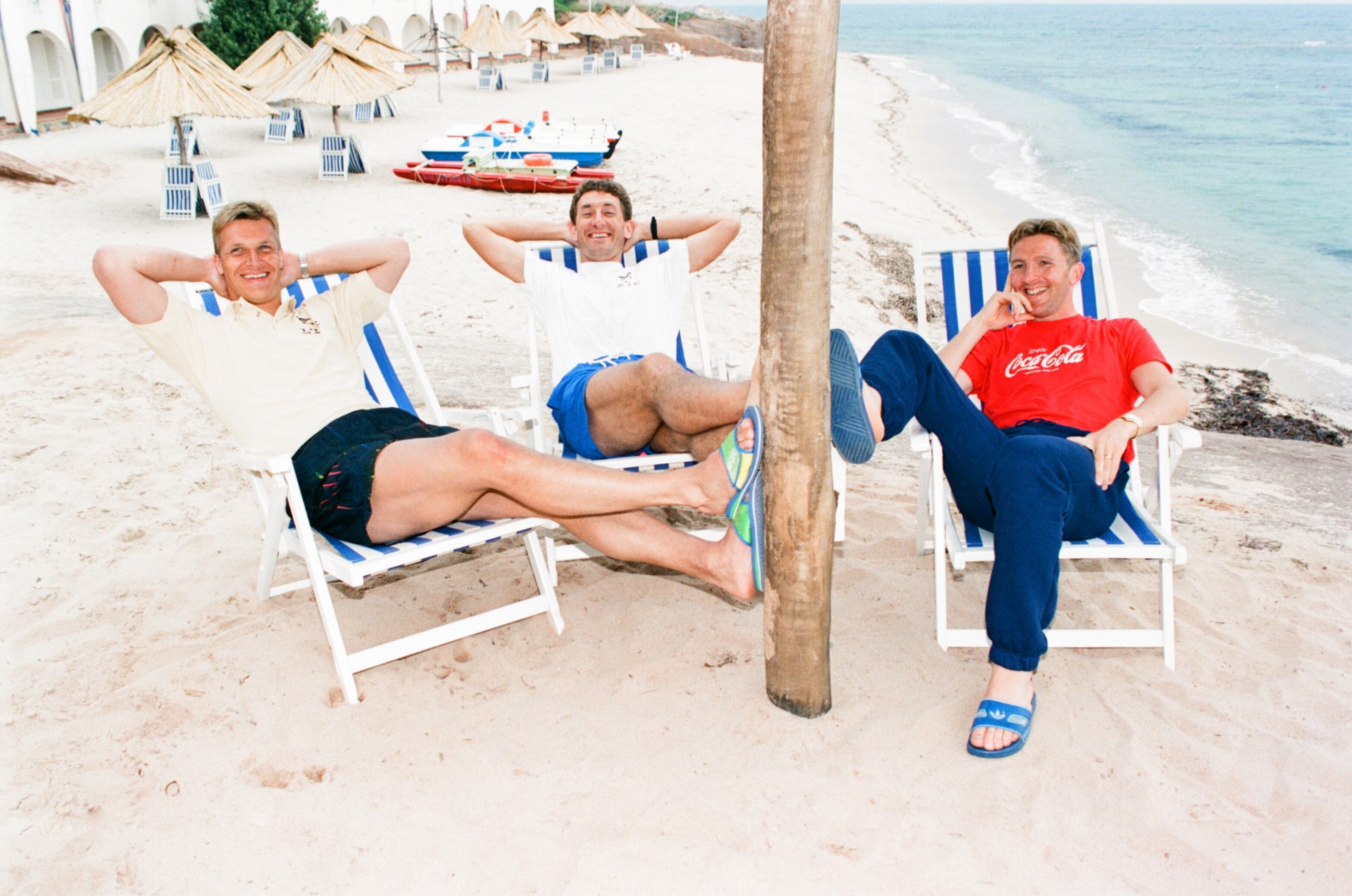
In Sardinia, Bobby Robson’s men stayed at Is Molas Golf Hotel near Pula – now simply called Is Molas Resort – which was known as a top golf resort and had hosted the Italian Open.
Based in southern Sardinia and a 45-minute drive to Cagliari, the English players famously enjoyed lounging by the pool and indulging in the odd game of golf. Paul Gascoigne, however, couldn’t be calmed down and was his usual hyper self from the moment the squad landed.
Today, Is Molas is a four-star resort. A 10-minute drive to Porto d’Agumu beach and still containing a world-class golf course, Is Molas welcomed the England squad for two weeks, with the Three Lions playing all of their games at the Stadio Sant’Elia.
Renovated for the tournament, the Sant’Elia is now a sad story. Lack of maintenance following the tournament meant the structure fell further and further into a state of disrepair. Cagliari eventually abandoned the stadium in 2017 and built a temporary ground next door.
The ground that saw Gazza bedazzle Ronald Koeman with a elegant Cruyff turn and England and Ireland duke it out in one of the worst World Cup games in living memory is set to be demolished in the coming years, once the go ahead is given for Cagliari to build a new stadium.
After finishing top of Group F, England were heading to the mainland and a round of 16 clash with Belgium in Bologna. To get there they had the relatively smooth voyage of a chartered flight.
For the five thousand English fans who made the trek to Sardinia, getting off the island was a different story. It was very much a tale of trains, planes and automobiles to leave.
Those who had significant budgets flew, while those who took pride in doing a World Cup for as cheap as possible got the ferry across from either Cagliari’s port in the south or Olbia’s in the north. Many fans landed in port cities such as Genoa, Livorno and Civitavecchia and then took a train down to either Rimini – using it as a base – or Bologna.
Italy had a lack of high-speed trains at the end of the 1980s, with it’s ‘Pendolino’ service only covering several main cities. Therefore fans were forced to take regional InterCity trains, with a journey from Rimini to Bologna lasting anywhere between 60 and 90 minutes. The same route today takes less than an hour.
Bologna
While in Sardinia they stayed far away from the centre, in Bologna the England squad couldn’t have been any more central, choosing the Novotel Est as their base.
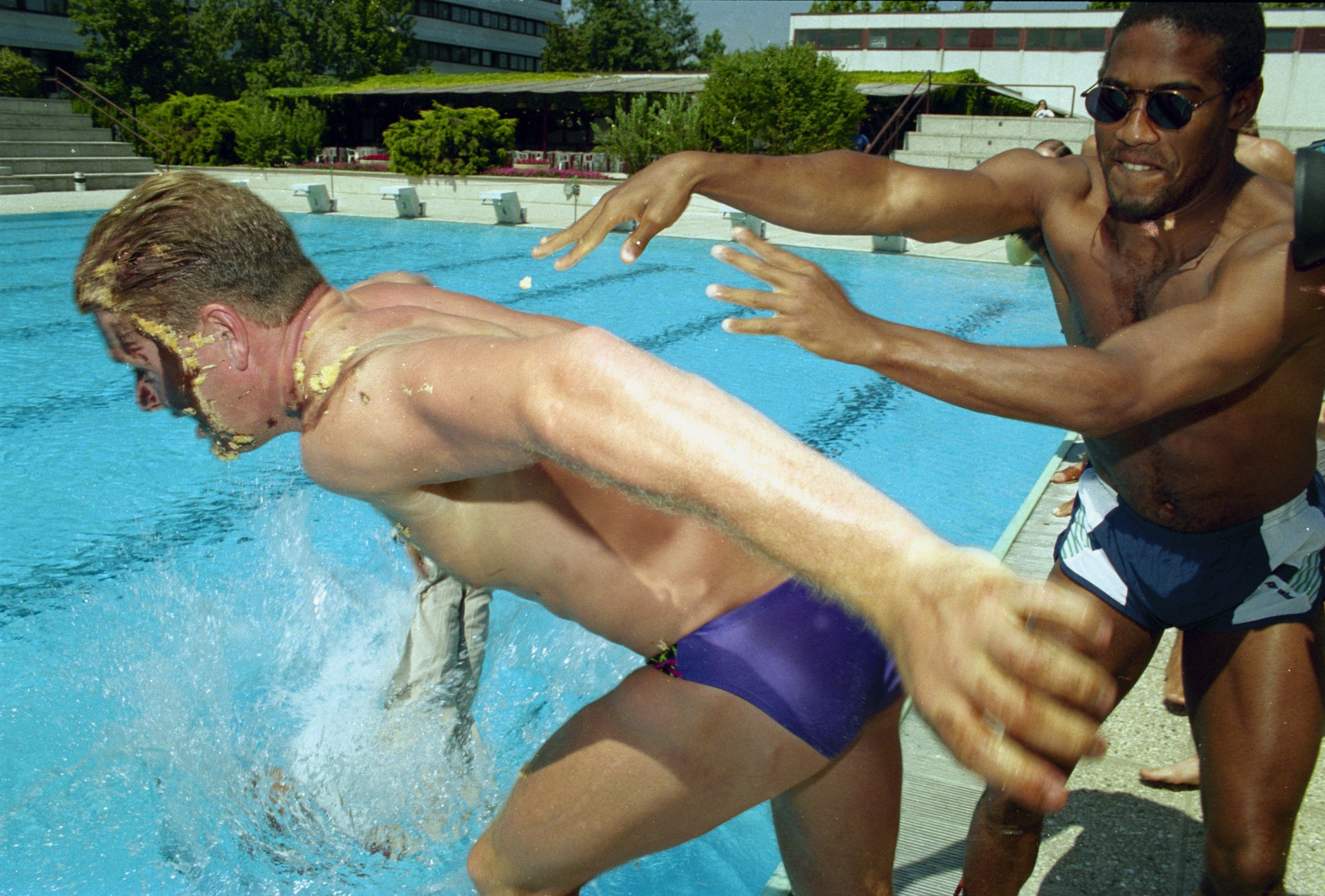
Now called Living Place Hotel on Via Villanova, England’s stay was brief. However that didn’t stop Gascoigne, according to right-back Paul Parker, playing tennis with an American couple the morning of their last-16 encounter. It was also around the pool where the England midfielder terrorised his fellow team-mates with chocolate cake.
The game at the Stadio Renato Dall’Ara almost went the distance to penalties, save for a sublime swivel-and-volley from David Platt that arrowed into the corner of the Belgium goal with just a minute left on the clock.
The Dall’Ara has mostly remained untouched since but remains one of the nicest and well-kept stadiums in the country. Undoubtedly worth a visit, it would play no further role at the tournament after England’s victory, but the Three Lions would, as a quarter-final with Cameroon in Naples awaited.
Naples
Five days after the victory in Emilia-Romagna, England found themselves in Diego Maradona’s backyard of Naples. Robson’s men were up against Cameroon, who had shocked many with their performances at the tournament and in Roger Milla had one of the stars of the competition.
While the squad again flew, fans made the trek south from Bologna or Rimini by train or car, with the journey in 1990 taking around four-and-a-half to five-and-a-half hours whether on rails or wheels.
England again headed out of town, opting for a relaxing stay in the luxurious Hotel Raito on the Amalfi Coast before their tricky game against the Indomitable Lions. The Stadio San Paolo, as it was then known, was and remains a hulk of a structure, with its iron and metallic look giving a menacing appearance from the outside.
Little has changed in that respect, as the stadium, renamed after Maradona following his death in 2020, remains an eyesore from the outside. Yet inside is where the real magic happens, with Napoli fans producing arguably the rawest atmosphere in Italy. You can check out our guide on how to make the most of a trip to Naples.
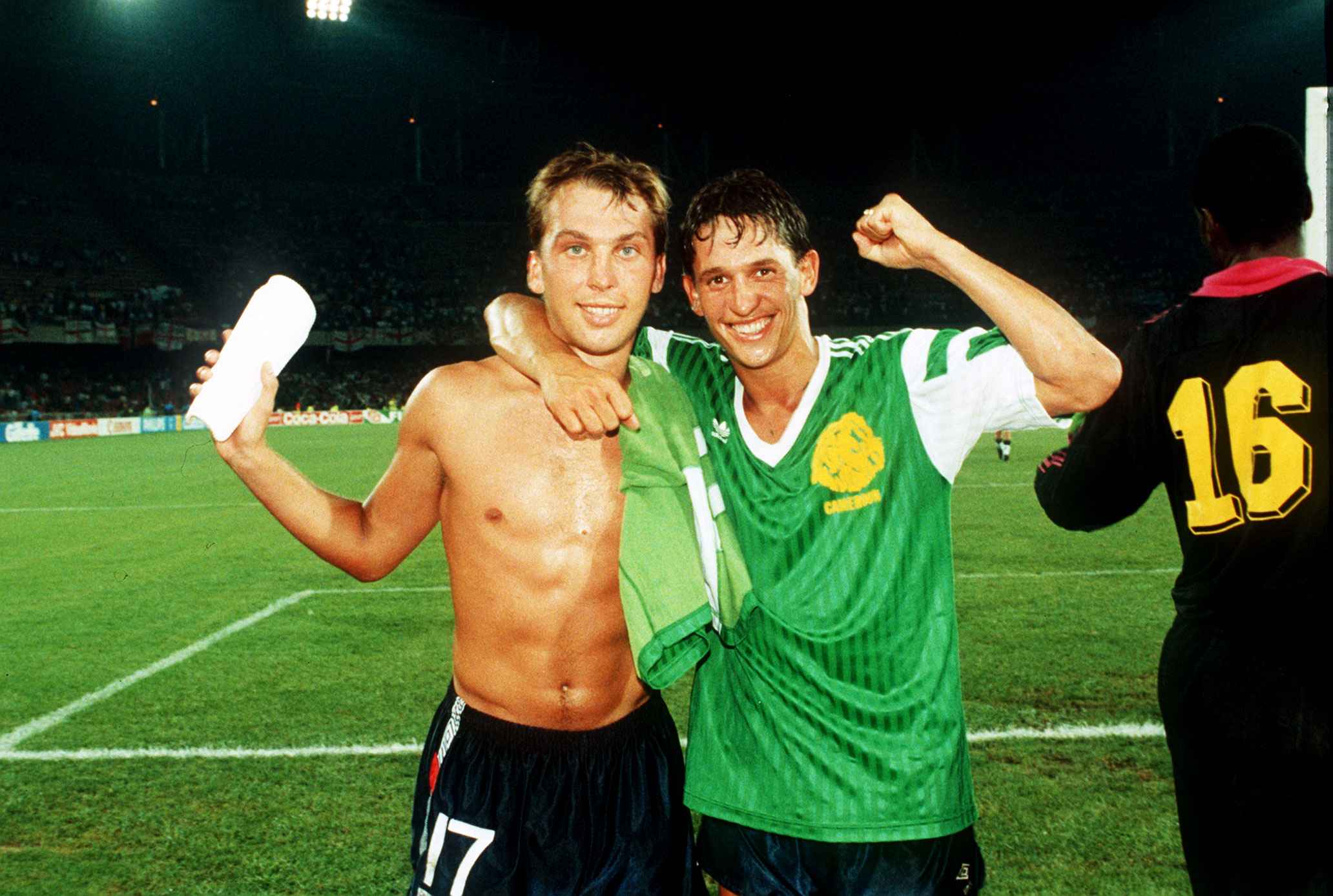
Two goals from Gary Lineker and one from Platt secured passage with a slender triumph over the Africans to set up a semi-final tussle with West Germany in Turin.
Turin
A mere three days after their bruising dance with Cameroon, England made the journey up north for their first World Cup semi-final for 24 years.
For the players, it was a relatively smooth chartered flight up. For fans, it meant a long train or car journey, with travel time in 1990 around nine to 10 hours on an InterCity train, while some made the smart move by booking overnight sleeper trains. There were also a string of orange buses that ferried a portion of English fans up and down the country in those heady summer weeks in 1990.
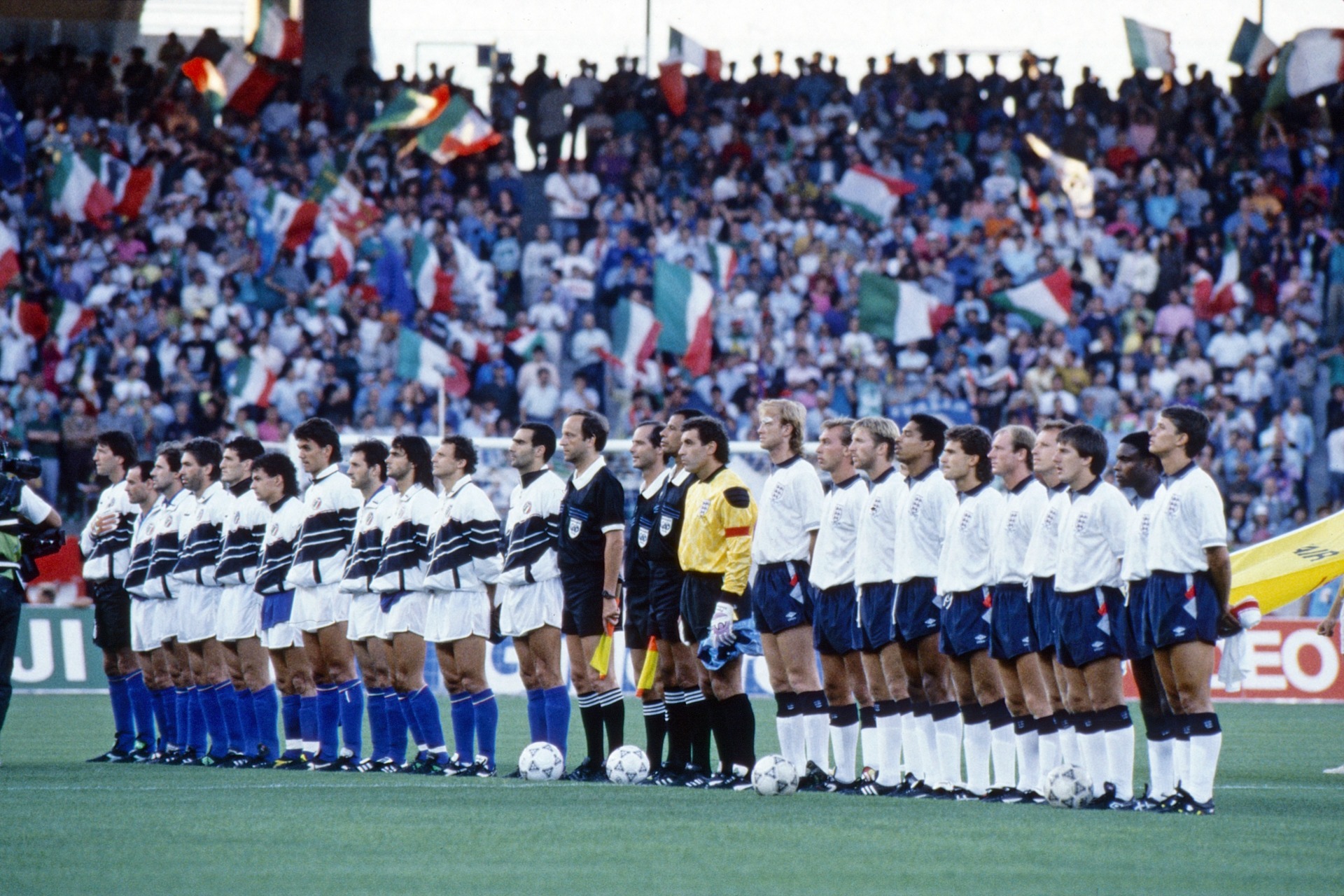
The massive Stadio delle Alpi, one of only two new grounds built for Italia 90, was the setting for one of the most dramatic semi-finals in World Cup history. England would, amid Gazza’s tears, ultimately fall short by losing on penalties.
Gascoigne, however, had made his mark not just on the tournament but on Serie A owners too. Within weeks of England’s return home, rumours intensified that the midfielder would be on his way back to Italy shortly.
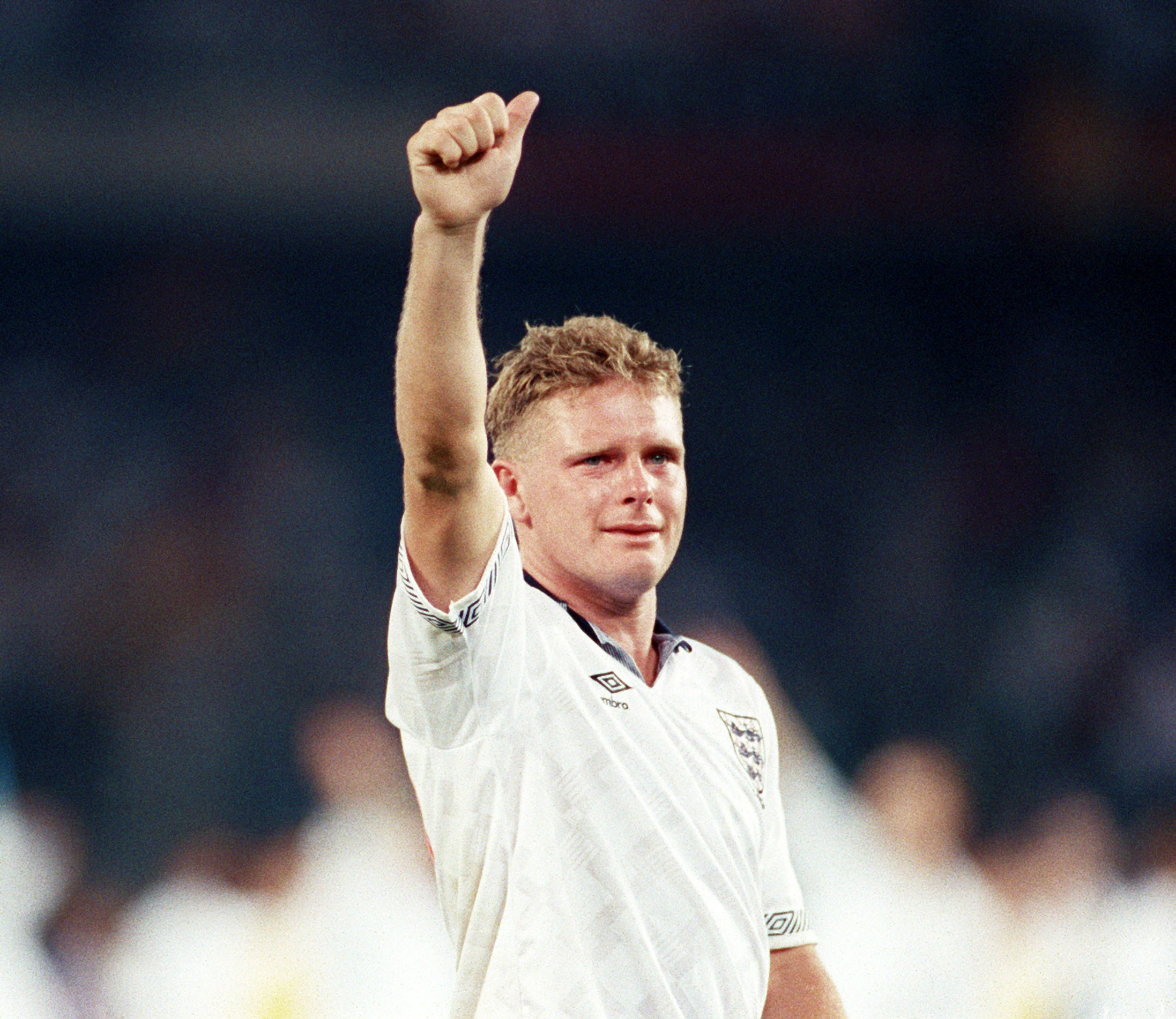
Lazio was the team who offered the most money, and a deal was due to be done in the summer of 1991, only for Gazza to damage his knee in the FA Cup final, postponing the transfer for a year. Yet he eventually did arrive, and inadvertently started a cultural revolution in the UK and Ireland, with Gazzetta Football Italia on Channel 4 born out of his move to Rome.
The Delle Alpi, meanwhile, was loathed from the get-go by Juventus and Torino fans due to its poor sight-lines. It’s shelf life was a mere 16 years, before being torn down and then replaced with the Allianz Stadium in 2011.
Bari
After all the drama, exhaustion and excitement of the preceding three weeks, all that was left for England was the third-place play-off with the hosts in Bari.
Maradona’s Argentina had dumped Italy out of their own World Cup in the other semi-final, and so both countries travelled to Puglia for one final game. England’s last match of the tournament also meant playing in the other stadium built squarely for Italia 90: the opulent, but equally unnecessary, Stadio San Nicola.
For England fans the trek down to Bari from Turin would’ve been a herculean effort in 1990. Most flew home following the West Germany defeat, but for those who made the voyage, a train from northern Italy to the southeast of the country would’ve taken 10 to 12 hours.
England, as ever, took a comfortable flight ahead of what would be the most stress-free game of the competition. Italy would secure the win, with all three goals coming in the final 15 minutes.
Roberto Baggio and Toto Schillaci scored for the hosts, with the latter winning the Golden Boot, while Platt scored his third goal of the competition in a ground he would soon call home. Platt stayed in England one more season before signing for Bari in the summer of 1991, and he would spend four years in Serie A with later spells at Juventus and Sampdoria.
The San Nicola has, unlike the Delle Alpi, stood the test of time, yet it took 24 years for the 58,000-seater stadium to sell out for a single game. Not even the 1991 European Cup final between Marseille and Red Star Belgrade could fill the massive structure.
Today it’s a little rough around the edges, yet still worth a visit to see Renzo Piano’s architectural jewel on the outskirts of the city. Check out our stadium guide on how best to take in a game at the San Nicola.
England returned home to a heroes’ welcome at Luton Airport, their performance helping reconnect the Three Lions with the English public. What followed in the UK was a massive transformation for the domestic game over the next decade, in large part thanks to those four magical weeks at Italia 90.
Related Topics
Related Articles
Related Articles
The calcio itch won't be properly scratched for a few weeks yet, but there are opportunities to watch Italy's top teams in action this summer.
Year on year, one of the biggest teams in the world would descend on a quaint little town of just under 4,000 people.
As another World Cup without Italy reaches its climax, one small slice of the peninsula keeping a close eye on the final.