
The 1990 World Cup remains one of the most cherished memories in the history of Italian football: from the hosts’ matches at the Stadio Olimpico to the Notti Magiche sung by Gianna Nannini and Edoardo Bennato.
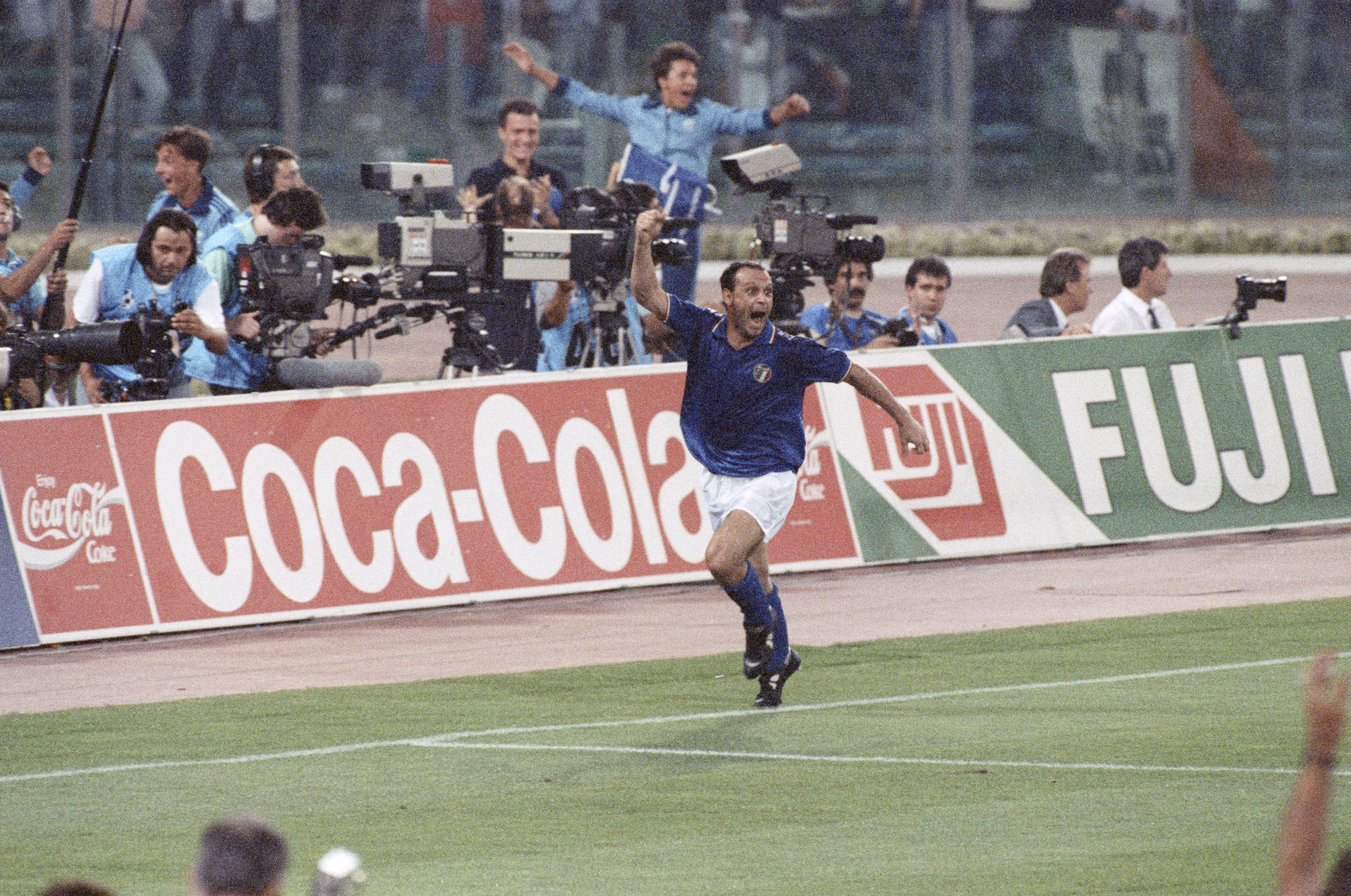
But everyone remembers one figure above all from that summer: wide eyes, arms outstretched, a desperate sprint towards the bench. Salvatore ‘Toto’ Schillaci, the tournament’s top scorer and best player.
His story begins far from the World Cup stadiums. It starts in the south of Italy, in Palermo.
The boy from the CEP
Schillaci was born on December 1 1964 and grew up in the CEP (Centro Espansione Periferica), a working-class neighbourhood on the outskirts of Palermo. It was built in the 1960s as public housing for working families and, marked by poverty but with a strong sense of community, it is where Schillaci learned to play.
His football academy was the street, his first club was AMAT Palermo. “I started at 11,” he told the Giornale di Sicilia on his 50th birthday. “I’d pick up my bag, load it on my shoulder and walk from the CEP. Football was my only thought.” Before the ball paid his way, he repaired tyres. He gave himself a deadline: make it in football, or go back to the workshop.
Soon, the fate of his story was sealed at age 17 in a negotiation that stayed with him forever. Palermo wanted him but the numbers didn’t add up.
“The president of AMAT’s football team asked Palermo for 35 million lire (about £15,000). The Rosanero offered 28 million (£12,000). Nothing came of it,” Schillaci recalled. “I went to Messina. For 7m lire, I didn’t sign for Palermo.”
The biggest cost was the city’s greatest footballing son would never wear their colours. Over time, he made peace with that sliding door.
“I believe everyone has a destiny. If I’d gone to Palermo, maybe I wouldn’t have had this career. Perhaps it was better this way,” he said.
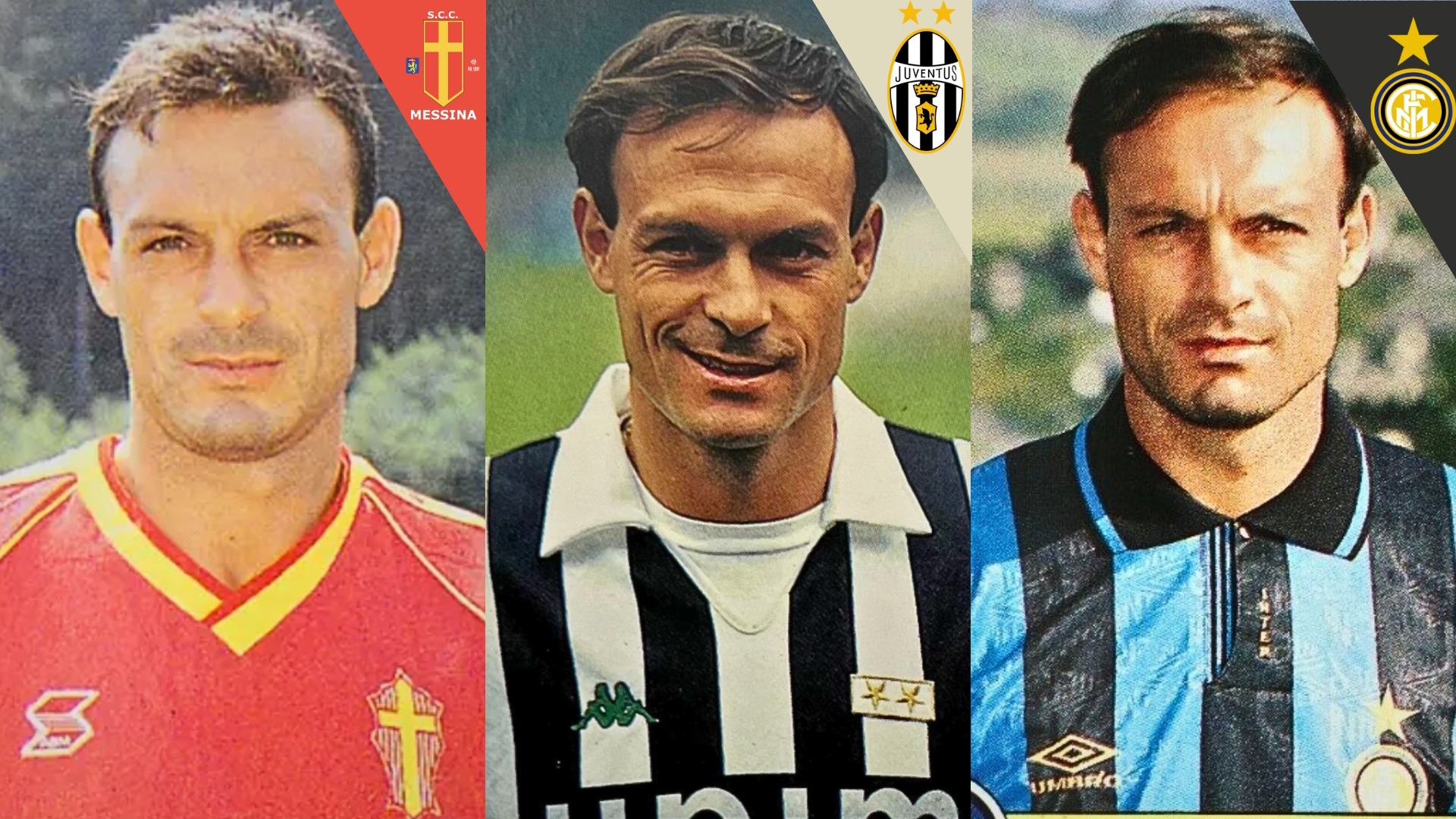
And it was on the other side of Sicily that the climb began. Seven seasons at Messina, leading them from Serie C2 to Serie B. In 1988-89 he was the Serie B top scorer with 23 goals, and earned a move to Juventus. Fifteen Serie A goals, a Coppa Italia and a UEFA Cup later, Italy coach Azeglio Vicini called him up for the World Cup. He had one cap to his name when Italia 90 kicked off. He thought he was going as a tourist.
Magic Nights
What happened over the following six weeks is one of the purest fairytales football has produced. In Italy’s first game against Austria, at Rome’s Stadio Olimpico, the match was deadlocked when Vicini sent him on. Three minutes later he headed home the winner. “The goal against Austria stays in my mind – he ran over to hug me,” team-mate Beppe Bergomi would recall more than 30 years later, at Schillaci’s funeral. “He was the hero of us all. He was giving us a dream.”
From that moment, Italy couldn’t do without him. He scored against Czechoslovakia to close out the group, blasted past Uruguay in the last 16, sank Ireland in the quarter-finals. Four goals at the Olimpico, and an entire country had learned to recognise those eyes before it even knew his name. “The goal against Austria gave me the launchpad,” he would say. “Wherever I go, they never show me in a club shirt, always the national team’s.”
Then the fairytale moved to Naples, to the San Paolo, and crossed paths with another football god – Diego Maradona. Schillaci scored there too, in the semi-final, but Argentina went through on penalties. One final act remained, the third-place match in Bari. His penalty decided the 2-1 win over England, his sixth goal, the one that crowned him top scorer and the tournament’s best player. That December, he finished second in the Ballon d’Or, behind Lothar Matthaus.
And yet, by his own account, the goals were only half the story. “I don’t think it was just scoring those goals that gave me this popularity, but the bond that grew with the people; my spontaneity, the expression in my eyes, my being an ordinary, humble, simple person.”
Curiously, he kept nothing from that summer. “I never watch the footage at home and I don’t own any recordings. It’s enough to see myself at every event I go to. Me, my wild eyes, and the Nannini and Bennato song.”
Palermo’s love
The post-World Cup years were a downhill run of injuries, difficult seasons at Juventus and Inter and a final Italy cap in 1991.
In 1994 he became the first big Italian name to move to Japan, joining Jubilo Iwata. “I’ve always loved travelling; playing abroad fascinated me. I opened the era of Italian players overseas,” he recalled. “I lived for four years in Hamamatsu, in the countryside, far from the chaos. The Japanese are precise, warm, respectful: I discovered a new way of living and eating.”
There he won the J. League in 1997, before injury ended everything. After that, he went home. And he stayed.
“Everyone asks me, ‘why didn’t you stay in the north or in Japan?'” he told the Giornale di Sicilia. “I tell them I’m in love with Palermo, with my city. I’ve travelled the world and I’ve never seen a city like it for monuments, climate and so much more. I came back for my family’s affection, the warmth of the people.”
This is the paradox that makes the man irresistible: the player who made all of Italy fall in love spent his whole life chasing the love of his own city, without ever wearing its shirt. He was close again on his return from Japan, offering to play for free, but no one took him up on it. “I would have loved to finish at Palermo. It would have been the cherry on the cake of my career.”
What remains?
Schillaci died in Palermo on September 18 2024, aged 59, after a long illness. “Dad was a lion, a rock,” his daughter Jessica told Repubblica. “Until July he lived exactly the same life as always, he went to work despite the terminal diagnosis and the chemotherapy.”
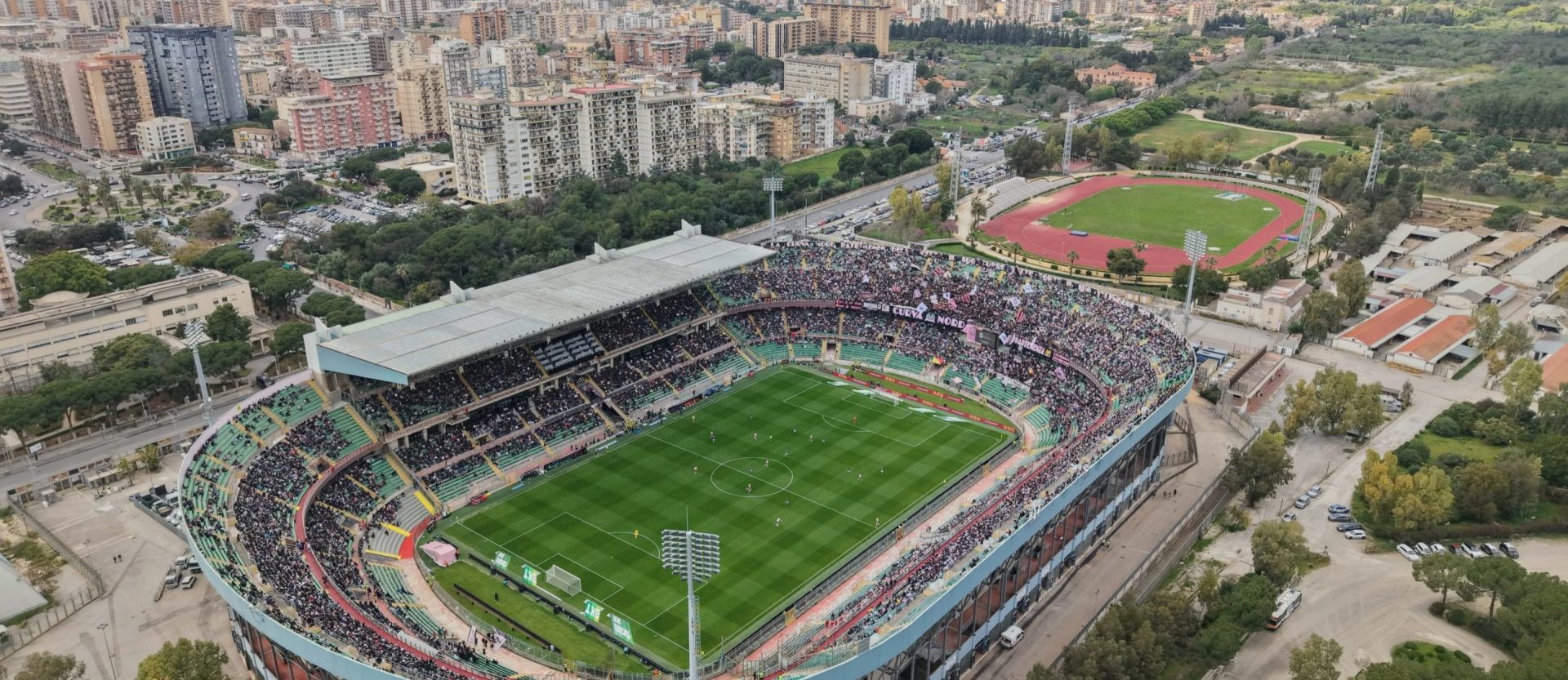
The city held his wake at the Stadio Renzo Barbera with his number 19 Azzurri shirt on the coffin. The funeral cortege crossed the CEP and passed his father’s house. Even in death, he did a lap of his neighbourhood. On the coffin, alongside the Italy and Palermo shirts, lay a Messina scarf: the city on the Strait declared a day of mourning for his funeral. “Toto is a son of Palermo, but loved across all of Sicily.”
The Palermitani commemorated him at the stadium where he never played. Three days after his death, before the kick-off at Palermo vs Cesena, the Curva Nord unveiled a giant No 19 Italy shirt beneath the banner ‘Toto, hero of the magic nights, farewell’. As the notes of Notti Magiche rang out, the whole stadium stood still; then, on the 19th minute, a long round of applause broke out and his name echoed around the ground.
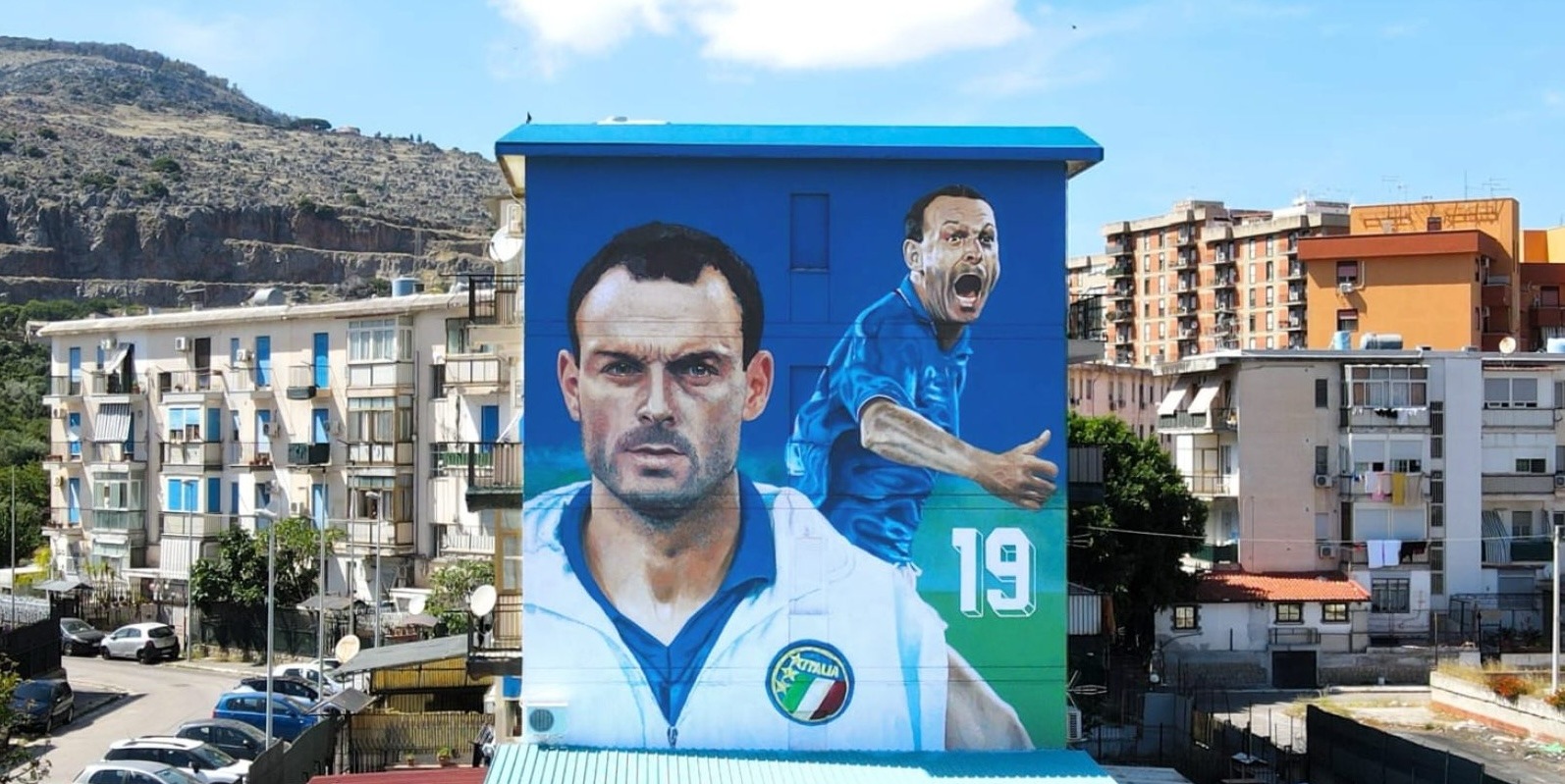
Today, Sicily offers a genuine Schillaci trail. In June 2025 a mural by artist Igor Scalisi Palminteri was unveiled in the CEP, overlooking the pitch where he kicked his first ball. On the first anniversary of his death came a second, ‘Yume: a dream for Palermo’ by Andrea Sposari. Yume is the Japanese word for dream, a nod to his Iwata years. On the other side of the island, his old Messina team-mates are campaigning for the Stadio Celeste, the theatre of his first goals, to bear his name.
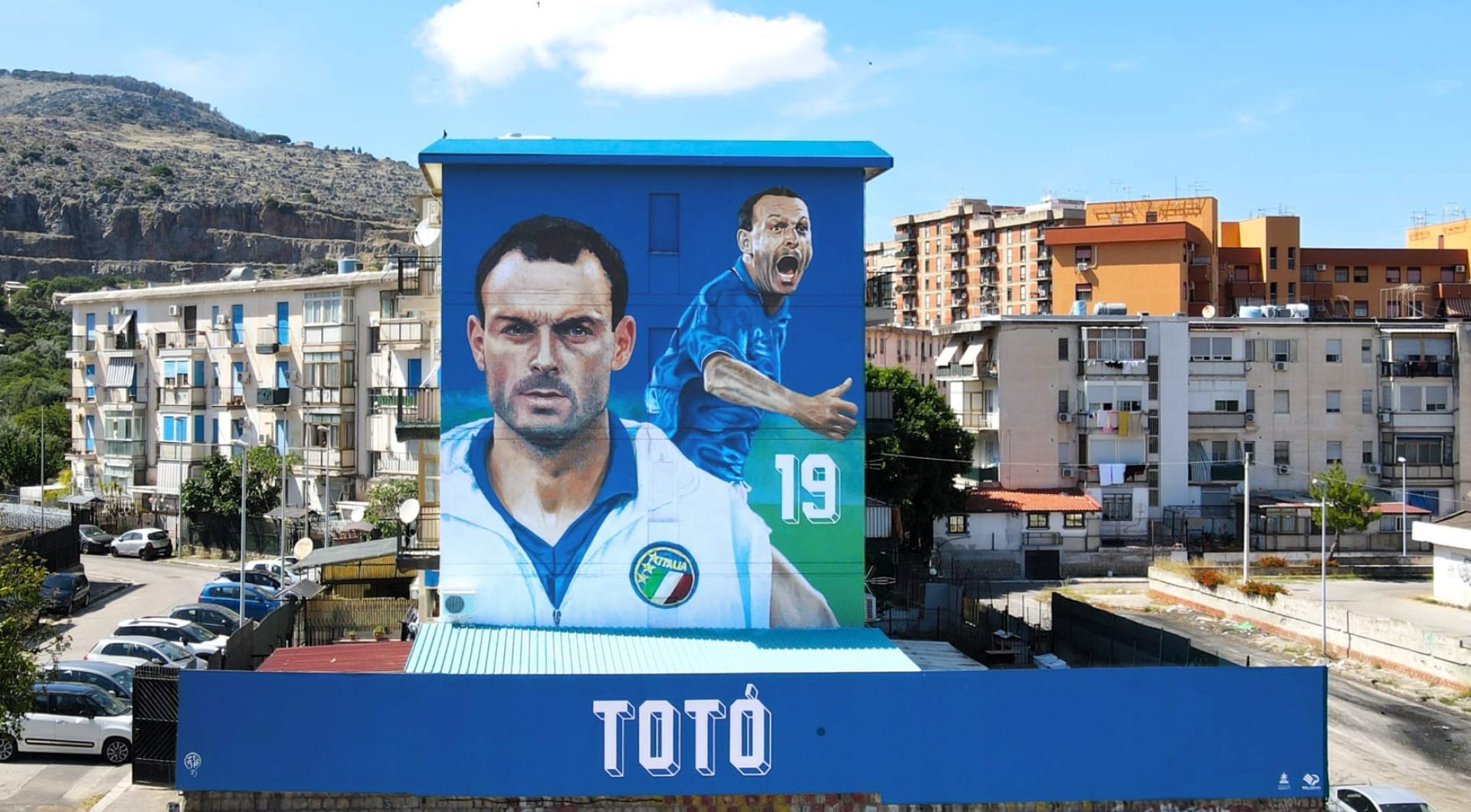
At 50, sitting in front of the pitch of his childhood, he was asked whether he still had a dream. His answer, today, sounds like a prophecy fulfilled: “I’d love to launch young players, to work at a big club, Palermo or anyone else. And I’d love for my name never to be forgotten.”
While the World Cup plays out on the other side of the ocean without the Azzurri, there is no fear of that, Toto: nobody has forgotten you.
Related Topics
Related Articles
Related Articles
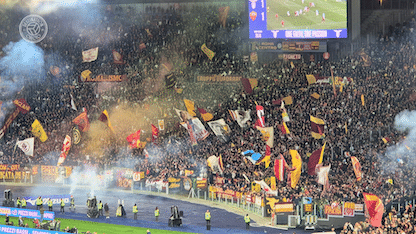
Up and down the country, each stadium is unique and every single one has its own charm. This is our top nine.
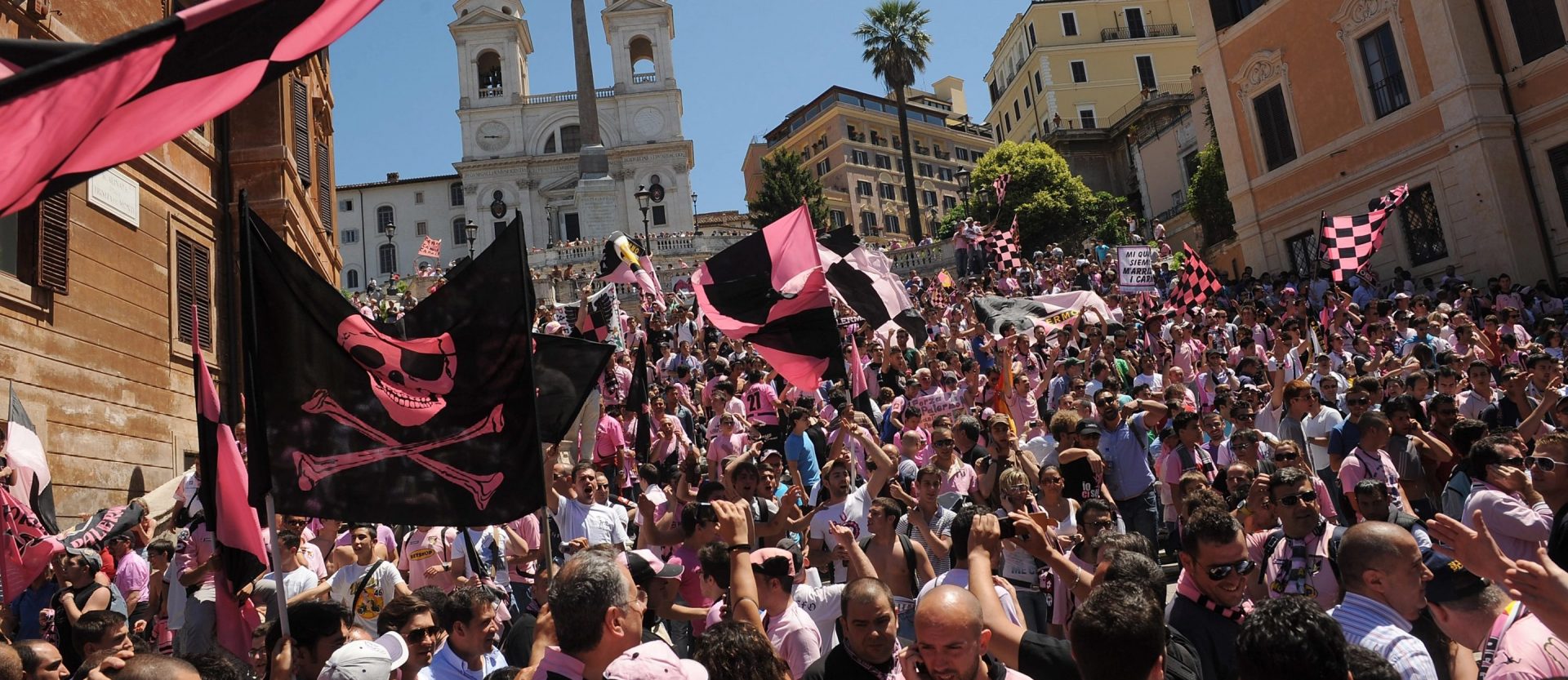
It is a long, long time since Sicily had three teams strutting their stuff in the top flight of Italian football.
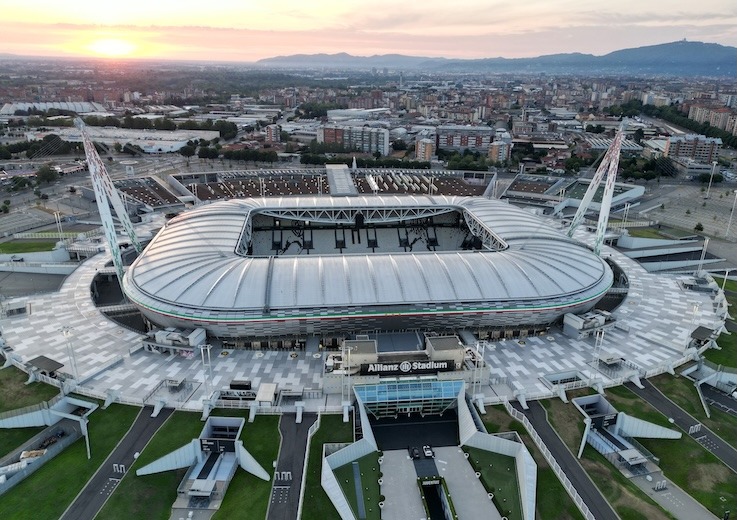
Some of the biggest grounds in the country must be replaced or renovated before the European Championship kicks off.