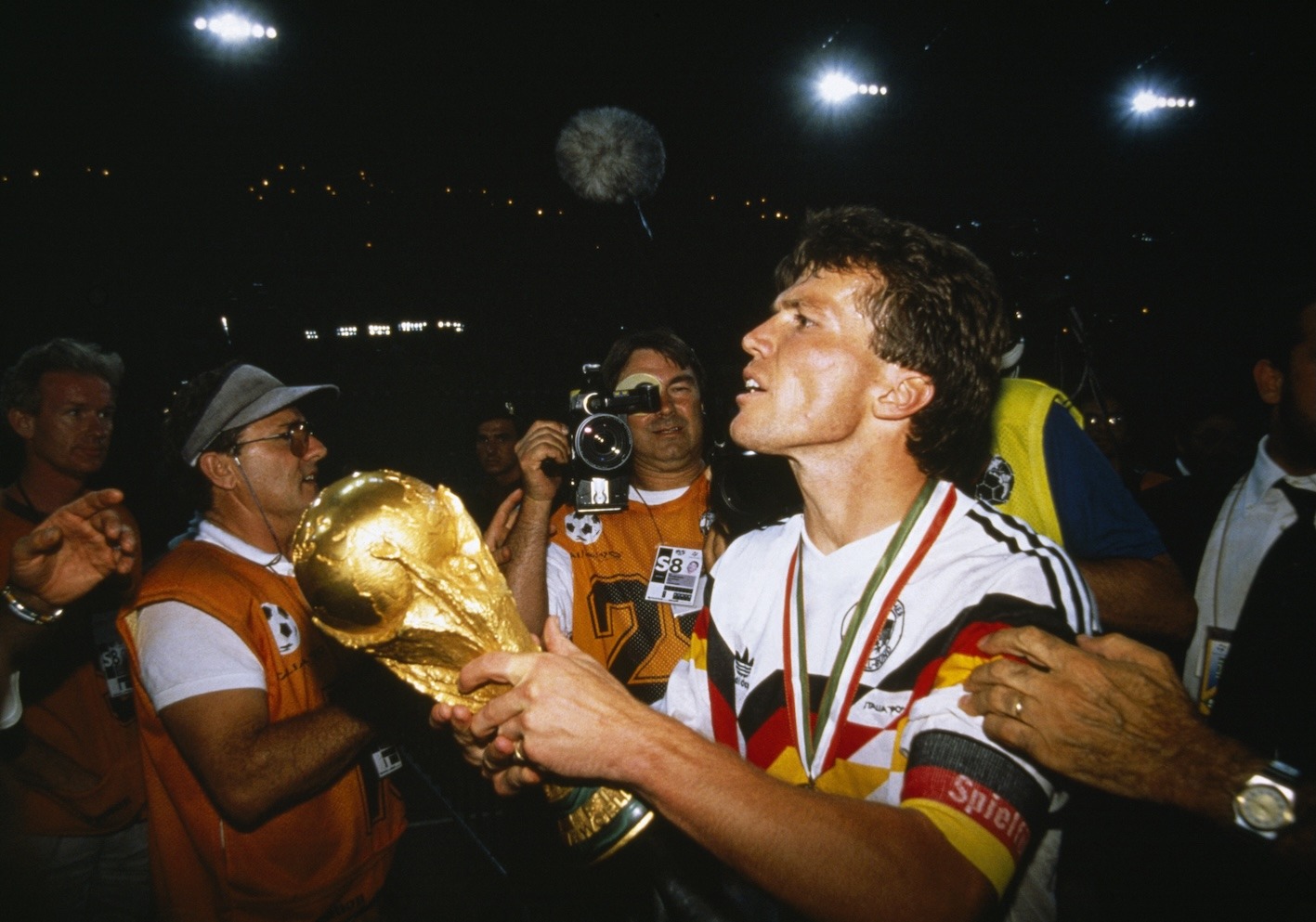
Ask Lothar Matthaus where home is, and he won’t point to Erlangen, or to Munich. He’ll look toward a sporting cathedral on the western edge of Milan.
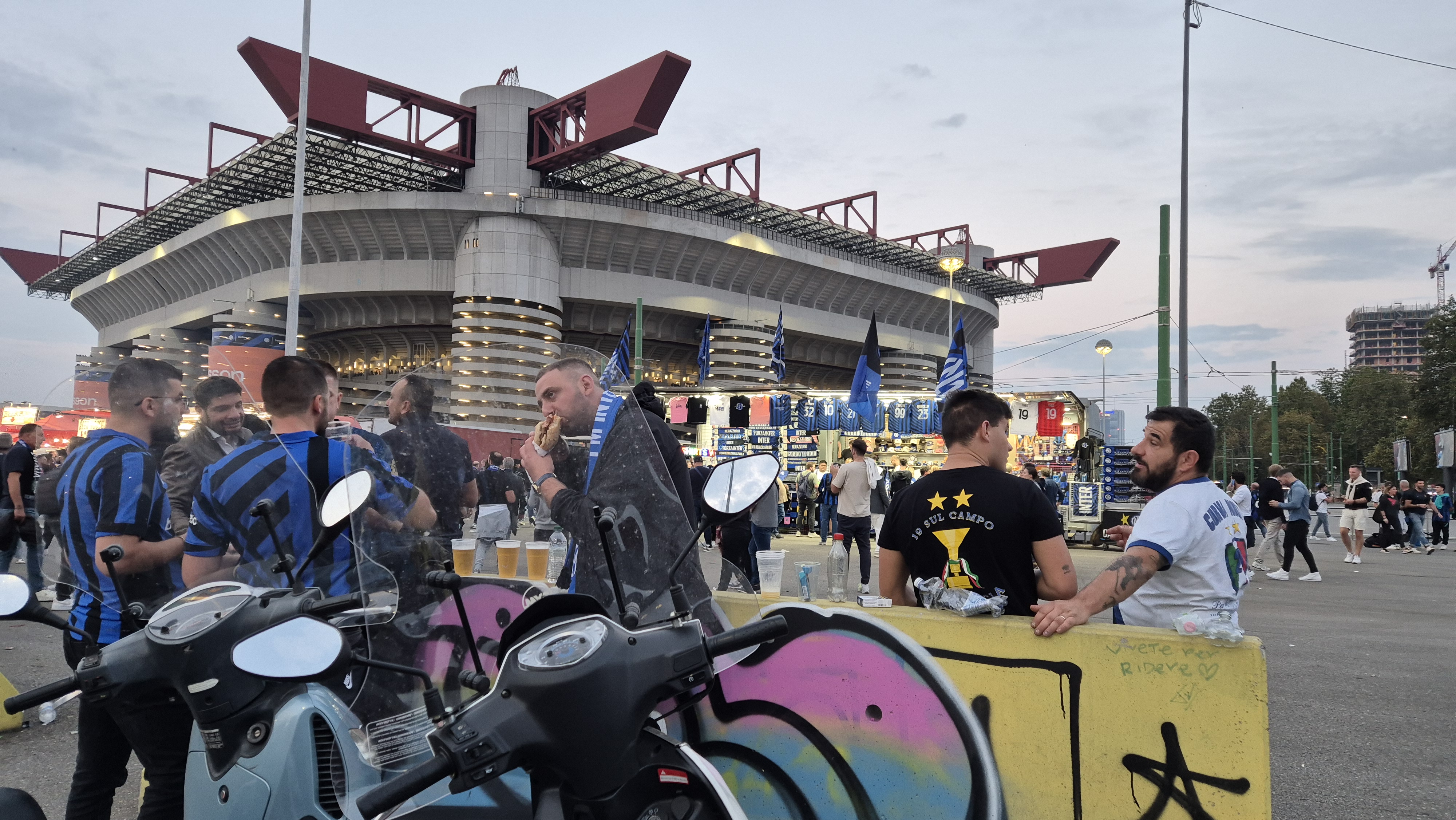
“San Siro was my living room, like Wimbledon for Boris Becker,” he told Bayern Munich’s official website last year. And you need only climb one of San Siro’s 11 spiral ramps, watching them screw their way up into the sky, to understand what he means.
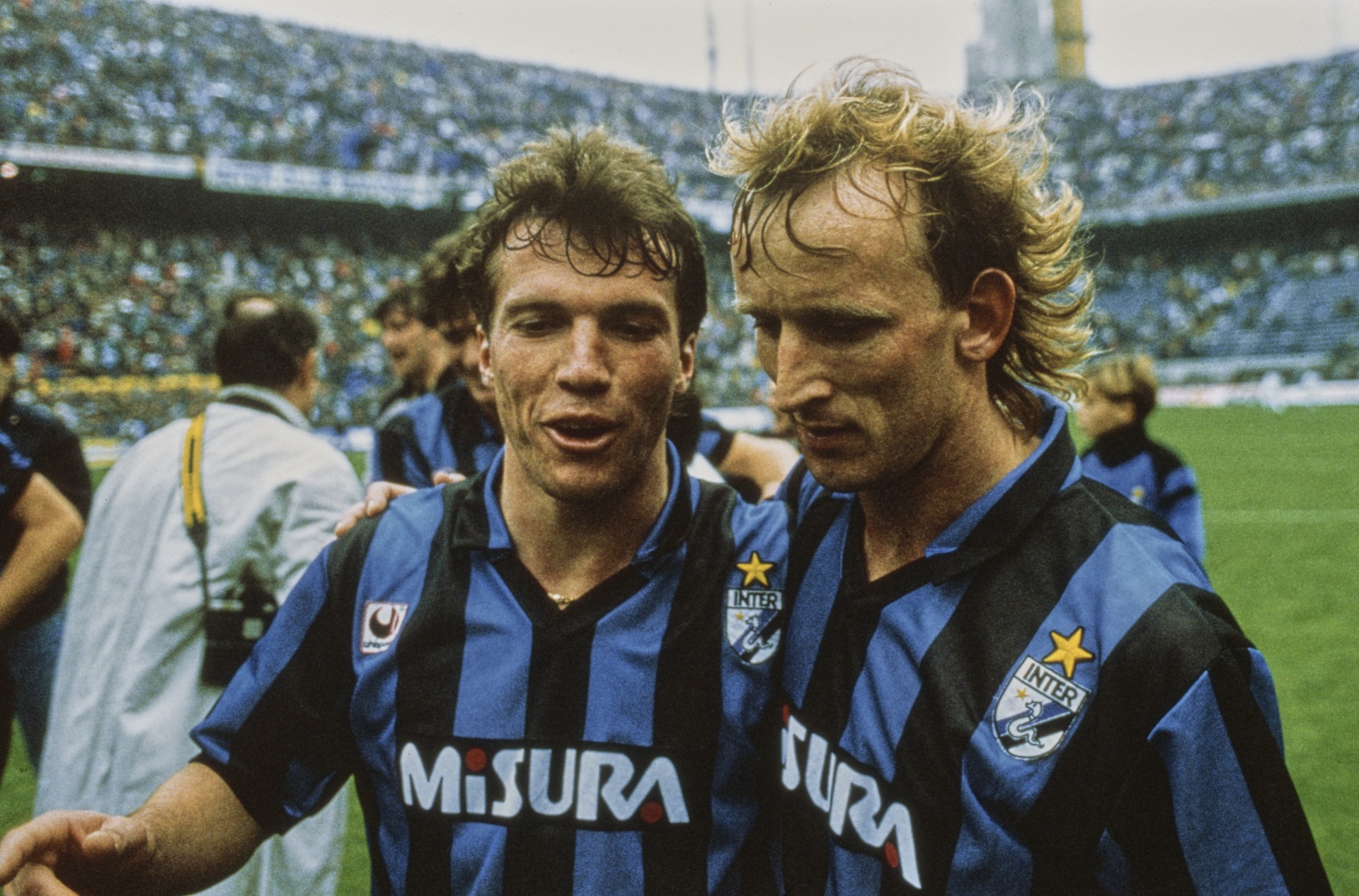
It’s a strange thing for a German to say about an Italian ground, but then everything about Inter’s German years was a little weird, and a little wonderful. For four seasons, between 1988 and 1992, the Nerazzurri ran on a Bavarian engine, with three world champions and all three, in their own way, fell for the city that adopted them.
When Inter spoke German
The German colony was a deliberate creation. Ernesto Pellegrini, the catering magnate who had taken over Inter in 1984, was an avowed Germanophile. He had already brought Hansi Muller and Karl-Heinz Rummenigge to the Nerazzurri before assembling the side that would make every Inter supporter fall in love. In the summer of 1988 he prised Andreas Brehme and Matthaus from Bayern Munich together, then a year later Jurgen Klinsmann arrived from Stuttgart to complete the picture.
“German was spoken at Inter, and we were adored,” Brehme recalled in an old interview with the German outlet SPOX. Across the Naviglio, Milan had their Dutch trio of Ruud Gullit, Marco van Basten and Frank Rijkaard. For a few seasons the San Siro turnstiles fed two of the finest teams Europe has ever housed under one roof.
Football arrived first, and it arrived hard. In Matthaus’ debut season, Giovanni Trapattoni’s Inter won the scudetto dei record: 58 points in an era when a win was worth two, just 19 goals conceded, a title sealed on a scorching May night at San Siro against Diego Maradona’s Napoli, with a Matthaus free-kick. “I’m happy, happy. This scudetto is worth more than the three I won at Bayern,” he told reporters that evening in May 1989, mixing his languages in excitement.
Trapattoni had known how to win him over. “You’re not (Michel) Platini or Maradona, but I need you to win.” That was how Matthaus remembered the coach’s words, recounting them to La Gazzetta dello Sport last year. And, true to character, he repaid the faith and the flattery in goals.
The capital of football
What lifts this story beyond the trophy count is how quickly the city got under their skin. “Thank God, Milan is the capital of football again,” Matthaus declared to the Italian press after just two rounds of his first campaign.
San Siro became the fixed point of his Milanese life: sold out every weekend, he said, whether for the league, a European night or a special meeting with Napoli and Maradona. The 1991 UEFA Cup, Inter’s first European trophy since 1965, was lifted right there, in front of a full house, in a German-tinged final against Roma.
“I always played to win; ours was an exceptional team,” he told Inter’s official channels for his 60th birthday in 2021. The fans, he has always insisted, were the 12th man.
The Italian-German World Cup
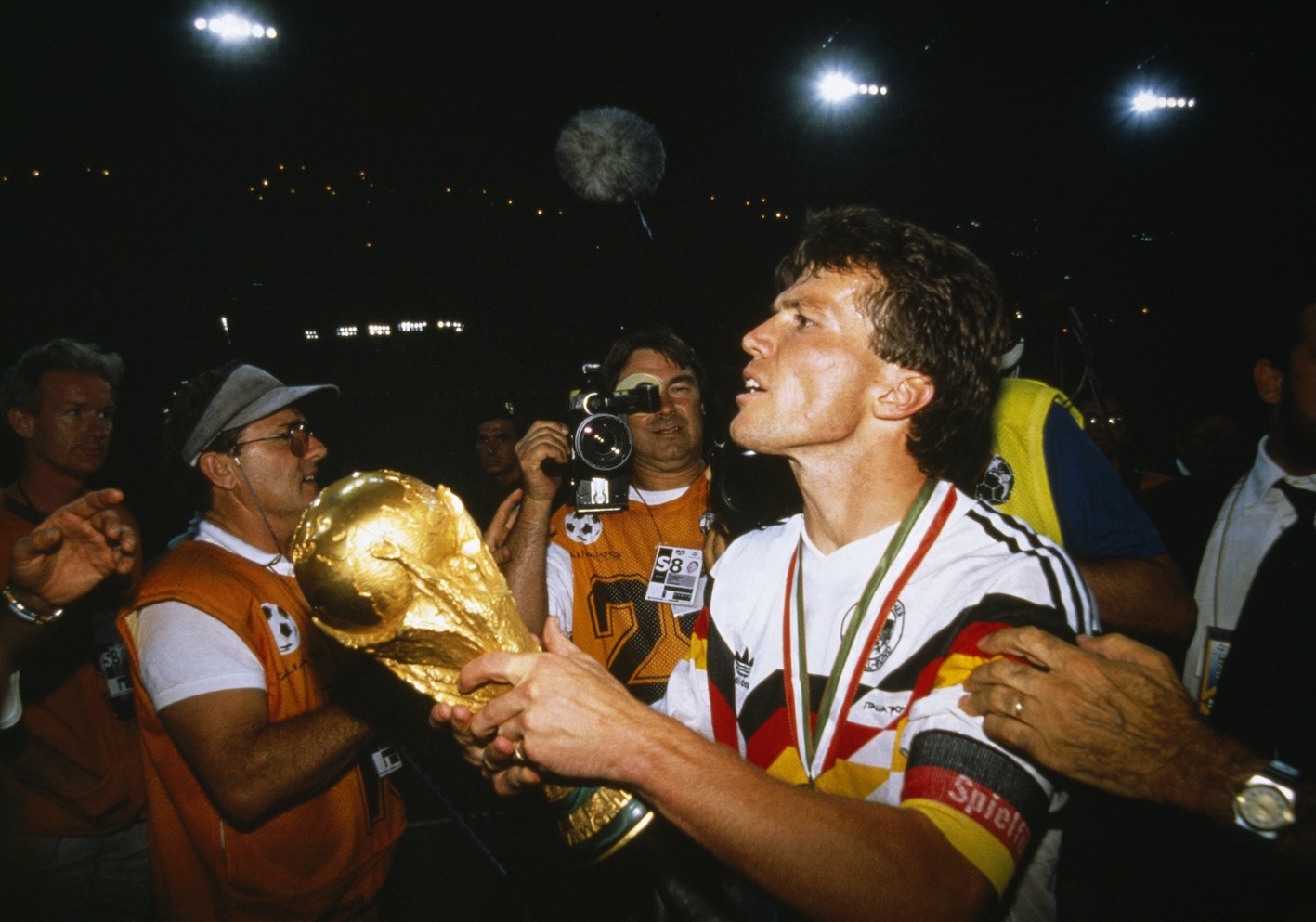
Then, in 1990, it was the World Cup that came to them. Italia 90 turned San Siro into a German living room in the most literal sense. West Germany played five matches at the Meazza on their march to the title, and three of the men in that classic white kit with the flag design across the chest – Matthaus, Brehme and Klinsmann – were simply going to work in their own backyard.
Matthaus has described his San Siro match against Yugoslavia, in the group stage, as among the finest performances he ever delivered for the national team.
And on June 24, the Meazza staged the match that still stirs the Milanesi. West Germany against the Netherlands, the round of 16 – but really Inter against Milan in disguise. On one side, the three Nerazzurri Germans, on the other, the Rossoneri’s Dutch trio. A contest so full of San Siro regulars that the locals watched what felt like a Derby della Madonnina played out in national shirts, and many in the papers described it as the World Cup’s true final.
The match was the stuff of legend: Rijkaard spat at Rudi Voller, the two were sent off together, and the night tilted Germany’s way. Klinsmann produced his best performance of the tournament, he and Brehme scored, Ronald Koeman pulled one back from the penalty spot, and West Germany won 2-1 in the stadium that three of them called home every other Sunday.
For Klinsmann the whole thing was uncanny in its familiarity. San Siro, he told FIFA, was simply “my Italian living room.”
It ended in Rome, on the warm night of July 8, with Brehme stroking a penalty low beyond Sergio Goycochea, handing West Germany the title.
The Milan that outlasted the football
Events on the pitch made up only half the story. Away from San Siro there was another Milan to learn: the aperitivo hour, the weekend escapes to the glittering bowl of Lake Como, the easy elegance of a city then at the peak of its self-confidence. The football would fade, Trapattoni left, the team aged, the German experiment closed in 1992, but the affection did not.
Klinsmann put it best of all. “I remember everything about my time in Milan, and it’s all good,” he reflected, in words gathered by Ultimo Uomo in its history of Inter’s Germans. “From you I learned that life is, above all, about encounters and bonds. I was swept away by the way people treated me in my years at Inter.
“When I tried to speak Italian, they’d draw a single word out of me and build a whole sentence around it. They had incredible patience. I learned to take people as they are. In three years, what I learned stayed inside me, and from then on I was able to go anywhere. It was kind of a university of life.”
Brehme, the quietest of the three, was the one who kept coming back the longest. He learned the language, returned again and again, eventually bought a place on Lake Garda and would take the train from Munich just to sit with old Italian friends. When he died, in 2024, the title of his autobiography – From Barmbek to San Siro – told you where his heart had settled.
Visit San Siro before it’s too late
An elegy hangs over all of this now. San Siro’s future is uncertain. For years there have been plans for a sweeping redevelopment of the old Meazza, even demolition to make way for a new stadium on the same site.
So go, while the old stands are still there. Climb the ramps until you see them turn. Seek out those steep, narrow tiers that, the captain swore, could make a player run a step faster. And spare a thought for three Germans who came to win and stayed for love – who arrived speaking German and left fluent in Milanese.
Related Topics
Related Articles
Related Articles
Up and down the country, each stadium is unique and every single one has its own charm. This is our top nine.
As the temperature dips, stadiums around Italy come alive with smoke, fog and fireworks cutting through the frosty air.
Some of the biggest grounds in the country must be replaced or renovated before the European Championship kicks off.