
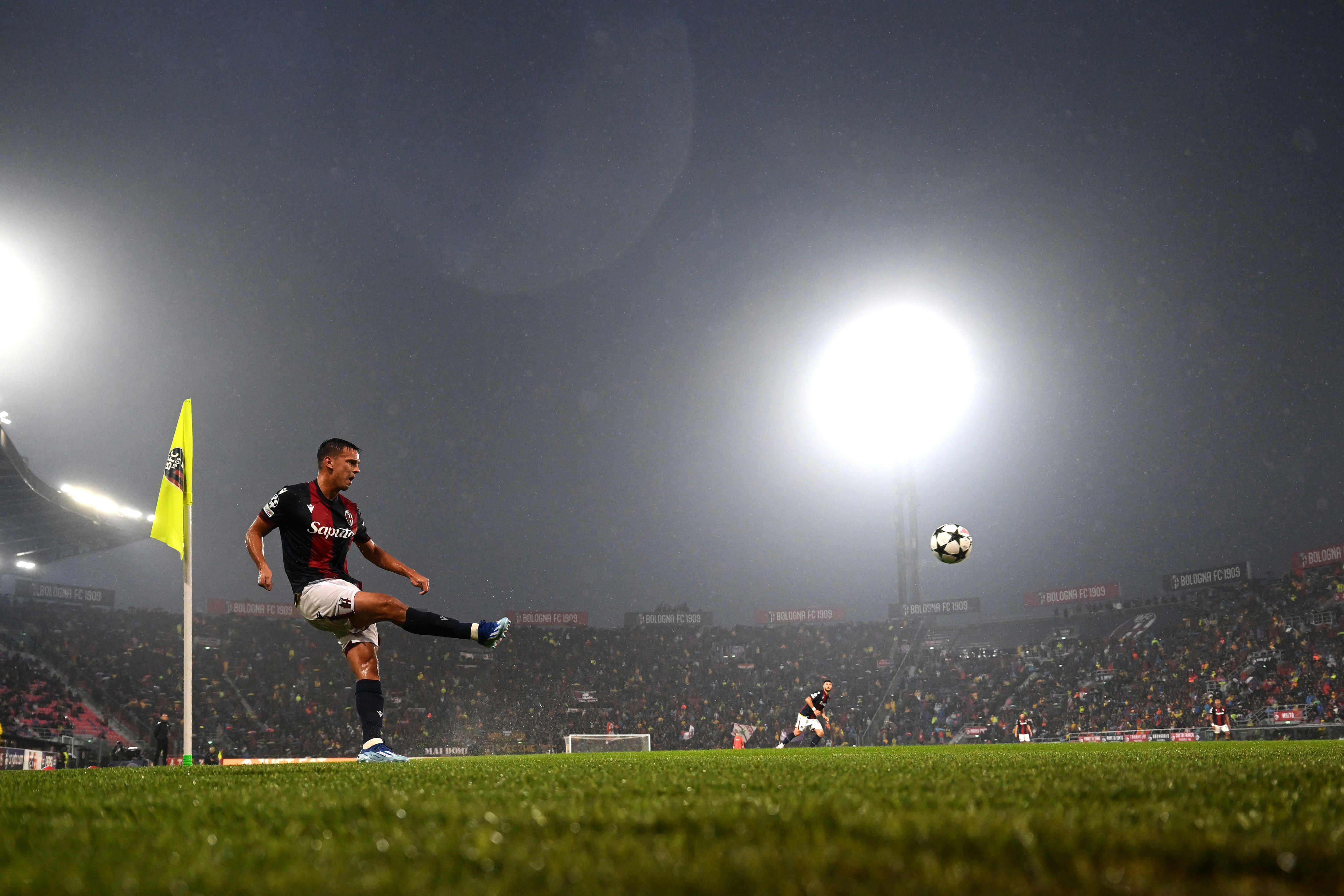
The 1929-30 season was a pivotal time for Italian football as its top flight adopted the format that has remained in use ever since, while the division first took on the denomination of Serie A.
Two years later, calcio celebrated another milestone as Bologna and Casale became the first Serie A teams to play a fixture under the floodlights when they met at the former’s Stadio Littoriale for the 33rd round of the season on June 5, with the Rossoblu winning 4-2.
Bologna and Casale had been here before. Almost exactly two years earlier they had met at the same venue in a friendly, with proceeds raised for the Mount Grappa Monumental Cemetery.
And just a month before their league meeting in 1932, Bologna had hosted Olympique Antibes, beating the French side 3-0 under the floodlights.
The inspiration behind the Rossoblu’s new-found taste for night games? A successful tour of South America three years earlier along with Torino, the team they had just pipped to the Scudetto.
Bologna won the first leg of the inaugural Divisione Nazionale final 3-1, but lost the return in Turin 1-0. With goals on aggregate still a distant concept, the two teams met in a winner-takes-all decider in Rome, where the Rossoblu sealed the title courtesy of a 1-0 win.
Four days later, Bologna and Torino boarded the Conte Rosso steamer and headed to South America. Awaiting them, a punishing schedule that would take the Rossoblu from Rio de Janeiro to Sao Paulo and Montevideo, then Buenos Aires, La Plata and Santa Fe, before heading back to Brazil.
The main takeaway from the tour? The prospect of playing football under the floodlights, which were already installed at the old Velez Sarsfield Stadium in Villa Luro and would be fitted at the Estadio Centenario in Montevideo within three years.
Opened in May 1927, the Stadio Littoriale followed suit with floodlights installed in 1930, barely 12 months after the stadium had been completed with the unveiling of the Torre di Maratona. Measuring 42 metres, it was topped by a flagpole adorned with a Winged Victory.
Renamed Stadio Comunale after World War II and Stadio Renato Dall’Ara in 1983 in memory of the former club president who oversaw five Scudetti in three decades, Bologna’s home ground has witnessed its fair share of glorious nights under the lights – none more so than during their exhilarating run to the semi-final of the UEFA Cup in 1999.
Real Betis and Lyon were dispatched at the Dall’Ara and Bologna were four minutes away from reaching their first European final before Laurent Blanc equalised from the spot as Marseille broke Rossoblu’s hearts.

With Bologna set to move a new ground by the 2031-32 season, the clock to take in a night game at the Dall’Ara. Bologna are at home four times under the floodlights from early December into January, as they host Roma on December 4 and welcome Juventus and Genoa on January 3 and January 9, respectively. There’a a Coppa Italia clash with Palermo to look forward to on December 15.
Tickets are available to buy on the club website or at authorised Vivaticket selling points through the city. They normally go on sale about a week in advance but check the club website, especially for the bigger fixtures, which are likely to be in high demand and where access is limited to fidelity card holders. You can purchase Bologna’s We Are One card for €10 plus shipping on the club website.
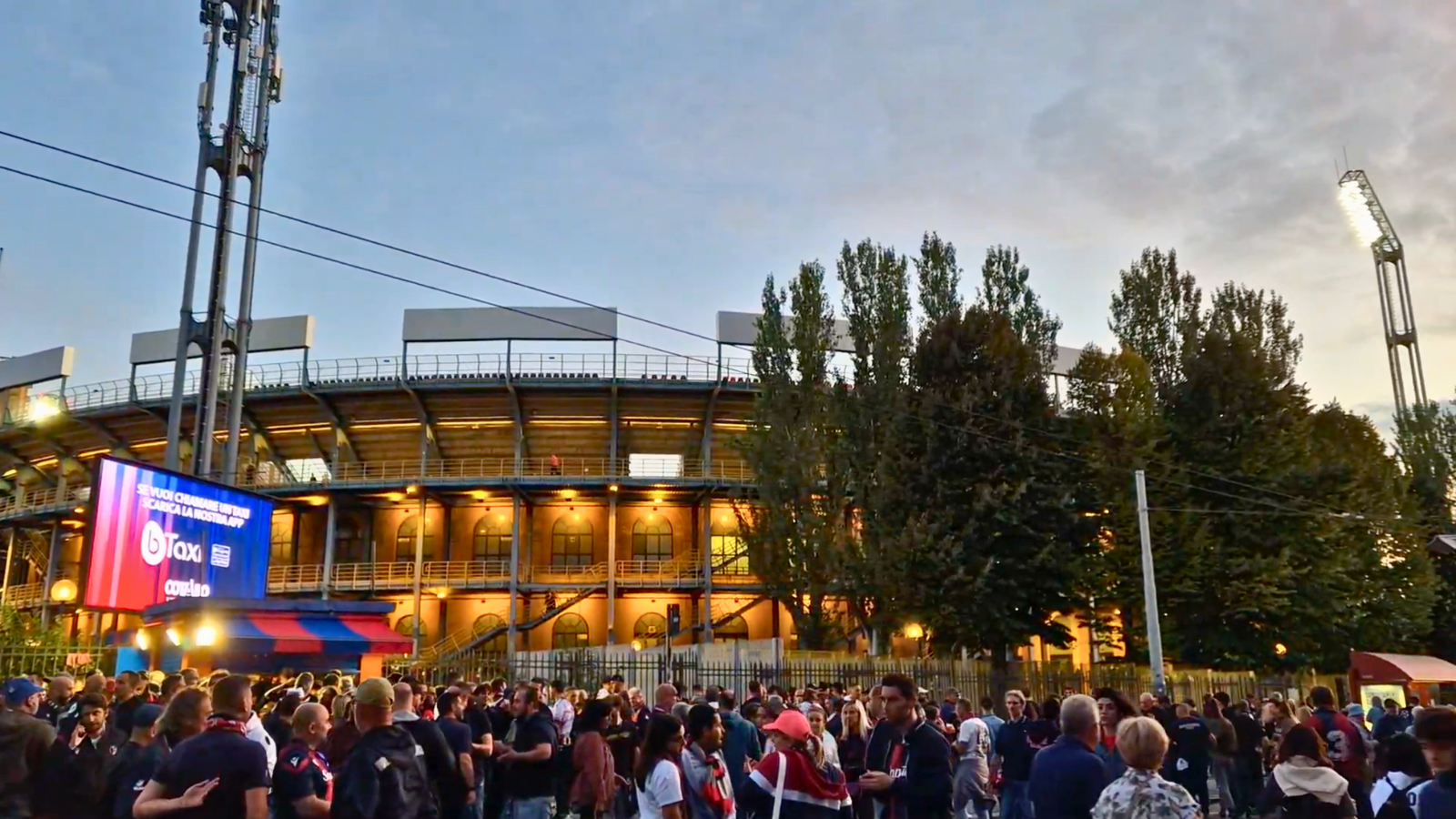
One of the oldest stadiums in Italy, the Dall’Ara is unique in both shape and colour. Entirely exposed to the elements on three sides, it does not have a running track but the two curvas aren’t directly behind the goal, while its red bricks make it instantly recognisable.
And despite its rather unusual shape, Bologna’s home ground can generate a magnificent atmosphere, particularly at night when the Curva Nord comes into its own.
But what makes the Dall’Ara really special is the walk to the ground, undoubtedly one of a kind in the country. Bologna is home to the world’s longest porticoes and the San Luca Porticoes take you all the way from the centre of town to the Dall’Ara, before continuing on towards the Colle della Guardia. So special are they, the porticoes and the Maratona Tower feature on all three kits this season to mark 100 years of the stadium.
Walking to the ground is an experience at any stage of the campaign, but even more so for an evening kick-off in winter. As the sun sets, Bologna’s red-bricked buildings take on a special kind of glow, while the old town comes to life with bars and traditional osteries steadily filling up. Dim lights, with the windows almost entirely steamed up from the crowd inside and a few brave souls sat outside under the heaters. This may not be the weather for an Aperol Spritz, but it’s the ideal setting for a glass of traditional red wine with some warm tigelle – small, round flatbreads typical of Emilia-Romagna, normally served with cheese or charcuterie boards.
You really don’t need Google Maps here, just walk from Piazza Maggiore in the general direction of the ground and watch as the number of people wearing Rossoblu scarves over their winter coats grows steadily, from one bar to the next.
Then take the view in as you approach the Dall’Ara glistening under the floodlights in the crisp winter air. The clock on this particular view is ticking.
Related Topics
Related Articles
Related Articles
Some of the biggest grounds in the country must be replaced or renovated before the European Championship kicks off.
Club football may be on hold when the international breaks kick in but that doesn't mean calcio trips have to be put on the back burner.
From the Roman Empire to the Renaissance to the modern day, Italy can often seem like a living museum.