
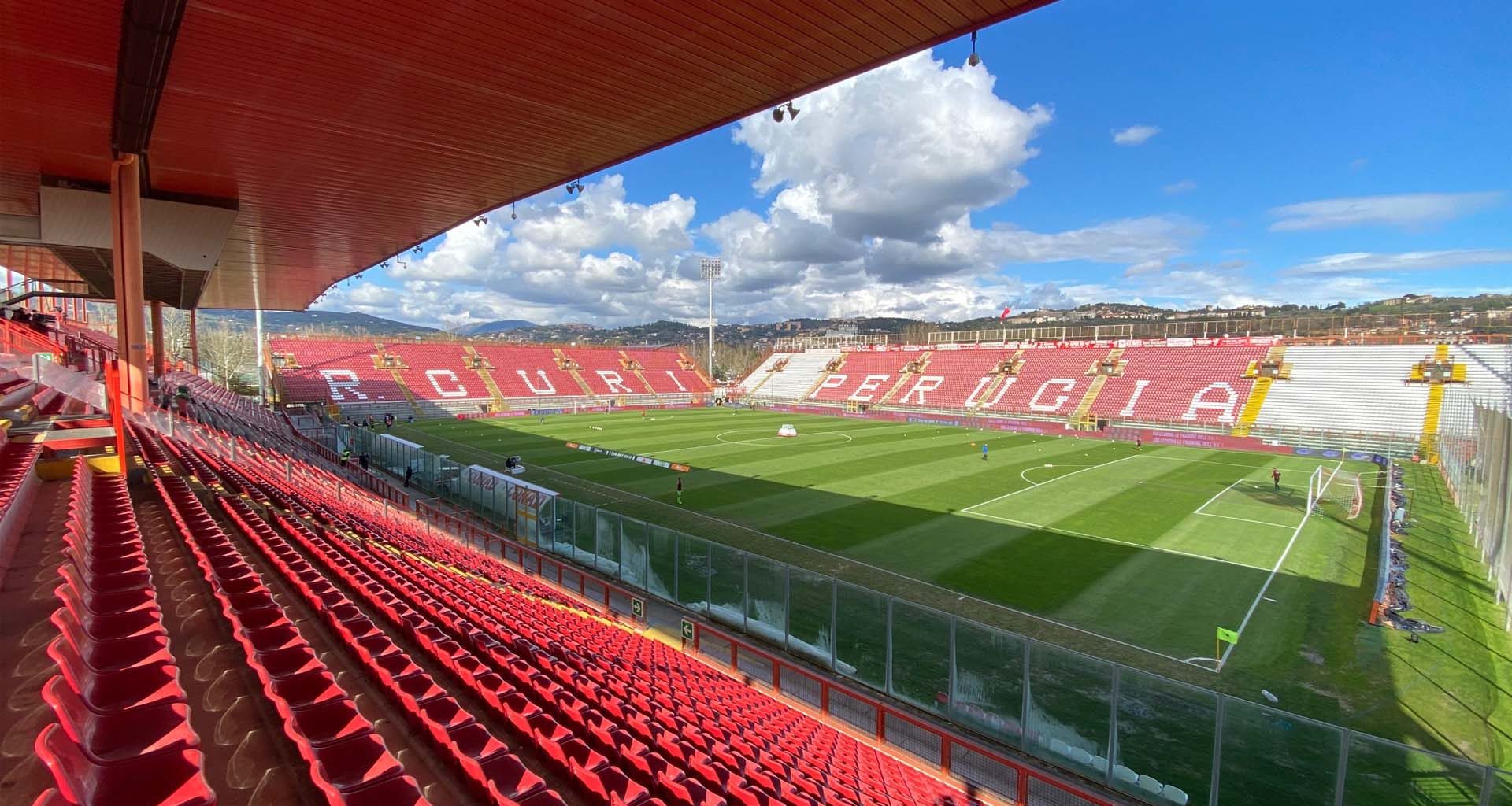
Perugia sits on a hill in the middle of Umbria, and most visitors spend their time in the old town at the top.
The football happens further down, on the flat ground of Pian di Massiano, where the Stadio Renato Curi has stood since 1975.
The ground was built in a hurry. Perugia had just won promotion to Serie A for the first time, and the old Stadio Santa Giuliana, near the city centre, was too small for the top flight. Work started on May 15, 1975 and the stadium opened on October 5 with a goalless draw against Milan, in front of a crowd reported at around 35,000.
It was first called the Stadio Comunale di Pian di Massiano. Two years later it took the name of the player the city still remembers above all others.
Here is everything you need to know.
What Makes It Special?
The name. Renato Curi was born in Montefiore dell’Aso, in the Marche, in 1953 and arrived in Perugia in 1974. He became the engine of Ilario Castagner’s midfield, part of the side Italians still call the Perugia dei Miracoli.
On May 16, 1976, on the final day of the season, he scored the only goal against Juventus. Juve lost the title, and it went to Torino. On October 30, 1977, Juventus came back to Perugia. The match was played in heavy rain, and early in the second half Curi collapsed on the pitch after a cardiac arrest. He was 24.
On November 26, 1977 the stadium was renamed in his honour. The team he left behind went through the 1978-79 Serie A season unbeaten and finished second behind Milan, with an average home crowd of almost 21,000. The south end was only added in November 1979, in time for a UEFA Cup tie against Aris Thessaloniki.
Until then, the ground was open on one side, with a small terrace of eight steps for away fans. The structure itself is worth a look. It was built with prefabricated steel and concrete, and the red steelwork against the grey-white concrete picks up the club’s colours.
Over the years, the Curi has hosted the Italy national team and a Mass celebrated by Pope John Paul II in 1986. It also has a small place in refereeing history: on August 29, 2014, Perugia against Bologna was the first Italian professional match to use vanishing spray.
How To Get There
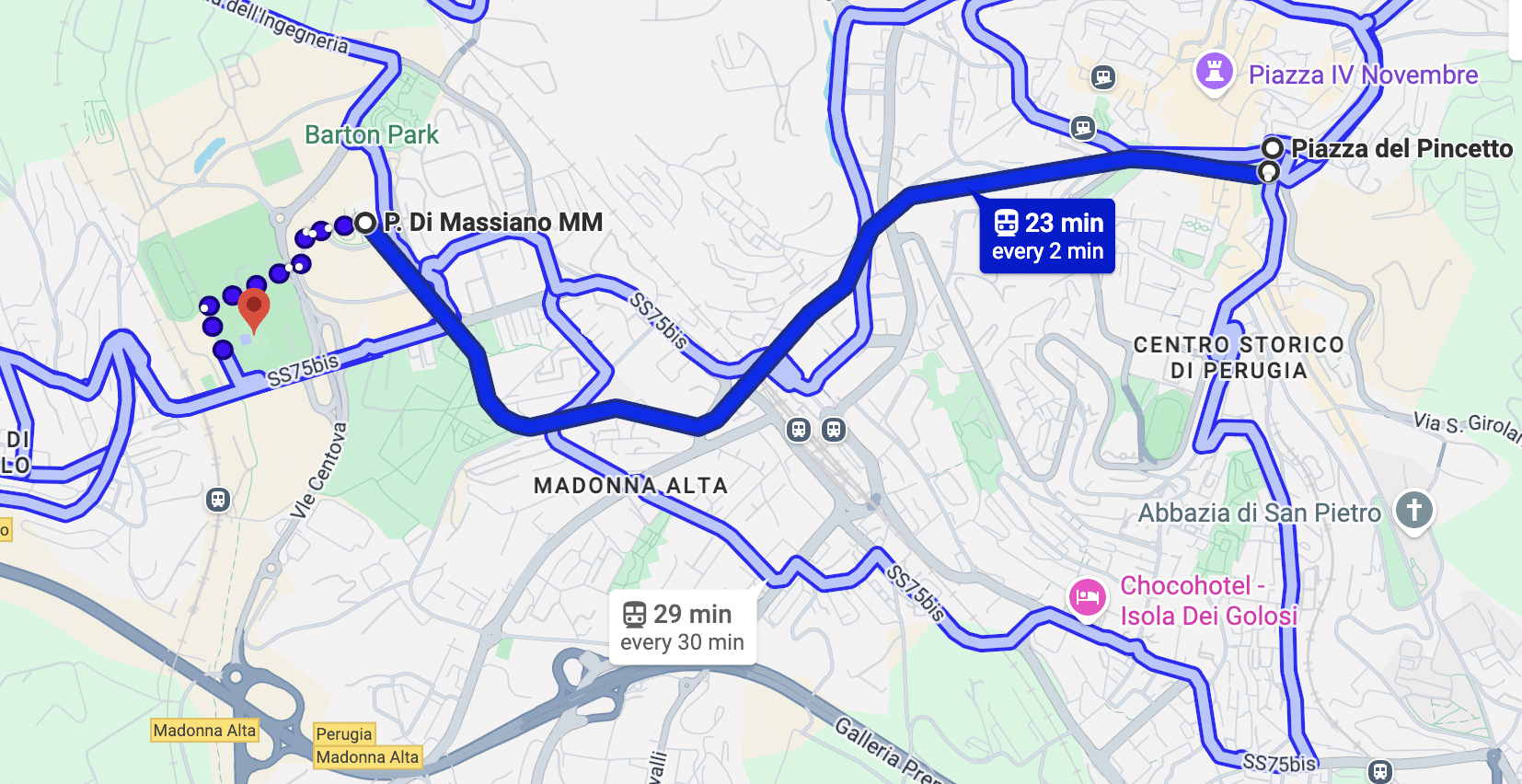
The easiest way is the Minimetrò, Perugia’s small automated cable railway. Pian di Massiano is the first station on the line, right by the stadium, and the line runs up through Fontivegge, next to the main railway station, to Pincetto on the edge of the historic centre. Trains run every few minutes. If you are driving, there is a large car park at Pian di Massiano, which also serves as the Minimetrò park-and-ride.
Map
Neighbourhood Tips
Start at the Museo del Grifo, the club museum. It is in an old farmhouse on the Pian di Massiano site, the only building left from before the stadium was built, and it is also home to the club offices.
For lunch, Il Ritrovo del Grifo on Viale Franco d’Attoma is a family-run seafood restaurant a few minutes’ walk from the ground. The name tells you who eats there on matchdays. Portions are generous, but you will still want more. For a glass of wine and a pizza Perugina before kick-off, Bar Fratelli Mattioli on Via Frà Giovanni da Pian di Carpine is a friendly local spot, about 10 minutes’ walk away. The Percorso Verde park next to the stadium is a good place to stretch your legs while you wait.
Need To Know
The Curi has an official capacity of 23,625, but the stadium is in the middle of a long renovation, so not every sector is open. The Gradinata, the long uncovered stand on the east side, was closed in January 2023 and reopened in September 2026 with new steps, new turnstiles and around 6000 seats. Work then moved to the Curva Nord, the home end and the heart of the Curi’s atmosphere. It closed in October 2026 for a roof to be put on, with completion expected in spring 2027. While the work continues, the home ultras have moved to the Gradinata. Away fans are housed in the Curva Sud, in the section closest to the Tribuna.
Tickets
Tickets are sold through AC Perugia Calcio’s official website and authorised outlets. Away supporters should check the sales restrictions for each match before travelling.
Related Topics
Related Articles
Related Articles
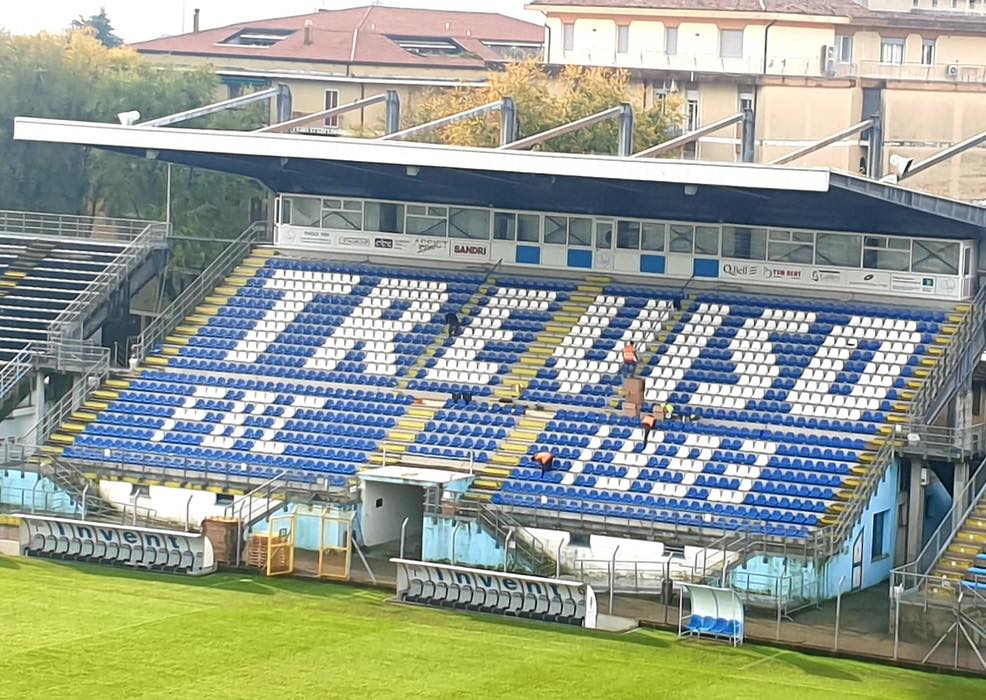
The ground sits just outside the old walls, a short walk from the historic centre, and has been the home of Treviso since 1933.
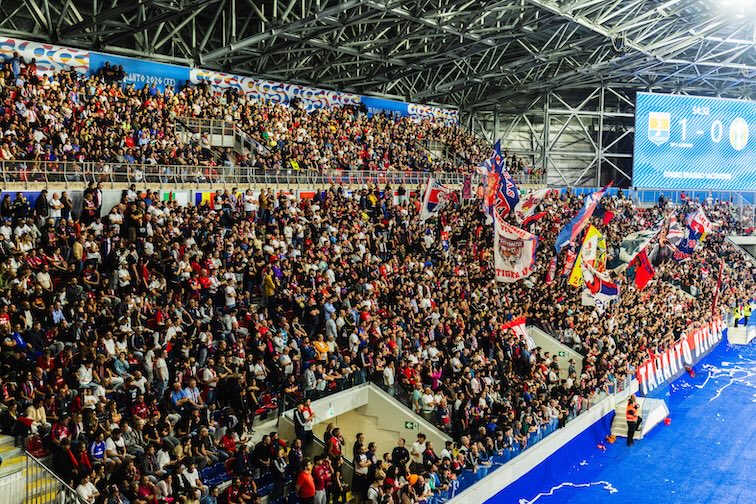
Despite playing in the fifth tier, Taranto now have one of the best grounds in the country, a glistening 20,000-seat arena.
Crotone sits on the Ionian coast of Calabria, and its football ground stands near the old town and the sea.