
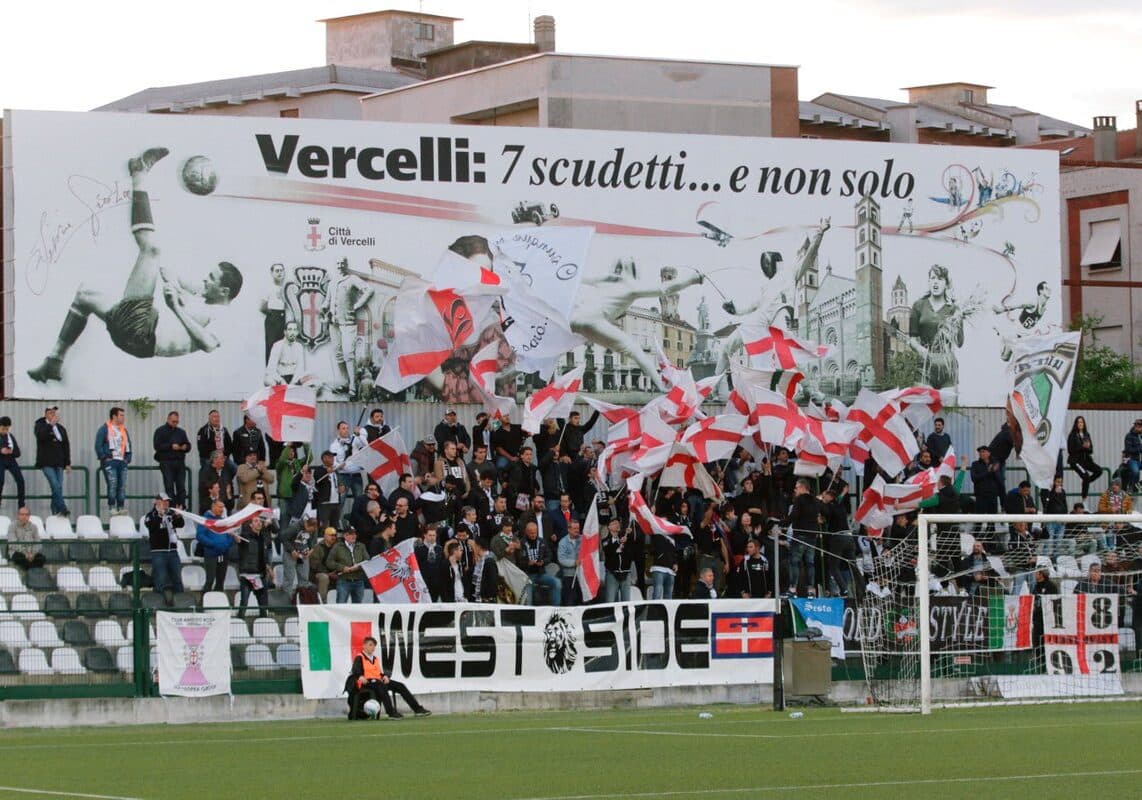
Long before Juventus, Milan or Inter turned football into a national obsession, there was Pro Vercelli.
Seven Scudetti between 1908 and 1922, a place at the heart of the legendary ‘Quadrilatero piemontese’ and a bloodline that stretches all the way to Sao Paulo, Brazil, where a club called Palmeiras still plays in white, green and red because of what happened in Vercelli over a century ago.
Founded in 1892, the club dominated the first two decades of Italian football almost unchallenged. Together with Novara, Casale and Alessandria, it formed the so-called Quadrilatero piemontese, four eastern Piedmont sides that effectively ran the national game before Juventus and the big Milanese clubs took over.
The most remarkable legacy of that era sits eight thousand kilometres away: in 1914, Pro Vercelli and Torino toured Brazil, and a group of Italian immigrants in Sao Paulo, inspired by watching them play, founded their own club and named it Società Sportiva Palestra Italia, later renamed Palmeiras.
The bond was formally revived in 2022-23, with a Pro & Palmeiras Day staged at home and a third kit dedicated to the Verdão, one of Brazil’s biggest and most decorated clubs. Few Serie C sides can claim to be genuinely famous in South America.
The Bianche Casacche play at the Stadio Silvio Piola, a compact 5,500-seat ground where the pitch sits barely 10 metres from the stands and the historic main stand is protected as a national monument.
Vercelli itself is a working provincial capital in the rice-growing plains of eastern Piedmont, built around a walkable historic centre and the Basilica of Sant’Andrea, where football, agriculture and the Via Francigena pilgrim route quietly coexist.
The fiercest fixture on the calendar remains the Derby delle Risaie against Novara, a rivalry running deep enough that the September 2024 meeting ended in multiple Daspo bans.
For anyone who wants to understand where Italian football actually comes from, this is essential.
Where To Stay
The four-star Vercelli Palace Hotel, on Via Tavallini, is just a few minutes from the stadium and works well for visitors travelling by car via the A26. Hotel Matteotti, a family-run three-star near the SS11, is a reliable, simple base close to the centre.
For something with character, the Modo Hotel is often used by away teams and offers a well-reviewed, central alternative at accessible prices.
Where To Eat
No Vercelli trip is complete without panissa, the city’s signature dish made with rice and beans; in traditional kitchens it is still cooked slowly in a copper paiolo, exactly as the old rules demand. Alongside it, look out for bagna cauda, rane fritte (fried frog legs), risotto alla pilota, and Canossa, a richer risotto made with local beans from the Villata and Saluggia countryside.
Ristorante Il Paiolo, on the central Via Garibaldi, is one of the most reliable spots for the real version of panissa, alongside other Piedmontese classics. Ristorante Vecchia Brenta, on Via Morosone, is another well-established name known for its panissa and traditional risottos while Trattoria Paolino, on Via San Paolo, is worth seeking out for a more rustic, family-run experience.
Hosteria Del Capel Rosso, tucked into Vicolo Santa Chiara in the historic centre, is a genuine neighbourhood osteria serving Vercellese classics in a simple, convivial setting; booking ahead is recommended, and the panissa here is prepared the traditional way.
For a more refined evening just outside town, Osteria Cascina dei Fiori in nearby Borgo Vercelli offers an elegant, territory-driven menu, including risotto with frog legs and courgette flowers in season, and veal cheek braised in Barolo.
To finish, Bicciolani biscuits and torta tartufata are the two local sweets worth seeking out in the city’s historic pasticcerie.
Where To Drink
The anchor point for a proper pre-match glass is Vinòmio, a well-regarded enoteca on Via Dante Alighieri, close to the Basilica of Sant’Andrea; it pairs a serious wine list with tagliere-style small plates and works equally well before or after the game.
Beyond that, matchday and evening life mostly plays out around Corso Libertà and the streets near Piazza Cavour, where aperitivo culture is strong but low-key rather than flashy, and a handful of craft-beer pubs and wine bars fill up as kick-off approaches.
This is one area where asking around on the day still beats any online list; supporters gathering pre-match are usually happy to point newcomers to whichever spot is busiest that weekend.
Don’t Forget
Tickets – Prices remain affordable for professional football: curva and distinti sectors are typically around €15-€20, away sections are often €10-€15, with tribuna/rettilineo seats around €25-€30, though prices vary by opponent. Remember to bring ID.
Check fixture times and ticket availability in advance through VivaTicket as Serie C schedules are released in blocks.
Arrive early enough to explore the compact centre before kick-off; there isn’t much distance to cover, but there’s plenty to see.
Getting There
Vercelli sits on the Milan-Turin railway line, making it an easy stop by train from either city (around 40-50 minutes from Milan, 35-40 from Turin). The stadium is inside the city centre, within comfortable walking distance of the station.
By car, the A4 (Milano-Torino) and A26 motorways serve the city, with Vercelli Ovest the most convenient exit for stadium parking.
Need Another Football Fix?
Novara is 30 minutes away by car or train, offering the chance to complete the historic derby picture from the other side. Turin, home to Juventus and Torino, is under an hour away, while Milan and its two Serie A giants sit roughly 50 minutes to the east, making Vercelli a natural stop on a wider northern Italian football tour, and arguably the one with the deepest history of them all.
Related Topics
Related Articles
Related Articles
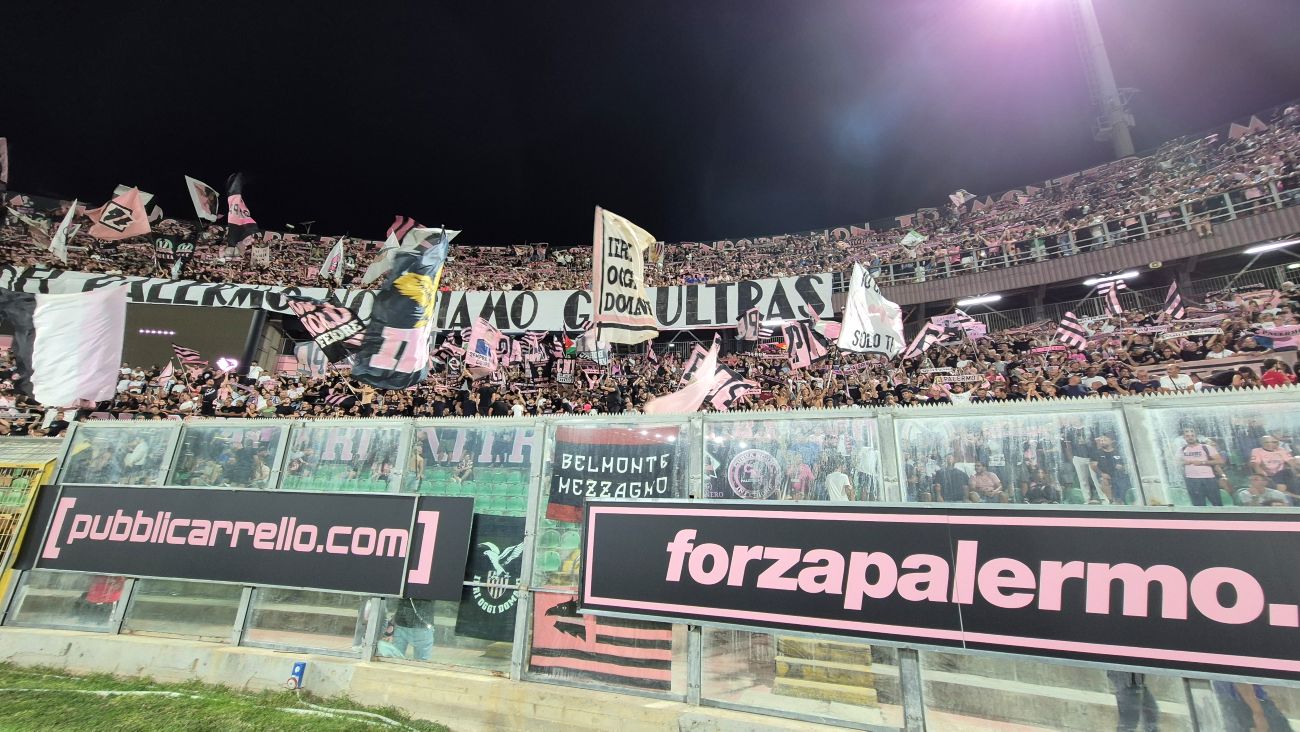
League leaders Palermo are again in action in the latest triple-header of Serie B fixtures live on Destination Calcio TV.
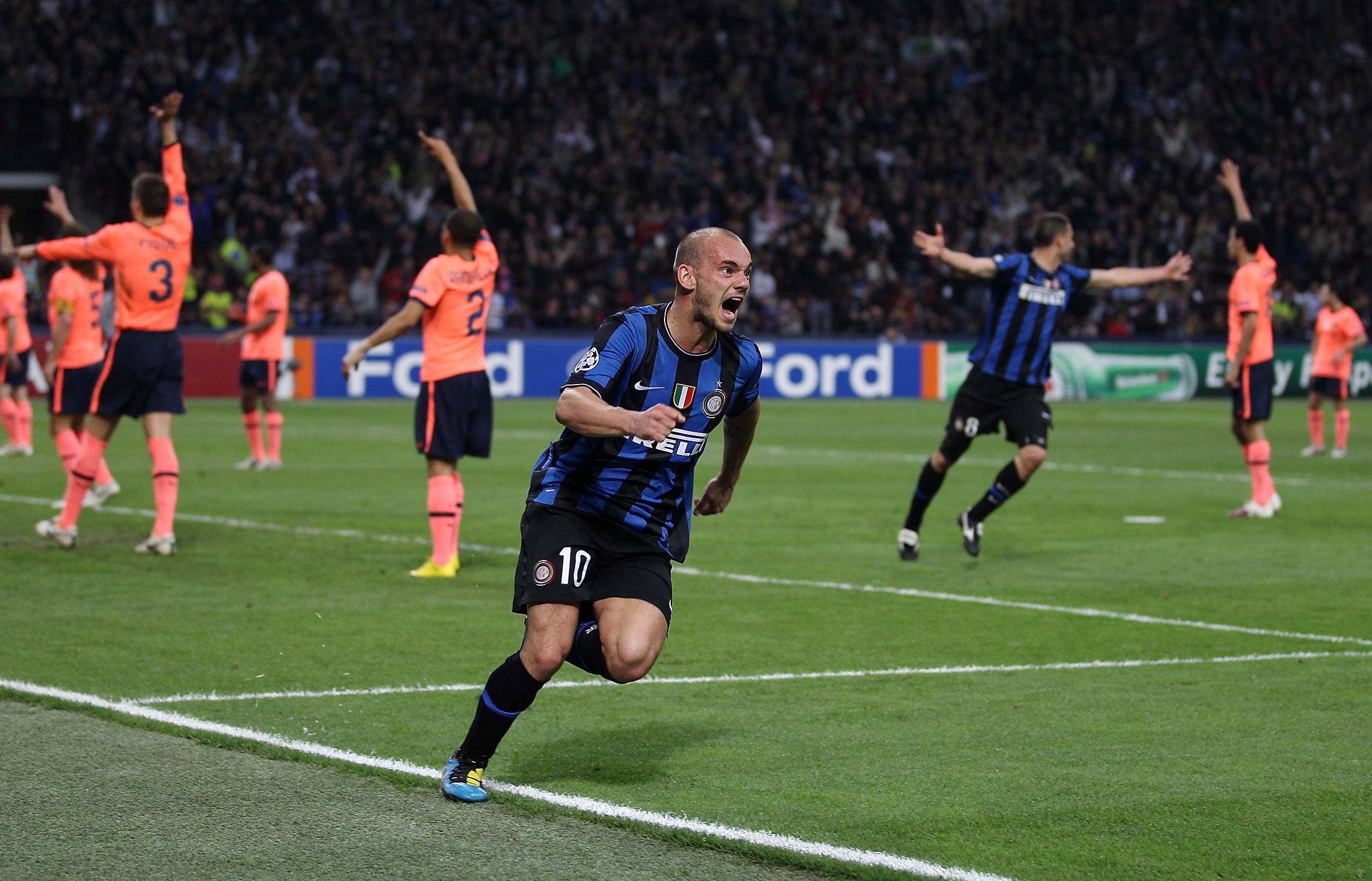
Italian teams have, over the years, been involved in some epic encounters on the continental stage. Here are seven of the best.
Up and down the country, each stadium is unique and every single one has its own charm. This is our top nine.