It announces itself from the plane. As you descend into Fontanarossa Airport, the cone of Mount Etna fills the window to your left – snow-capped, gently smoking, unmistakably alive.
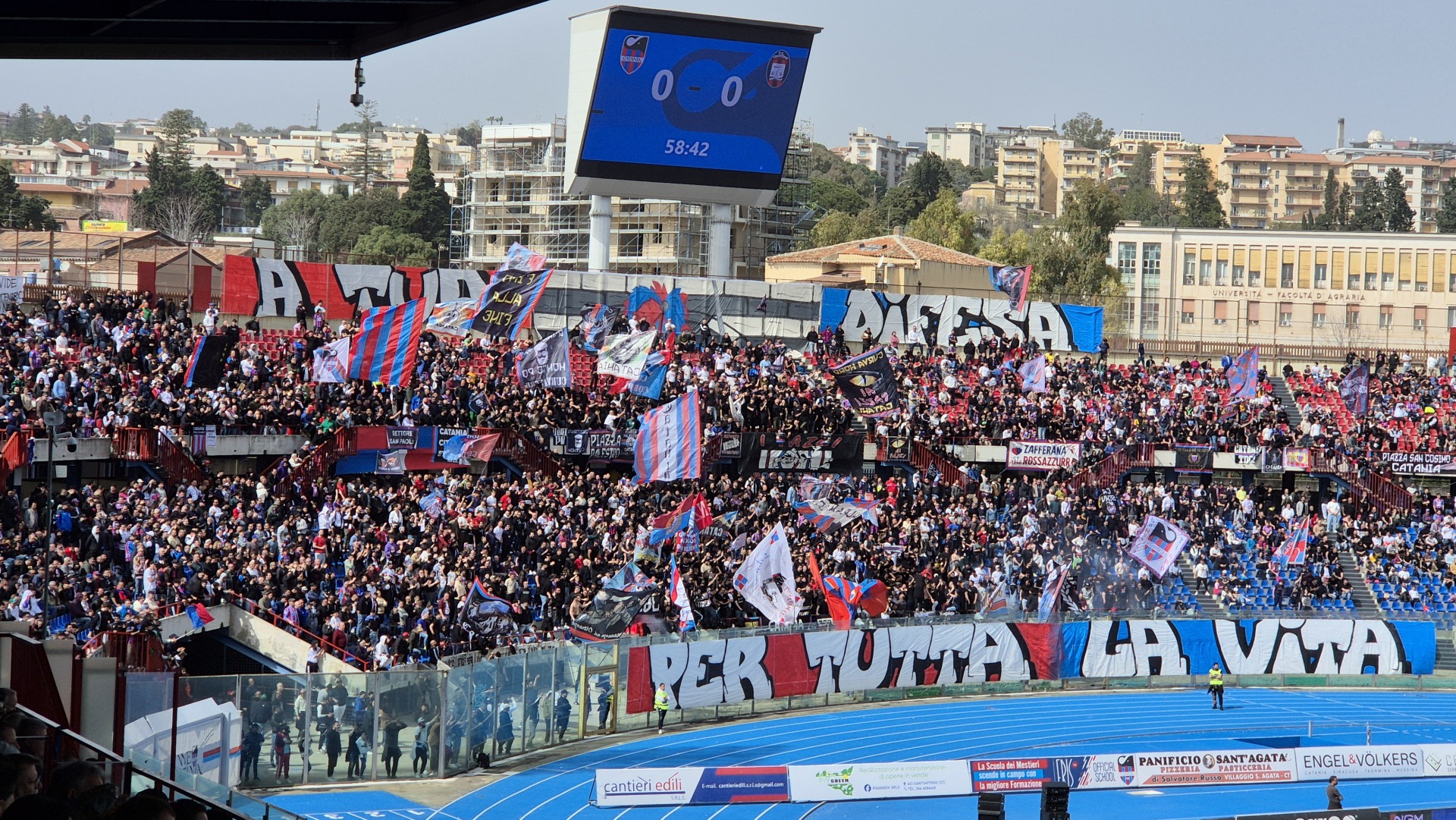
Catania sits at its foot, wedged between the volcano and the Ionian Sea. This is not a city that does things quietly.
The Rossazzurri are in Serie C, working their way back up after the financial collapse that brought them to their knees in 2022.
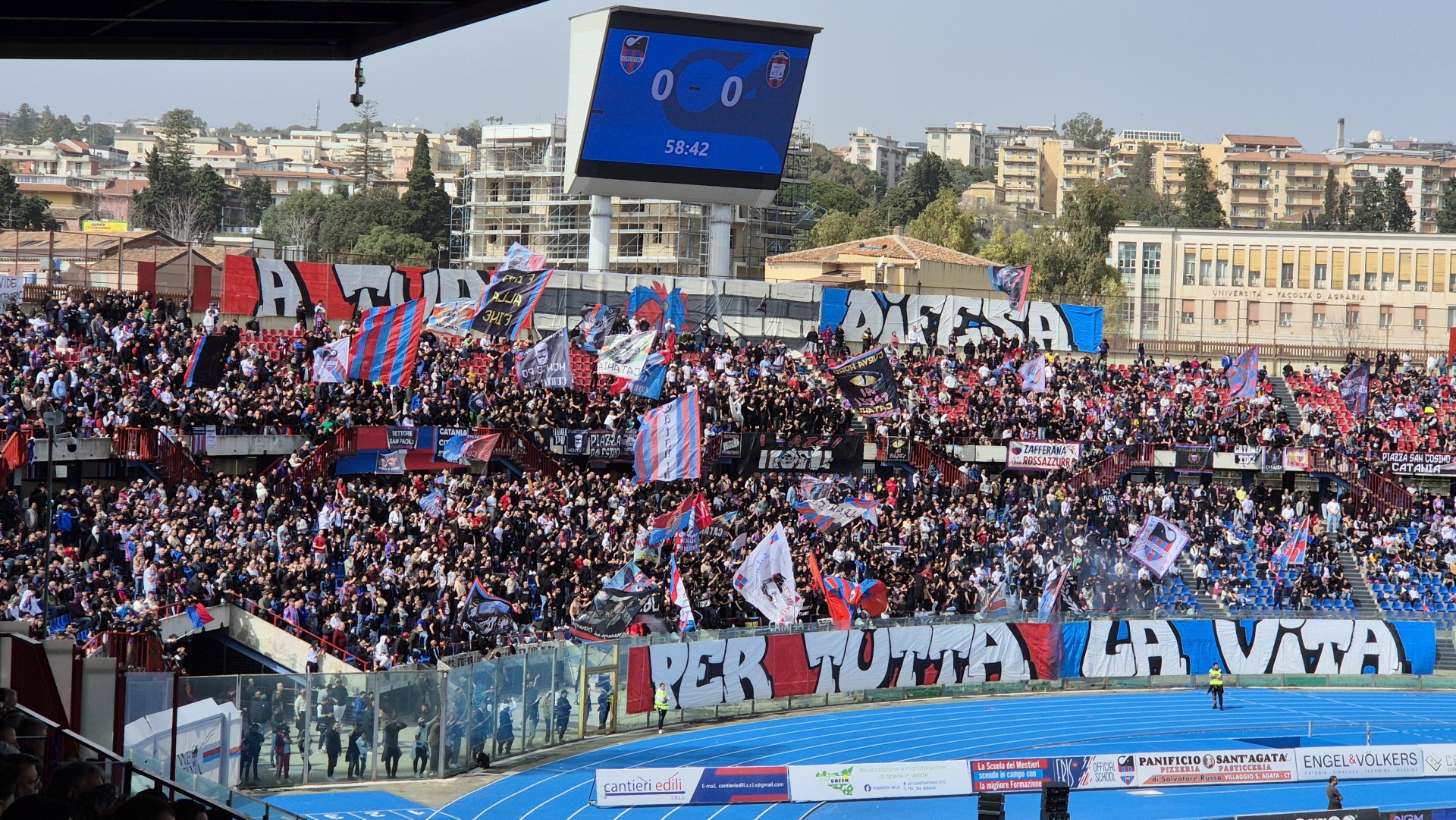
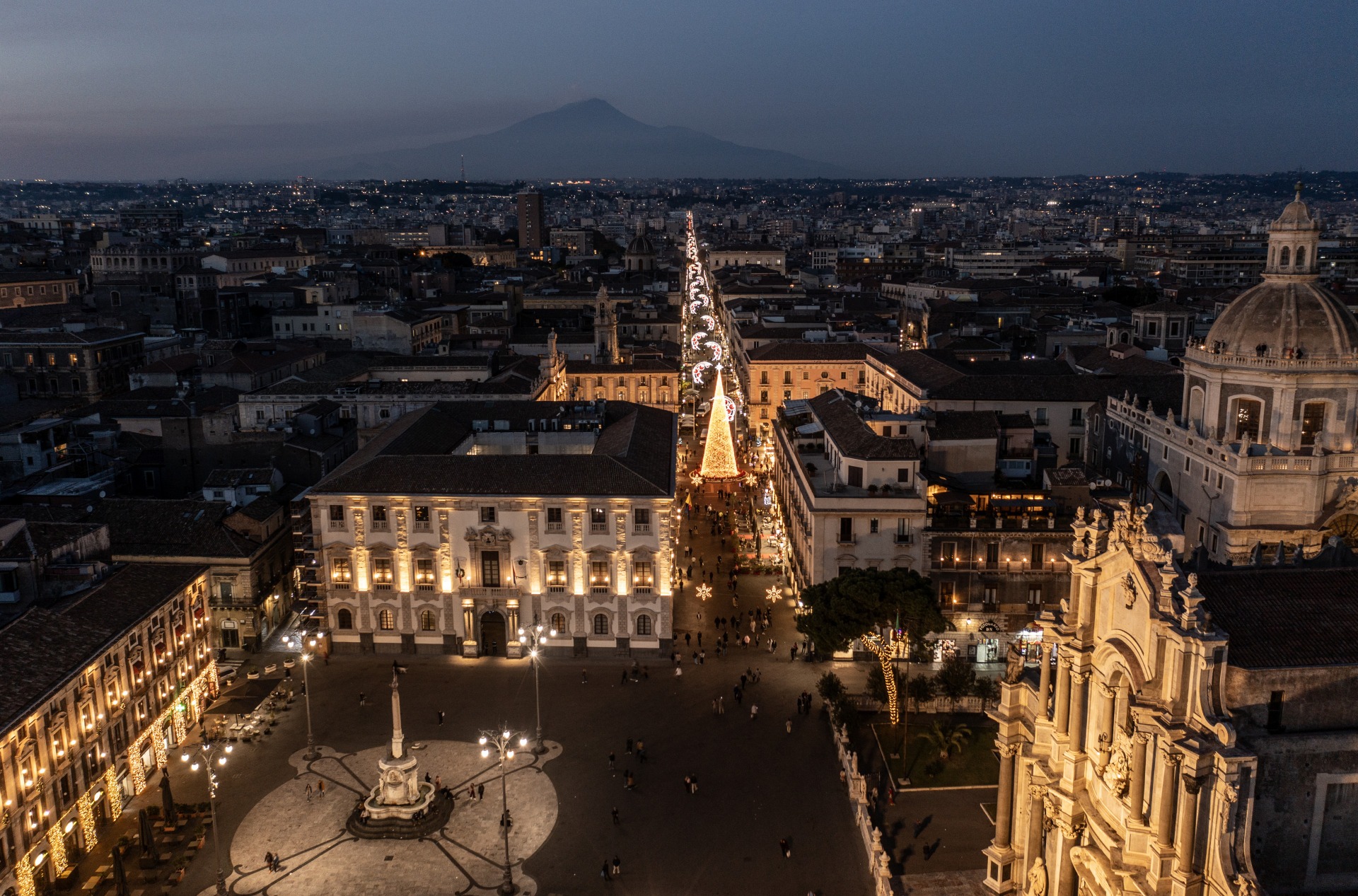
Yet the stadium fills up, the passion never dims and a day at the Angelo Massimino remains one of the most intense in Italian football.
Here is everything you need to know.
Where To Stay
Catania is compact and easy to navigate. Most visitors base themselves in or around the historic centre, within walking distance of the main sights, the fish market, the best bars, and a reasonable bus or taxi ride from the stadium in the Cibali district to the north-west.
The area around Piazza del Duomo and the streets behind it – Via Etnea, Via Teatro Massimo – offers a solid range of options from boutique hotels to well priced B&Bs. It is central, atmospheric and gives you easy access to almost everything.
For something quieter, the streets behind the Pescheria (the fish market) have a more local character and are a short walk from the seafront. Wherever you stay, the city’s flat grid makes orientation simple – Etna is always to your north, the sea to your east.
Where To Eat
Locals will tell you Catania has the best food city in Sicily, which makes it one of the finest places to eat in Italy. The cuisine is built on volcanic soil, mountain pistachios, Ionian seafood and centuries of Greek, Arab and Norman influence.
Start with an arancino. Catania’s version is shaped with a point at the top, like a triangle, and is always masculine (the Palermo version, arancina, is round and feminine, which is a difference worth knowing before you cross the island). The classic is al ragù, a rich meat sauce inside a crispy golden shell. Pasticceria Savia on Via Etnea has been making them since 1897 and remains the city’s benchmark.
Breakfast here means granita con brioche, a semi-frozen dessert of almond, pistachio or lemon poured into a brioche bun. It sounds unusual. It is, in fact, close to perfect. Order it at any bar worth its salt, and follow the local instinct of pouring a shot of espresso over the almond granita as you eat it.
The city’s most famous pasta dish is pasta alla Norma, rigatoni with tomato, fried aubergine and grated salted ricotta, named after Bellini’s opera because someone, on tasting it, reportedly said it was ‘a real Norma’ (a masterpiece). Every trattoria serves it; few do it badly.
Where To Drink
The matchday geography in Catania follows a clear pattern. Supporters organise by group, and each group has its patch. Knowing where to go is the difference between standing on the edge and being in the thick of it.
Chiosco 46 on Piazza Bonadies is a Catania institution. The kiosk culture in the city is unique – outdoor drinking spots that serve everything from coffee to cold beer and are social hubs year-round, not just on matchdays. Piazza Bonadies fills up with fans in the hours before kick-off, and Chiosco 46 is at the centre of it.
Chiosco Catanese is on Piazza Spedini, which sits immediately outside the stadium’s main entrance. Its location gives Chiosco Catanese a particular significance on matchdays.
Don’t Forget
Tickets – To watch Catania tickets can be purchased at the stadium on matchday or through authorised points of sale in the city. It has been about €12 during their time in Serie C.
The Curva Nord is home to the most organised supporters and this is where the noise is generated before spreading throughout the ground.
Merchandise – The club shop is at Torre del Grifo Village, the training centre in Mascalucia. Official merchandise is also available online. The Rossazzurri – red and blue – reflect the city’s dual identity: the fire of the volcano and the blue of the sea.
Did You Know?
In June 1961 Catania produced one of the great upsets when they beat Helenio Herrera’s Grande Inter, who needed to win to keep pace with Juventus in the title race. Radio commentator Sandro Ciotti cried out ‘Clamoroso al Cibali (Sensational at Cibali) and that phrase has been part of calcio vocabulary since, used when a result goes against all expectation. Herrera had dismissed Catania earlier in the season as ‘a team of postal and telecommunication workers’.
Getting There
Catania-Fontanarossa Airport is one of the busiest in Italy – the sixth by passenger volume nationally – and is served by most major airlines operating routes across Europe. It is less than three miles from the city centre, and a shuttle bus makes the journey in about 20 minutes. Taxis are available at the terminal.
By rail, Catania Centrale connects the city to Messina (approximately 90 minutes), Palermo (three hours via the inland route) and Syracuse (just over an hour).
The stadium is in the Cibali district, roughly 2.5km from the historic centre – a 30-minute walk along Via Etnea or a short bus ride on the AMT Line 4-7 circular from Catania Centrale.
Need Another Football Fix?
Palermo is around two-and a half hours west by road, and their derby with Catania – when fixtures align – is one of the most intense in southern Italy. Messina are in Serie C and a 90-minute train journey to the north. Siracusa and Acireale both have clubs in the lower professional and semi-professional tiers. They are within an hour of Catania by road and are worth combining with a visit to the Valle dei Templi or the Greek theatre at Siracusa.
Related Topics
Related Articles
Related Articles
From top-flight derbies to neighbours leagues apart, here are seven Italian cities with two teams and so much more.
From the Alps in the north to the heel of the boot, past medieval towns and the odd volcano, every corner of the country is covered.
There are 60 teams split into three groups in Serie C. Here are five of the biggest and reasons why they are worth visiting.