
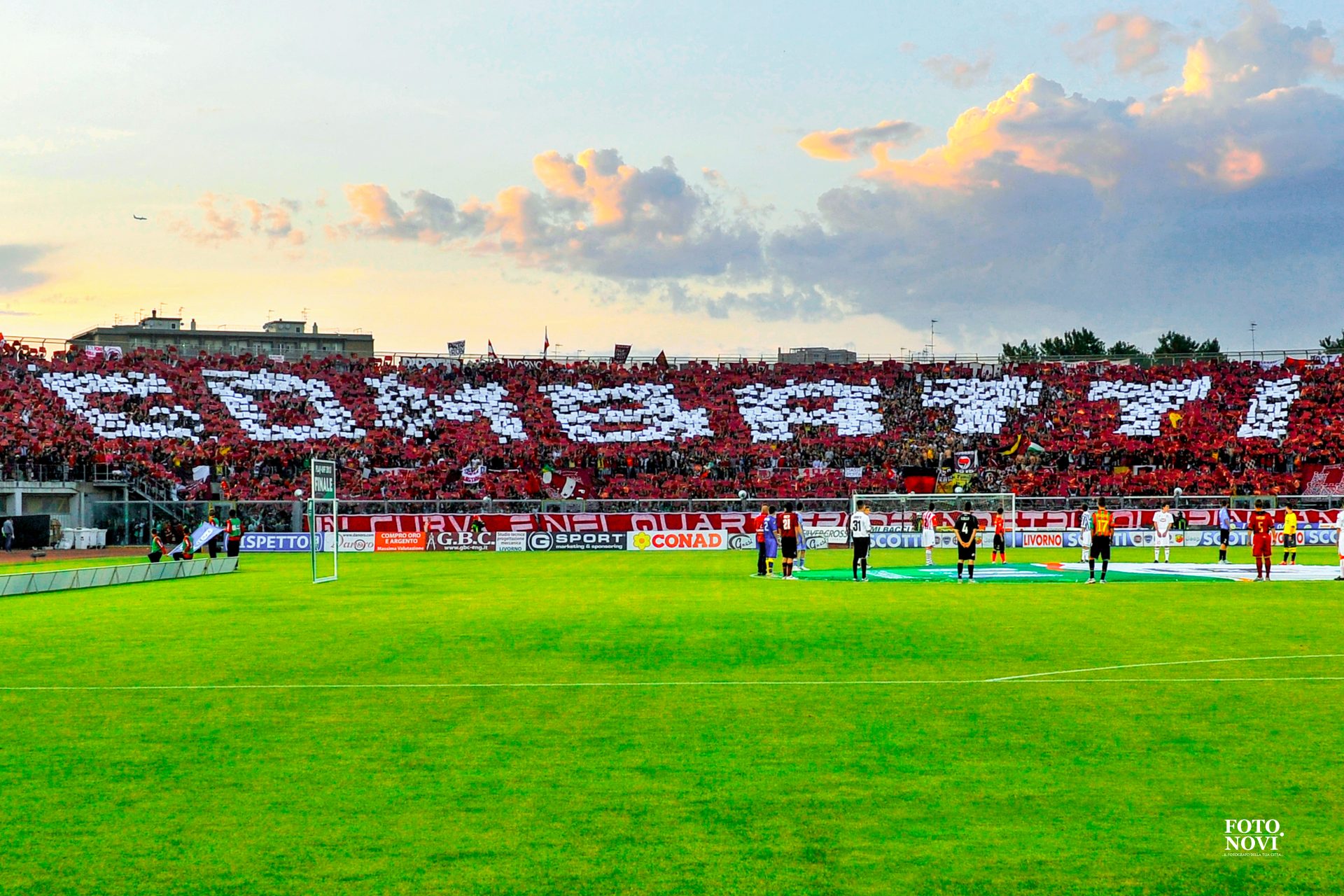
In a country defined by derbies, the Derby del Tirreno may be the fiercest of them all. It pits an aristocratic city famous for its art and education against a coastal, working-class port town with a distinct dialect and strong maritime identity.
As far as rivalries are concerned, that between Livorno and Pisa is certainly one of the oldest, as the cities have been squabbling for one reason or another for the best part of seven centuries.
“It’s better to have a dead body at home than a Pisan on your doorstep,” goes a famous Livornese saying. In Pisa, meanwhile, wisdom has it that, “words are blown away by the wind, and bicycles are stolen by the Livornese.”
Pisa and Livorno are separated by 20 miles, but their feud goes beyond the traditional spats that define neighbouring cities. This one is rooted in a controversy.
In 1107, the Bishop of Pisa granted a local noble family, the Orlandis, a castle and the small settlement that had grown around it, naming the village Livorna.
At the time, the outpost survived solely through its connection to the coveted port of Pisa – then one of Italy’s four great Maritime Republics. Over time, however, Pisan power faded, culminating in a crushing 1284 naval defeat to Genoa at Meloria, a reef just off the coast of Livorno.
With the Pisan empire in ruin, the rulers of Florence – first the Medici, then the House of Lorraine – decided to transform that tiny hamlet into a major Tyrrhenian port.
Between 1591 and 1593, they issued the famous Leggi Livornine (Livornese Laws), inviting merchants, political and religious refugees, and even pardoned convicts to settle in Livorno and build a thriving port city.
The expansion of Livorno’s port felt like a direct threat to Pisa’s power – an insult the Pisans simply could not stomach, pitting the two cities against each other from then on.
Pisa may be home to one of the oldest universities in the world, but the Livornese dismiss the Pisans as gosti – country bumpkins – while the latter describe their neighbours as ciuccialische—which effectively translates to fishbone-sucking beach bums.
The colourful nature of the insults is typical of Tuscany, a region whose inhabitants are renowned for being straight talkers.
Intriguingly, while Pisa, like Florence and Siena, is quintessentially Tuscan, Livorno has always relished its role as an outsider.
That is partly a matter of history – the city was established under Medici rule while its neighbours date back to the Romans or the Middle Ages – and partly because Livorno was a true cultural melting pot right from the start.
Inevitably, the antipathy has carried onto the football stage, where the two rivals officially met for the first time in 1921. A further 65 instalments of the Derby del Tirreno have followed since, with Livorno by some distance the more successful team with 28 wins to Pisa’s 12.
Remarkably, they have never faced each other in Serie A, with their rivalry largely played out against the backdrop of Serie B and Serie C.
Much as with Millwall and West Ham, meetings between the two have been rare, with the clubs enjoying relative success in different spells. When Pisa won promotion to Serie A after 34 years in 2025, Livorno had just returned to Serie C.
The Derby del Tirreno was absent from the calendar for almost two decades from 1979 until its return in 1996 and then again for seven years during the 2000s and eight years until 2017.
With Pisa currently marooned mid-table in Serie B and Livorno battling at the business end of Serie C Girone B, there is a slight chance the fixture could return next season for the first time since March 2020.
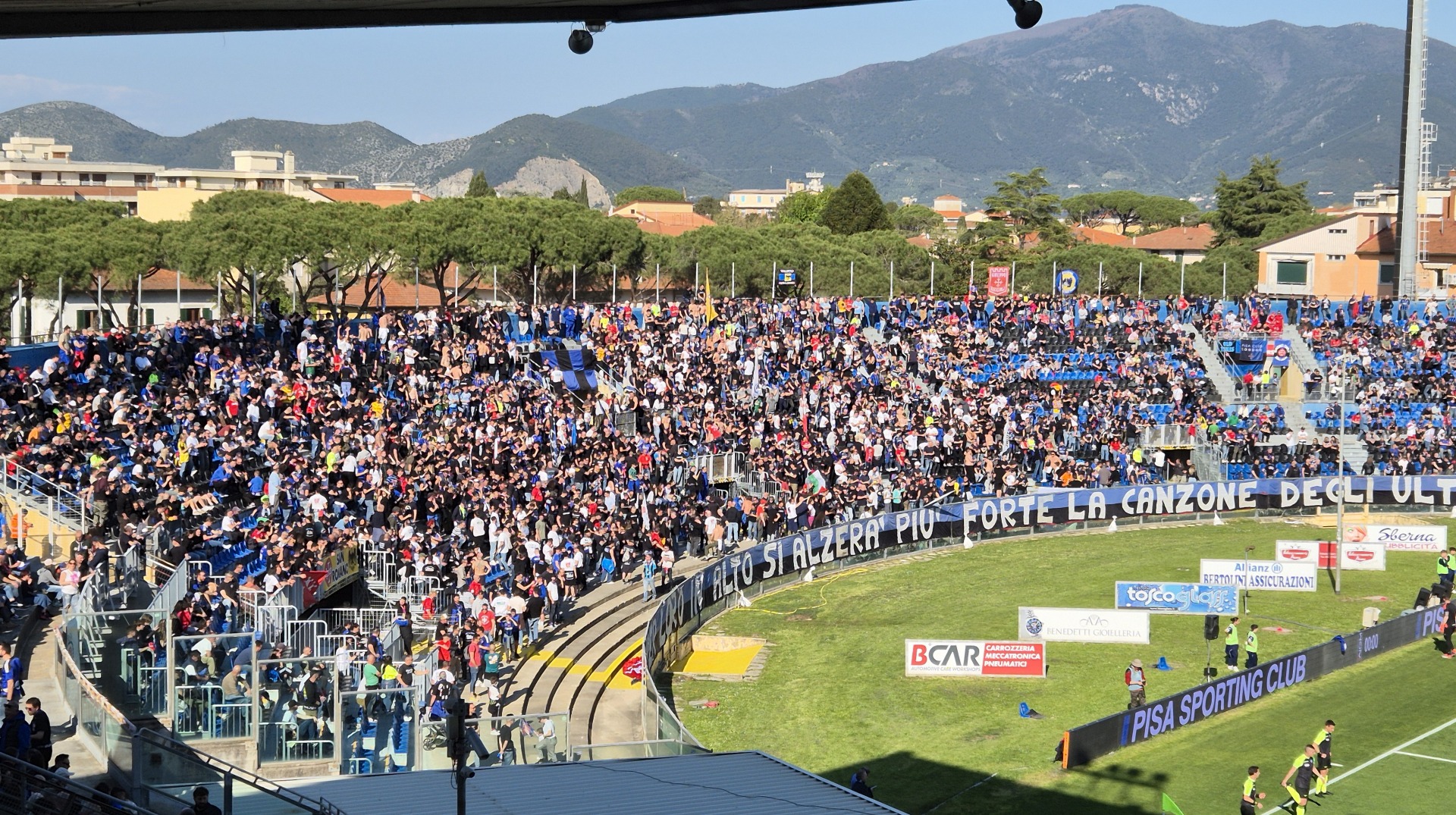
If it doesn’t, this is still an area that should be on the radar of the calcio tourist. Pisa has one of Italy’s main airports and is well connected to most international destinations, their stadium is within sight of the Leaning Tower and the city is a walkable delight. As for Livorno, there’s a nice walk along the waterfront to the Stadio Armando Picchi and once you get there it can look sparse but sound huge at the same time.
Sporadic as the meetings may have been, there was still plenty of room for mischief on both sides. Legend has it that during a meeting in 1946 as Italy tentatively emerged from World War II, a group of Livorno executives had to flee Pisa by boat to avoid some disgruntled locals.
Having provided an escape, water was the source of the Amaranto grievances 13 years later as the meeting at the Arena Garibaldi in Pisa descended into an all-out brawl.
Unusually heavy rain for late March had turned the pitch into a quagmire, but Livorno made light of the conditions and took a two-goal lead at the break courtesy of a brace from Francesco Mungai.
Halfway through the second half, the drain covers beneath the terraces were deliberately opened, to predictable results: a massive swath of the pitch was completely flooded, forcing the referee to halt proceedings.
No sooner was the game called off than the brawl began, in the stands and on the pitch.
“Everyone was throwing punches, except for yours truly and (Livorno defender) Armando Picchi – the two captains,” former Pisa skipper Roberto Balestri told La Nazione in 2020.
“I don’t think I’ve seen anything like that in a stadium since, except perhaps in the lower tiers of South America. It was a complete farce, and certainly nothing to be proud of.”
There were more handbags in 1994, when the two sets of supporters met up on the beach in Tirrenia where they clashed with slaps and water balloons.
Seven years later, meanwhile, the derby at the Arena Garibaldi was suspended when Pisa fans began tearing up seats and hurling them onto the pitch in protest at their team losing, much to the delight and applause of those in the away end.
And yet for all their differences, Pisa and Livorno fans have also occasionally managed to extend an olive branch. In 2017, Pisa ultras unfurled a banner of support for their rivals after a devastating flood had hit Livorno, with the latter returning the favour a year later when a fire broke out on Monte Serra near Pisa.
Politics has also proved to be an unexpected common ground for the two fanbases. The city where the Italian Communist Party was founded in January 1921, Livorno the club has remained true to its political ideology and has one of the most left-leaning fanbases in Italy.
Former player and current manager Cristiano Lucarelli, a born-and-bred Livornese, found himself at the centre of controversy when he wore a T-shirt portraying Che Guevara under his shirt as he scored in his hometown for Italy Under-21 in 1997.
The Argentine revolutionary features prominently in the Curva Nord at the Arena Garibaldi too, where Pisa ultras are themselves left-leaning.
That, however, is where similarities between the two fanbases begin and end.
Related Topics
Related Articles
Related Articles
All the information on where and when to buy your tickets to watch Empoli in action in Serie B.
All the information on where and when to buy your tickets to watch Catanzaro in action in Serie B.

The three brothers all grew up in Castellammare di Stabia, a city around half an hour's drive from Naples.