Even in the rich and colourful tapestry of Italian football, you will struggle to find something as contradictory in nature as the Derby della Capitale.
On paper, the meeting between two teams from the capital of a football-mad country should be fertile ground for one of the biggest and most consequential fixtures in world football.
And yet, a glance at the cold, hard figures reveals that Rome has witnessed just five Scudetto celebrations. Two fewer than Vercelli and Bologna and four short of Genoa, where the Rossoblu’s most recent title was more than a century ago.
As for Milan and Turin, forget about them. Inter last season celebrated their 21st Scudetto, moving two clear of their city rivals, while Juventus account for 36 of Turin’s 43 Serie A crowns.
Statistically, Rome is what Italians would describe as a provinciale, a provincial town in football terms. But in Rome success isn’t measured along the traditional standards.
Parochialism is central to football in the Italian capital, making meetings between Roma and Lazio incredibly tense affairs.
The clubs have finished as Serie A runners-up a combined 21 times – Roma on 14 occasions, Lazio on seven. And yet, success has a different meaning in the Eternal City.
Trophies count, yes. Silverware is welcome, of course. But getting one over your local rivals is just as important, perhaps even more so, which explains why the late Sven Goran Eriksson became a Lazio legend the season before lifting the Scudetto, as he led them to four derby wins on the bounce in his first campaign in charge.
Players revel in it as much as the fans, with Francesco Totti famously celebrating a win over Lazio in April 1999 that derailed the Biancocelesti’s title bid by unveiling a t-shirt reading, ‘I made you s**t yourselves again’.
There are, of course, more globally famous rivalries and derbies that carry more historical weight.
El Clasico in Spain and meetings between Manchester United and Liverpool fit in the former category, while even in Italy the Derby d’Italia between Juventus and Inter has often been far more consequential to the destination of the title than affairs in Rome.
Similarly, the Roman clubs are far from being domestic giants of the game, unlike Glasgow’s Old Firm, the Eternal Derby rivals in Belgrade or Intercontinental Derby opponents Fenerbahce and Galatasaray in Istanbul.
And yet, the Derby della Capitale is special in its own right. The rivalry is rooted in history. Lazio were founded in 1900 while Roma followed in 1927 after the ruling National Fascist Party ordered the merger of three clubs – La Roman, La Fortitudo and L’Alba.
The result was a club with a bigger fanbase in Rome than Lazio, which endures today as the Biancocelesti tend to draw their support from the region the Italian capital sits in, which is also called Lazio.
Giallorossi fans use that as a stick to beat their rivals, suggesting Lazio supporters aren’t from Rome at all, while they counter by claiming they are the Eternal City’s first and original club.
There is no love lost between the sets of fans, with the levels of vitriol comparable to Rangers and Celtic in Glasgow and the divide separating Manchester United and Liverpool.
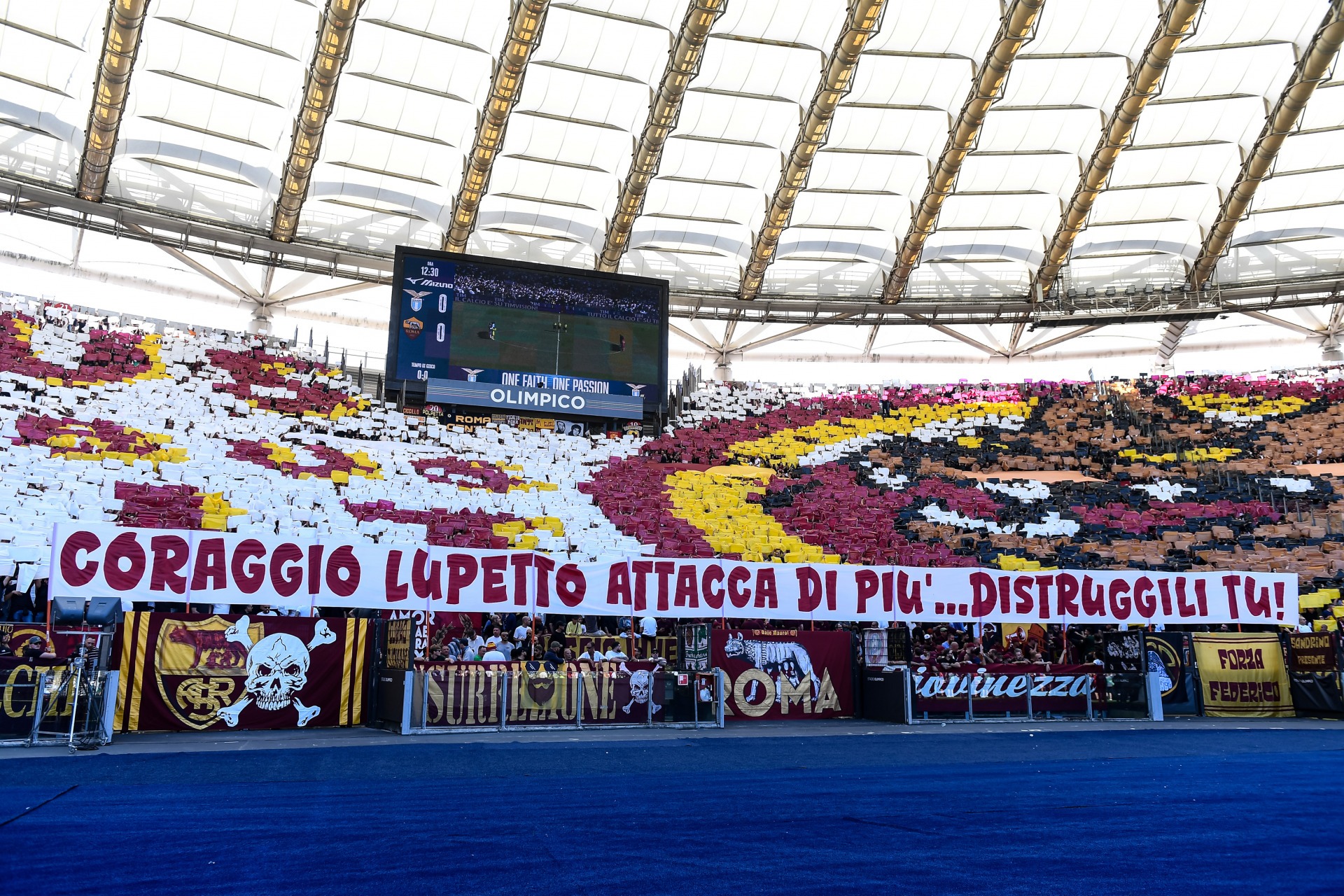
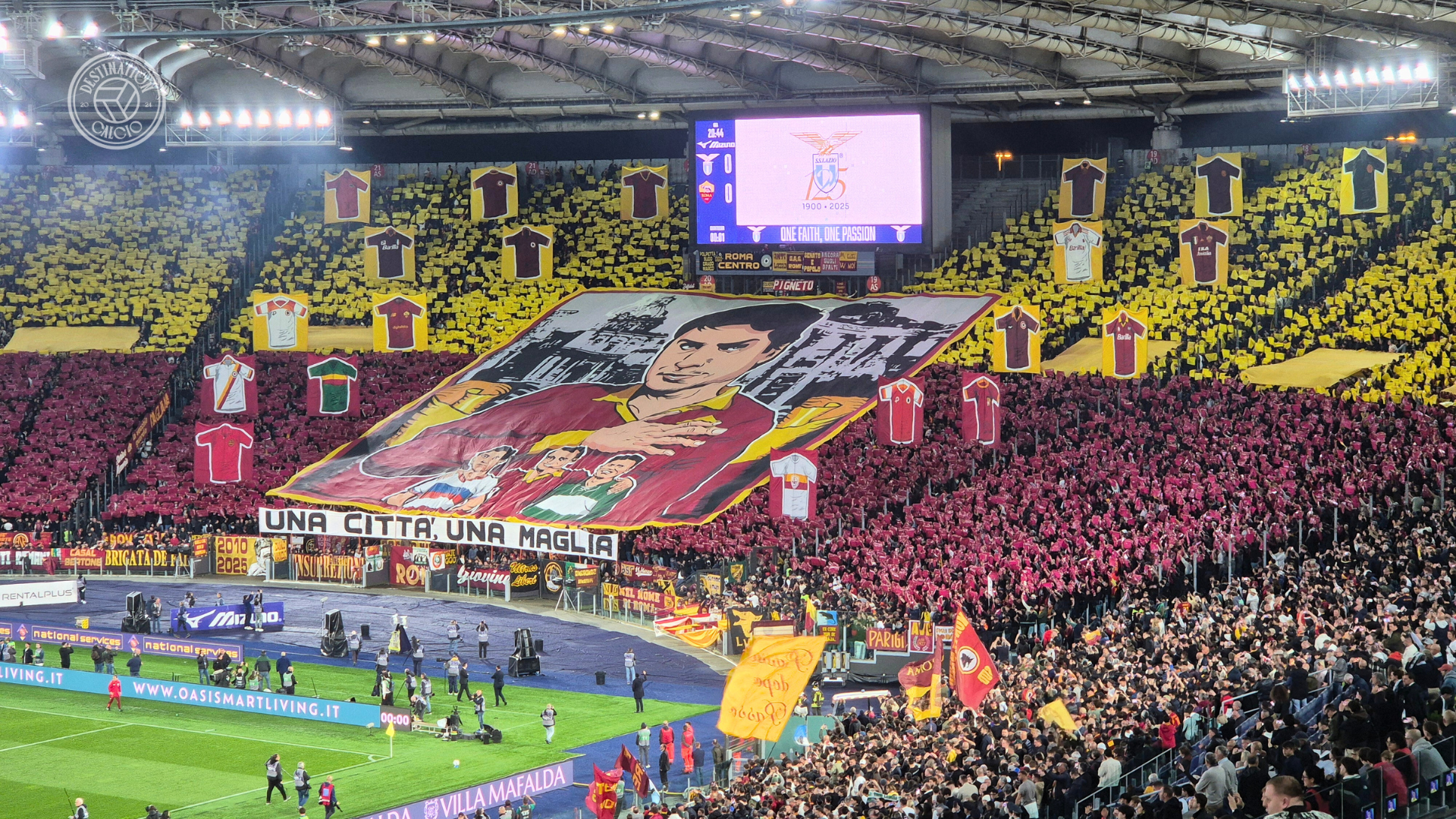
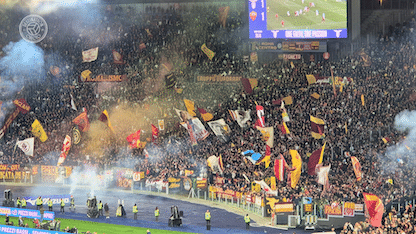
It makes for a febrile atmosphere at the Stadio Olimpico on derby day, with both the Curva Sud and the Curva Nord looking to claim bragging rights with spectacular tifos.
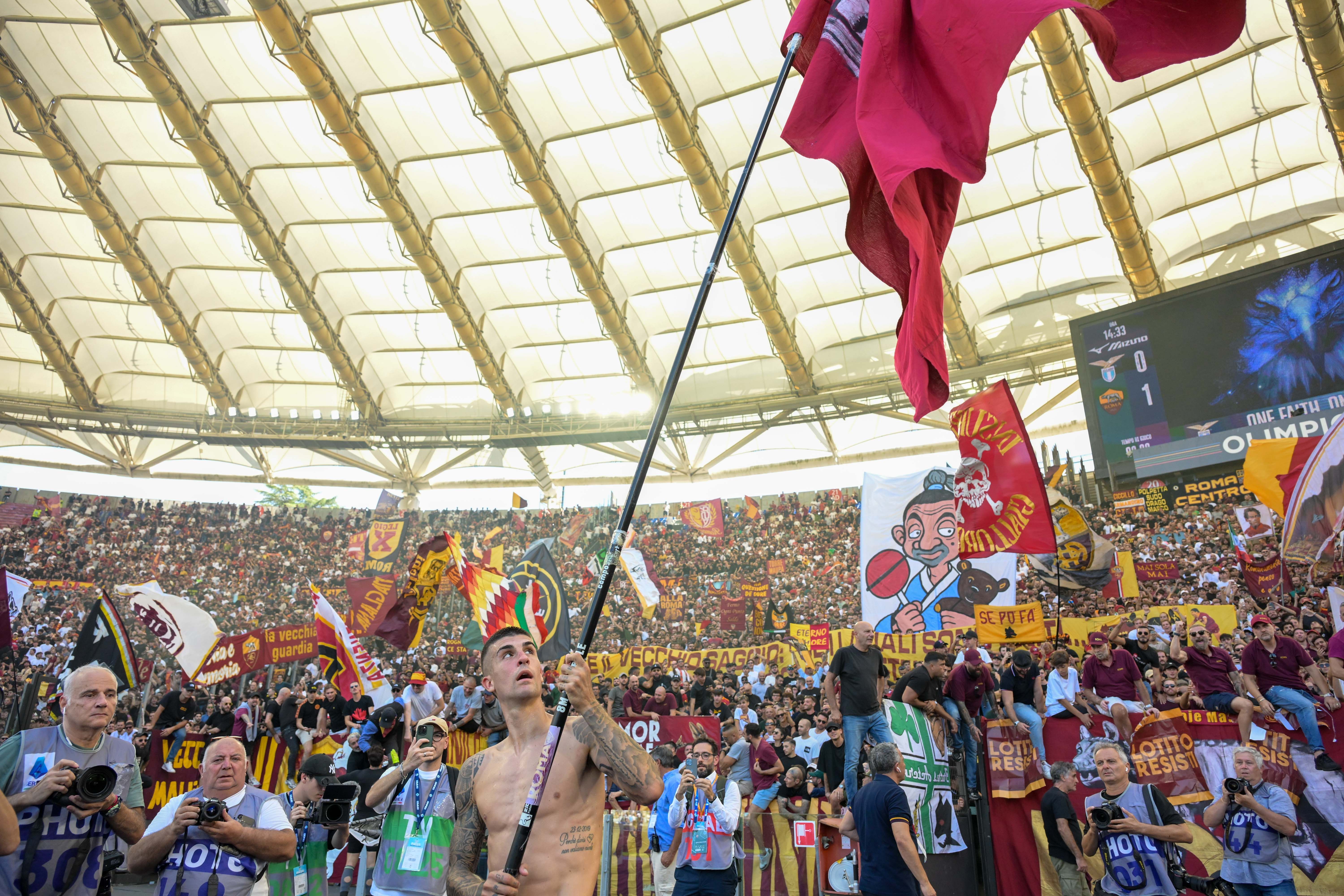
Arguably not even San Siro for the Derby della Madonnina can match the intensity of the atmosphere of the Derby della Capitale, with the tifos accompanied by flares and ear-splittingly loud firecrackers.
And while it may fall just short of Galatasaray against Fenerbahce, it’s not far off in terms of atmosphere. It is certainly a far less sanitised environment compared to the likes of El Clasico, a much bigger fixture from a footballing standpoint, but one which lags way behind the Derby della Capitale as far as the spectacle off the pitch is concerned.
At times, the vitriol has spilled over with tragic consequences, most notably in 1979 when Lazio fan Vincenzo Paparelli was killed by a flare launched by a Roma fan and in 2004, when the derby was called off amid rumours – which turned out to be fabricated – that a child had been killed after being run over by a police van during trouble between the fans ahead of kick-off.
Skirmishes these days are increasingly rare and exclusively a matter involving ultras. Better still, it is reasonably easy to secure tickets for one of the biggest fixtures on the calcio calendar and you really shouldn’t need a reason to visit Rome.
Whether it’s sipping a pint on Ponte Milvio among the Lazio fans on the way to the Stadio Olimpico or exploring the quiet streets of Trastevere for a true Roman experience to digest the aftermath of the derby, football in the Eternal City never really stops.
Related Topics
Related Articles
Related Articles
Up and down the country, each stadium is unique and every single one has its own charm. This is our top nine.
It wasn’t the most popular appointment but Roberto Mancini is back in the Italy hot seat - and is looking to recover from a losing start.
Some of the biggest grounds in the country must be replaced or renovated before the European Championship kicks off.