
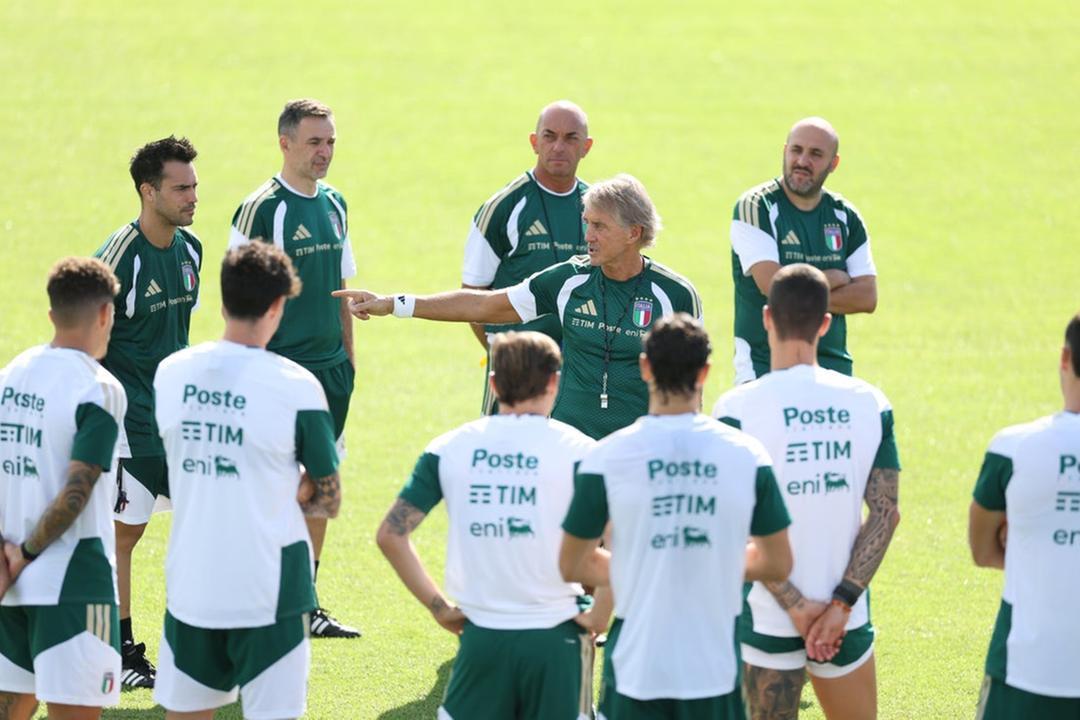
It wasn’t the most popular appointment but Roberto Mancini is back in the Italy hot seat. The man who guided the Azzurri to their last piece of silverware at Euro 2020, had returned to the position he walked out on three years ago amid controversy and political wrangling.
Mancini was selected by new FIGC president Giovanni Malago, yet the majority of Serie A clubs, who were instrumental in voting Malago into his role in June, wanted Antonio Conte.
Meanwhile, the newly-appointed technical directors of the federation, Paolo Maldini and Leonardo, wanted Andrea Pirlo as coach after Pep Guardiola politely declined their advances.
Malago’s decision prompted Maldini and Leonardo to resign in protest, just 16 days after accepting roles to reboot the nation’s failing football ecosystem.
Mancini arrived well aware he needed to win over the Italian public again, not because of the manner of his appointment, but due to his departure in August 2023, when he left and took up a lucrative post with the Saudi Arabia national side.
A good start would have helped but Belgium had other ideas and left Rome with a 2-0 win after their Nations League opener.
“I’m not in credit (because of winning Euro 2020) because that’s in the past, it doesn’t count for anything,” Mancini said before the game.
“I think that when a fan feels betrayed, he has the right to be upset, and you have to accept it. I think to win them back, we must do things well and bring the national team back to where it belongs so things will settle.”
Going one step further, he apologised for his actions three years ago. “I’m very sorry. The Italy shirt was always very important to me. It was like losing the love of my life.” he said in his first press conference back as manager in June.
It’s going to be extremely tough to win the support back if Friday night is anything to go by. Mancini’s players were booed at half-time and at the final whistle.
“When we lose, nobody is happy. When you lose, you can get jeered,” he said after the match.
Knowing full well that he’s at the start of a cycle, Mancini included a raft of new faces. Nine new recruits were called up to the 34-man squad, as the former Lazio, Inter Milan and Manchester City coach went with youth.
“I think it’s right to have young players so we can get to know them directly, because that’s the most important thing, to have a very strong squad in the future,” he said. “So we have to be quick to understand who could be the players that could be with us for the next four years.”
Mancini also appreciates that younger players possess a more carefree attitude and “do things on the field that when you’re older you don’t do because you think too much.”
Another positive of including so many new faces is that they aren’t burdened with the failures of the past five years, something Mancini himself also alluded to. Although with an experienced nucleus of players at his disposal, including the likes of Nicolo Barella, Sandro Tonali, Federico Dimarco, Alessandro Bastoni, Gianluigi Donnarumma and others, Mancini should have a good squad to work from.
Yet, many are suspect on whether Mancini is the man to bring Italy back to the top. Fabio Capello, one of the country’s greatest coaches, was adamant that Mancini shouldn’t have been allowed a second crack. “It seems incredible to me that Mancini can return after leaving in that manner, how can you leave the national team without any reason to go and get the money in Saudi Arabia,” he said in La Gazzetta dello Sport. “I’m not questioning his skill as a manager, but what he did, in my opinion, is very serious.”
Alessandro Altobelli, one of Italy’s best strikers during the 1980s, told La Repubblica: “Mancini is an exceptional coach, he could manage any team, all the big national sides. I even wrote to him, I sent him a message of congratulations and wished him well. But there’s that stain. It’s too late for apologies, I’m sorry. This isn’t about me, the national team belongs to everyone. I don’t know whether the fans will forgive him.”
In a strong Nations League group with France and Turkey as well as the Belgians, Mancini knew the importance of hitting the ground running.
Yet the man from Jesi, a province near Ancona in Italy’s Le Marche region, has demonstrated throughout his career, even as a player, that he has a winning mentality. Mancini, after all, played a vital role in Sampdoria winning the Scudetto in 1991, not to mention other silverware in an illustrious 15-year stint in Genoa.
Such was Mancini’s confidence that he effectively ran the club. “He would ring the kitchen and tell them that we would be late, therefore keep the pasta warm. He would call the kit man, and make sure all of the kit was ready to use,” revealed Sven-Goran Eriksson in a 2021 interview.
“He was involved in everything. He was like one of (Sampdoria owner Paolo) Mantovani’s children. Mancini and (Gianluca) Vialli used to eat at his house regularly. But what a talent, he could do everything on the pitch.”
Yet ironically for a man who’s now so identified with Samp, Mancini never wanted to live in Genoa. In a 2020 interview in the city with journalist Marco Ansaldo, Mancini told an interesting story. “I played for Bologna against Genoa in Genoa, we passed the Morandi Bridge and I remember thinking, ‘I would never come to play in a city like this’. Two months later I was a Sampdoria player and I stayed for 15 years.”
It’s apt that Mancini’s return to the Italy bench started in Rome at the Stadio Olimpico, a city where he also won as a player with Lazio. The No 10 joined Eriksson in the capital in the summer of 1997, and the pair of them set about changing the Biancocelesti mentality.
A slew of honours, domestic and European, followed and Mancini would win another Scudetto with Lazio in 2000 before retiring in early 2001. Yet he struggled initially in the Eternal City, as he did in Liguria. “At first I thought, ‘I cannot live here,’ it felt too chaotic coming from Genoa,” he said. “But instead it was love. Fans in Rome hardly know equal in the world, unique.”
After the disaster of Luciano Spalletti and mediocrity of Gennaro Gattuso in the Italy dugout, there can be no more margin for error. The pressure is on Mancini. Yet he is a man who performed best when playing for underdogs and as a coach managing underperforming teams.
Ahead of his second outing, against Turkey, he said: “It won’t be an easy game, but I am optimistic.”
He rescued Italy once before, can he do it again?
Related Topics
Related Articles
Related Articles
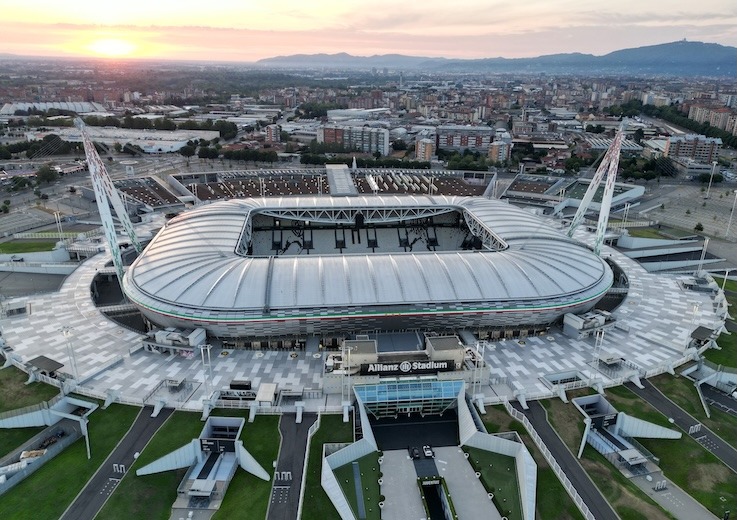
Some of the biggest grounds in the country must be replaced or renovated before the European Championship kicks off.
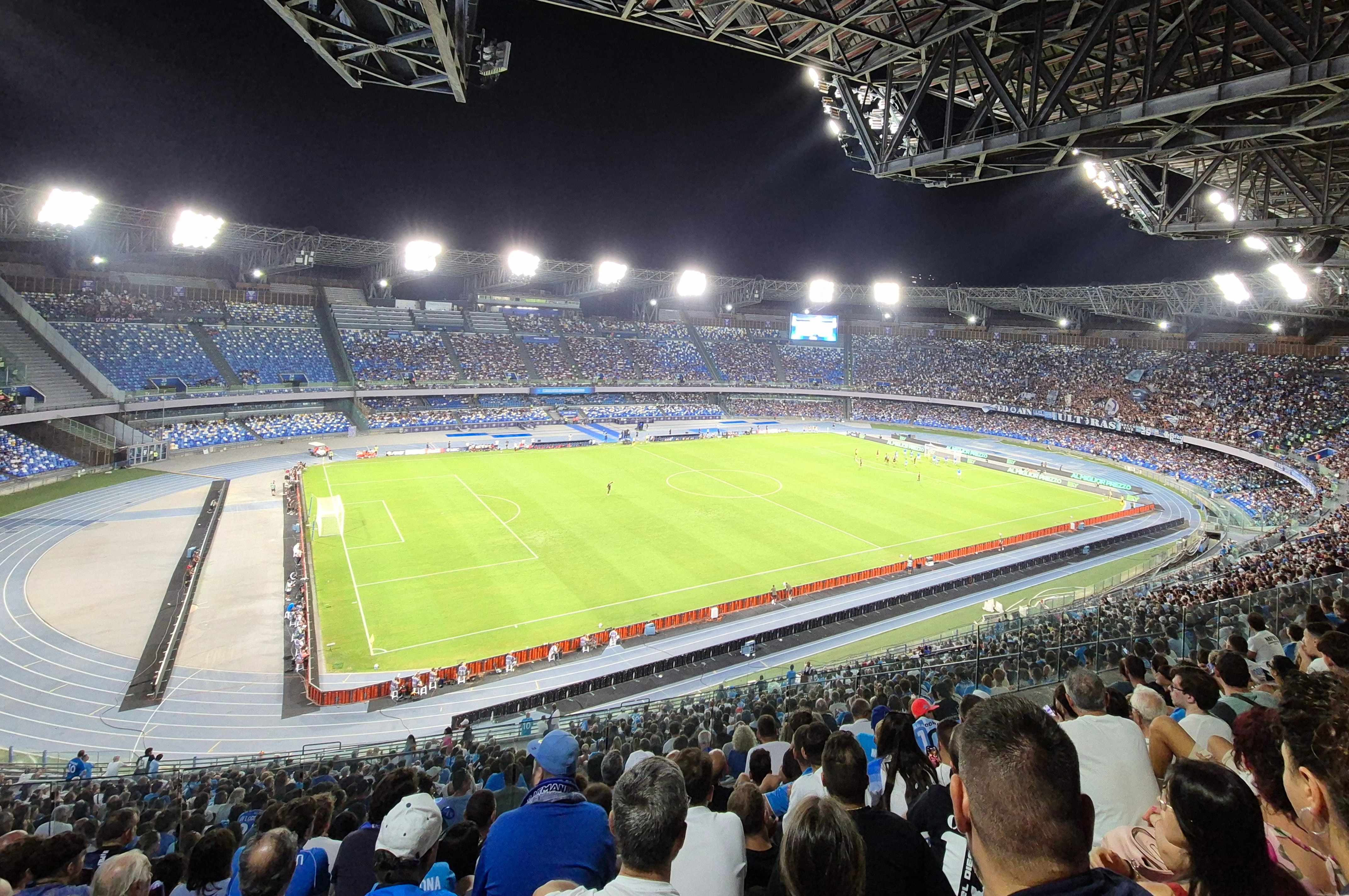
The Italy team take their home home games to all corners of the country but some of the high-profile destinations have been ignored.
There are huge sporting events going on throughout the football season which, with a bit of planning, can be paired with calcio weekend.