
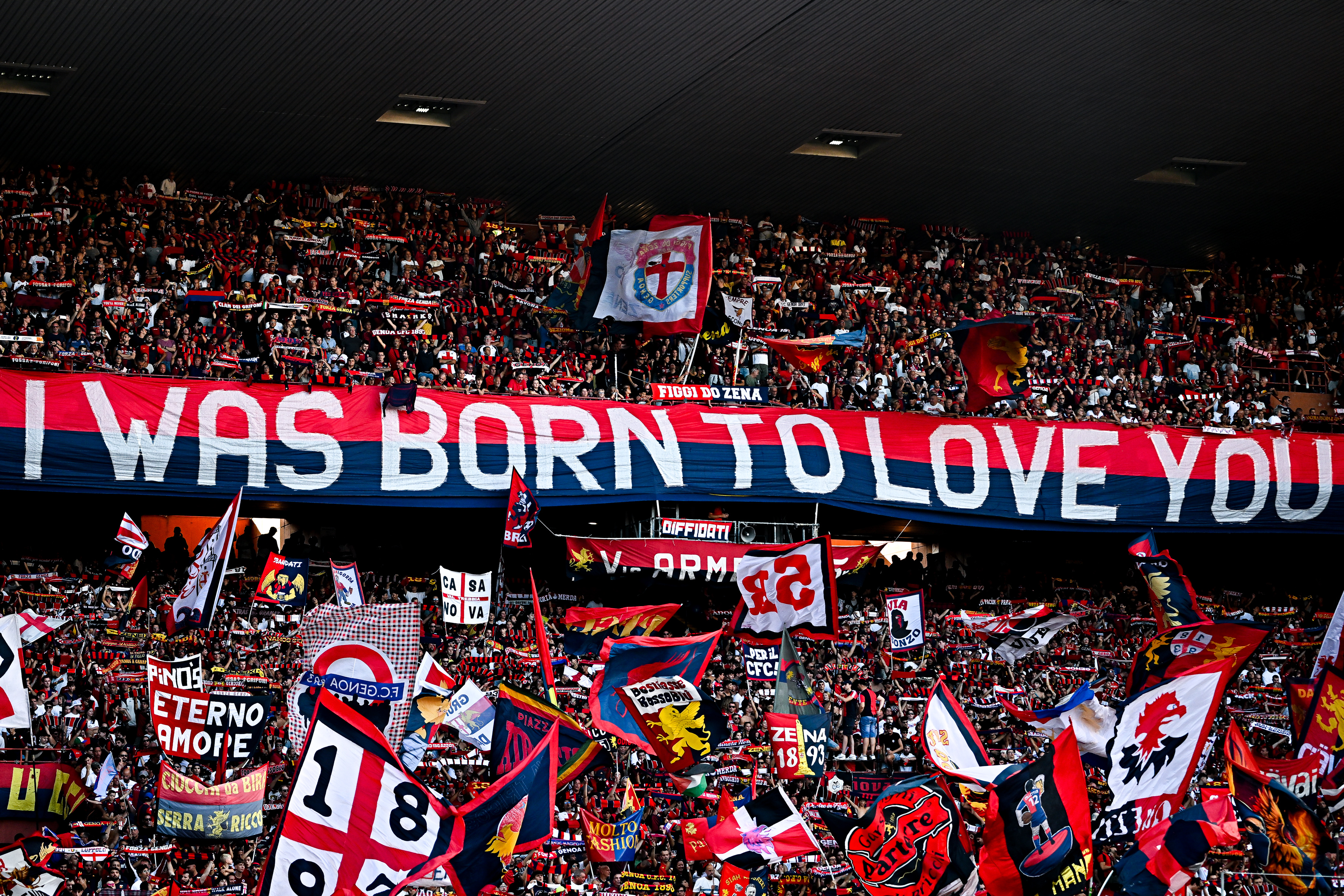
Imagine the scene. You’re in the city of Genoa for a weekend, maybe with an eye on watching the Rossoblu play at the Stadio Luigi Ferraris.
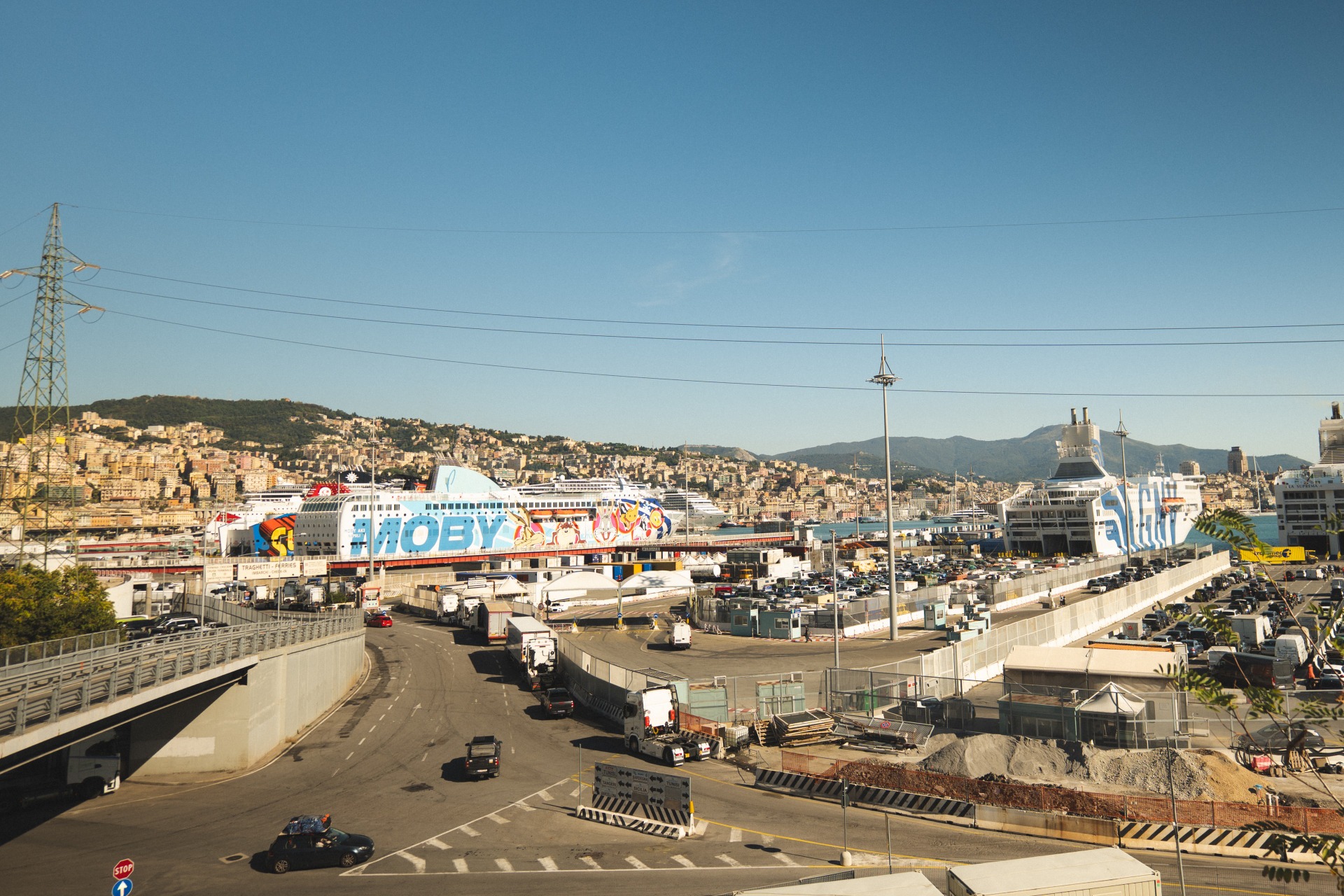
Strolling around the port, you notice what looks from a distance like an England shirt, with the easily distinguishable St George’s Cross. You see more of the same tops while wandering through Piazza De Ferrari, and even more as you take a tour of Porta Soprana, the medieval gates that once defended the city.
If it wasn’t for the fact that everyone spoke Italian, you would be forgiven a hint of confusion as you wondered where you were. The truth is the historical roots between Genoa and England are deep. England owe their flag to the city.
The Republic of Genoa used the Cross of St George as far back as the 12th century. England, in turn, paid the Republic a fee for the right to use the flag on their warships some time in the 13th century as a means of warding off potential attacks.
Fast forward nearly 700 years, and the English would return the gesture in kind – forever changing the very fabric of Italy.
Genoa’s port has been an important part of Italy for centuries, long before the country became unified in 1861. Nowadays, the port is a major hub for commercial traffic, liquid and dry bulk items, passenger transport and is also a destination for cruises.
Yet arguably its greatest contribution to the modern history of the nation happened in 1893 when British sailors – turned expats – disembarked and set about creating Genoa Cricket and Athletics Club.
The names of Charles De Grave Sells, S Green, G Blake, W Riley, DG Fawcus, Sandys, E De Thierry, Jonathan Summerhill and and Charles Alfred Payton may not mean much to your average calcio fan, but all arrived at the British Consulate on Via Palestro 10 to officially inaugurate the club.
Primarily set up as a function to represent England abroad due to the ever-growing expat community in the city (no locals were allowed), they focused on cricket and athletics in the early days, with football an afterthought due to the idea the game was only for the working class.
That would change three years later with the arrival of a a doctor who transferred from England to Genoa to treat British sailors on coal ships. His name was Sir James Richardson Spensley.
Born in Stoke Newington, Spensley was highly educated, fluent in Sanskrit and Greek, loved boxing, Eastern religions and was a correspondent for the Daily Mail, not to mention an avid traveller.
Yet the man who would transform Italy into a football-obsessed nation was himself a massive fan of the beautiful game, and was determined to bring it to the masses in his new home.
At the time team sports weren’t overly popular in Italy, yet that didn’t mean the Genoese population weren’t eager to try this alien sport.
Spensley quickly set about organising amateur games on Saturdays between crew workers from various ships at the port, before cementing football as part of Genoa’s Cricket and Athletic Club in April 1897. He went a step further, however, and proposed for Italians to be allowed entry.
Fifty were granted acceptance at the beginning, with no limit after a few years. The rest, as they say, is history.
Spensley, along with fellow pioneer Edoardo Bosio, an Italian textile merchant who lived in Nottingham for several years and was exposed to the burgeoning popularity of football in England, arranged the first ever game between cities in 1898, when Genoa took on a side from Turin consisting of two teams: Internazionale Torino and FBC Torinese. Genoa won the first ever championship in Italy, taking place over the course of a single day in May 1898.
When the FIGC later restructured the league and created Serie A in 1929 they recognised the past, and therefore Genoa have gone down as the league’s first ever champions.
In 1899 their name was changed to Genoa Cricket and Football Club, with the athletics part now dropped. It has remained since, with the club keeping the Anglicised version of Genoa (rather than Genova) as a nod to their English roots. They are Italy’s oldest club still in existence.
Spensley played as a defender and later goalkeeper for Genoa and also managed the club. He left in 1906 and died in World War I in 1915 at the age of 42. His time in the city has not been forgotten by Genoa, with a plaque on the wall of the house where he lived.
The country has always kicked a round object in some form or fashion: the Romans created a game called Harpastum revolving around a small ball made of feathers; Calcio storico was created in Florence during the Middles Ages, a mix of modern football, rugby and MMA, and many view its creation as a revival of Harpastum, albeit with a more violent twist.

To this day calcio storico, or to give it it’s full name – calcio storico fiorentino – is played in Florence’s Piazza Santa Croce on the third week of June every year to coincide with the Feast of Saint John the Baptist, the patron saint of the city. Thousands travel from all over the world.
Yet it is football that morphed into the country’s number one sport or, as former Juventus, Inter and Milan striker Zlatan Ibrahimovic once said: “Football is like a religion in Italy.”
When Italy struggled for identity as a newly unified country in the decades following 1861, football became an extension of the civic regional pride that was evident in centuries gone by. As more teams were created in various cities around the peninsula, calcio mirrored campanilismo (an intense loyalty to one’s bell tower) as the game blossomed in popularity during the Benito Mussolini era.
Football has now permeated Italian culture to the point where it has long been entrenched into the way of being; a cultural phenomenon often acting as a reflection of the trials and tribulations of the country itself. When Silvio Berlusconi formed his political party Forza Italia in 1994 and swept to power, he based its name from a football chant.
The Rossoblu, meanwhile, have never forgotten their English connection and even leant into it this season, with the design of their away shirt completely taken over with the Cross of St George and a gold trim to give it a modern twist.
The club’s social media posts promoting the shirt played on England’s ‘it’s coming home’ catchphrase, highlighting the historical bond between the two. Genoa went a step further and shot the campaign for the shirt in England, with one picture showing a model underneath a Spensley Way sign in Hackney, East London, in a nice little touch.
And so, when Spensley arrived in the port of Genoa in 1896 looking to help sick British workers, he would have no idea of just how influential his desire to bring the game of football to Italy would be.
A man who changed the entire history of a nation, with Genoa ground zero.
Related Topics
Related Articles
Related Articles
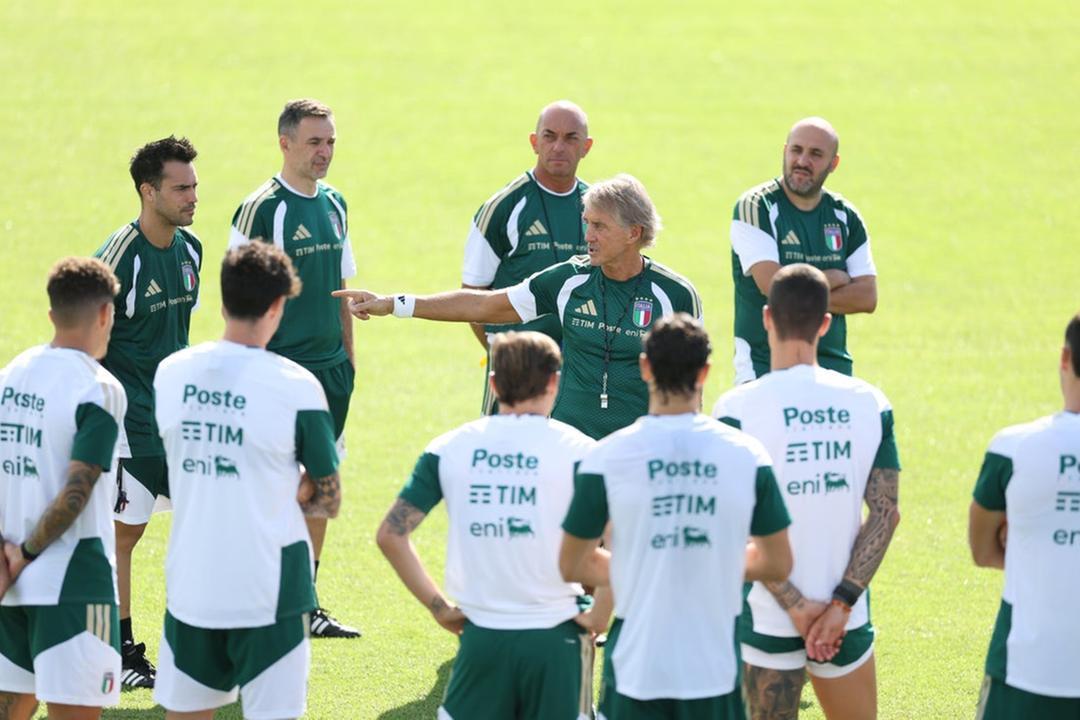
It wasn’t the most popular appointment but Roberto Mancini is back in the Italy hot seat - and is looking to recover from a losing start.
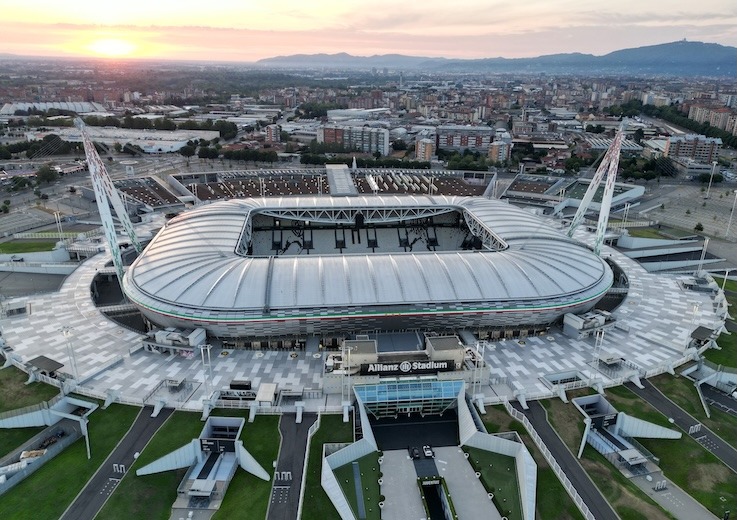
Some of the biggest grounds in the country must be replaced or renovated before the European Championship kicks off.
The Italy team take their home home games to all corners of the country but some of the high-profile destinations have been ignored.