
Brawls, Bedlam and Batistuta Facing Southend… Anglo-Italian Cup Had It All
By Emmet Gates
In the pantheon of football competitions, the Anglo-Italian Cup doesn’t quite sit among the greats – but it will always have a special place in the hearts of calcio aficionados.
Initially founded by football agent Gigi Peronace, an Italian who primarily dealt in transfer business between the two countries, the tournament ran sporadically from the late 1960s to the mid-1990s, often disbanded before given another lease of life.
Peronace’s brainchild was sparked at the end of the 1960s, with the idea that the winner of the FA Cup or League Cup would face the Coppa Italia winners. In 1969 Swindon Town demolished Roma 5-1 over two legs, paving the way for the early years of the competition.
The first version lasted until 1973 when it was abandoned due to a lack of interest from clubs. Three years later it resumed as a semi-professional competition, contested by lower-league sides, and lasted until the 1980s when the interest, once again, fell away.
It could be argued that it did well to carry on at all. In the 1970 final Napoli fans, dismayed at seeing their side getting pummelled by Swindon, threw objects on the pitch and at the opposition dugout. A riot led to 30 arrests, more than 100 people were injured and Swindon were given the automatic 3-0 win.
In 1973 a clash between Hull City and Lazio descended into what the Hull Daily Mail described as a “rough and tumble” after a fight broke out between a steward and Lazio manager Tommaso Maestrelli.
In 1992 it was rebooted as a full professional competition between clubs from Serie B and the First Division – now the Championship – as a replacement for the Full Members’ Cup, itself a competition only in existence due to England’s European ban in the wake of Heysel.
The new format consisted of two groups of eight, with the top two from each group making their way into a same-nation semi-final. This was to make sure the final wasn’t an all-English or all-Italian affair.
Yet the competition remained just as lively. A game between Ancona and Birmingham boiled over after the Midlanders raced into a 2-0 lead in front of 800 people in the 23,000-seater Stadio Del Conero. After a few heavy challenges from the Ancona players, Blues midfielder Paul Tait reacted badly to one from Marco Sesia.
A fight broke out between the teams, Ancona boss Massimo Cacciatori suffered a broken cheekbone and referee John Lloyd broke a finger. The police got involved, Birmingham players were charged and passports were confiscated. It would become known as the Battle of Ancona.
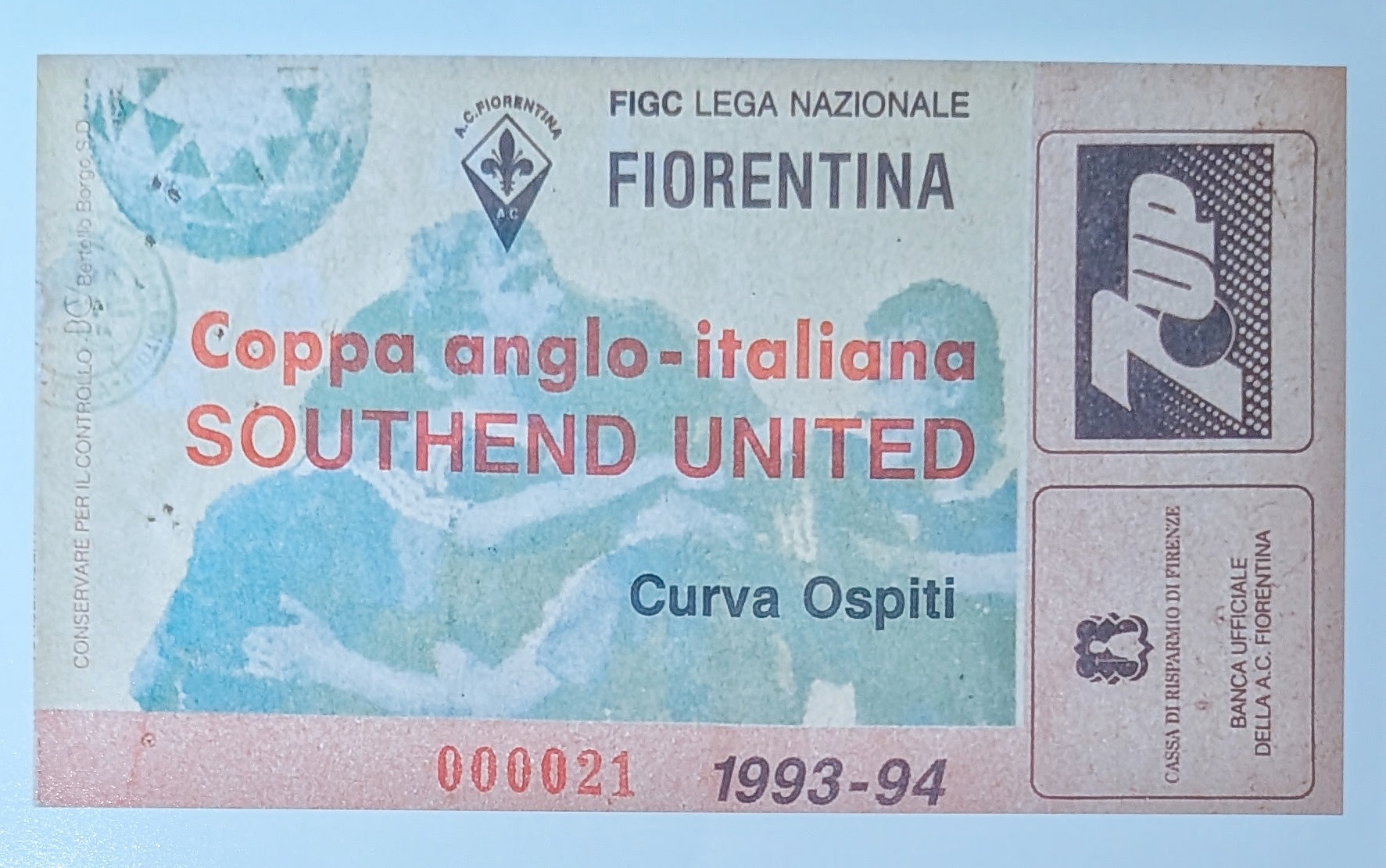
Yet many fans who travelled to Italy in the early 1990s have nothing but fond memories. Dave Shields, a Southend United supporter, remembers the excitement of travelling to watch his side take on Fiorentina in the 1993-94 edition.
“I went on my own and made the most of the trip by staying in Florence for the week,” says Dave. “I flew to Pisa and the Middlesborough squad were on the plane as they were playing there.
“I bought my ticket from Southend but didn’t realise until I got into the ground that I was behind the goal. If you’ve ever been to the Stadio Artemio Franchi, you’ll know seats behind the goal are a long way from the action.
“I spoke to a steward and was walked all the way around the Franchi to sit with our fans…the transfer cost more than the original ticket.”
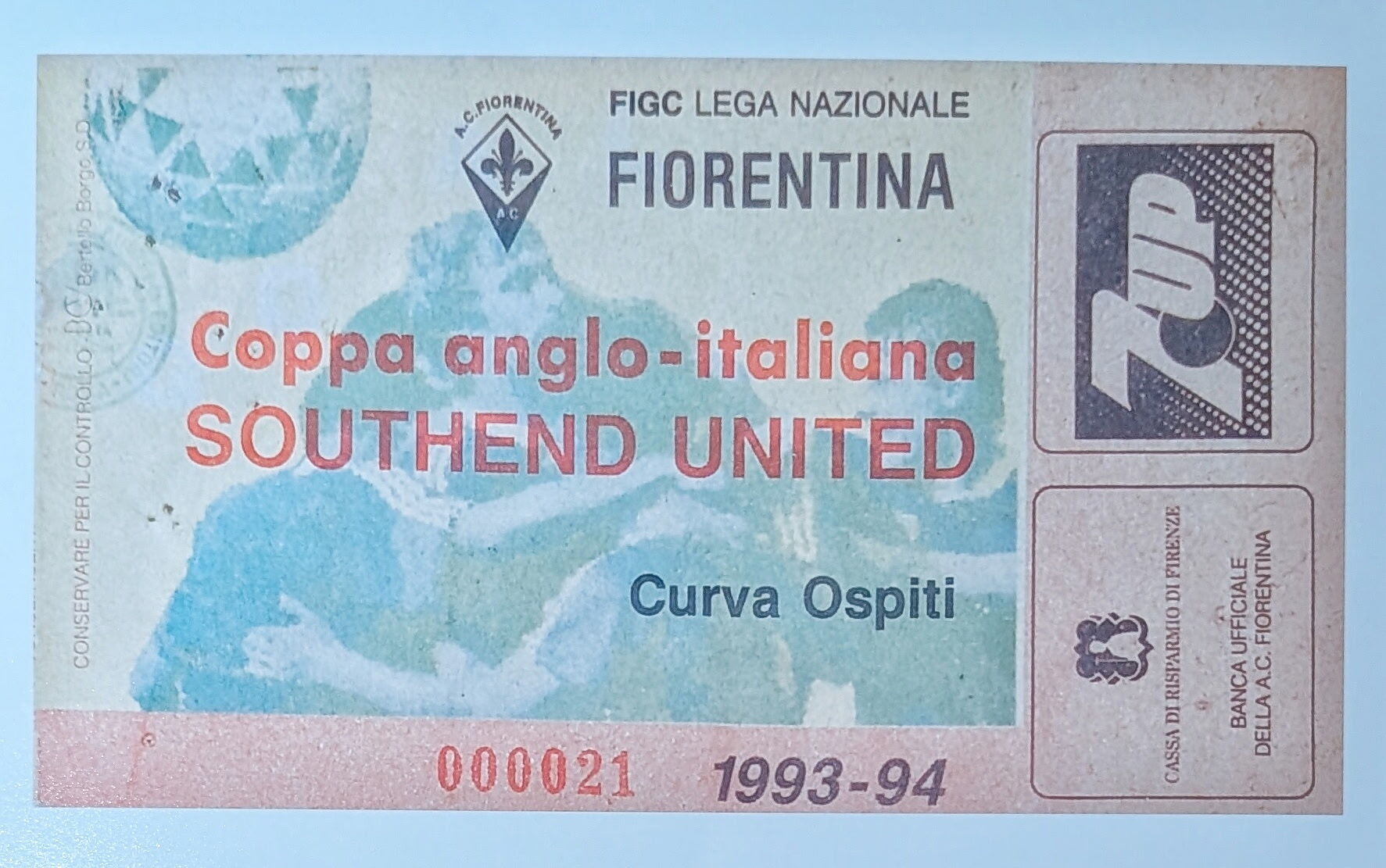
Dave saw the great Gabriel Batistuta score twice in a 3-0 win for the home team. “It was a strange atmosphere inside the ground as it was pretty empty, but it was certainly a pinch-yourself moment being there and watching Batistuta run the show.”
Fiorentina were in the competition after suffering relegation, despite having Batistuta, Stefan Effenberg, Francesco Baiano and Brian Laudrup in their ranks.
The experience was the start of something special for Dave, a football photographer by trade. “I fell in love with Florence and have visited a few times, including going to a derby against Livorno. I’ve also been to see other Italian teams – Inter, Milan, Brescia and Verona, and have taken my son a few times, including going to Desenzano in Serie D – the day after seeing Napoli.”
Bernie Friend covered the Shrimpers for the Evening Echo before transferring to the Daily Mirror.
“Against Cosenza, our flying winger Ricky Otto was chased through the ancient tunnel (at the Stadio San Vito-Gigi Marulla) by a hammer-wielding Cosenza player after turning on the magic in a 2-1 win for our boys,” Bernie said.
“But Barry Fry (the United coach) saw the funny side. He brought an inflatable hammer to the following match at Roots Hall and bashed Otto on the head during the warm-up.”
Southend lost to Notts County on penalties in the semi. “A heartbreak I still remember well,” says Dave.
County played Brescia at Wembley in front of 17,000. In the first edition of the revamped competition, Cremonese had seen off Derby County 3-1, and Italy would again emerge the winners a year later when Gabriele Ambrosetti, later of Chelsea, scored the winner.
The game itself is remarkable in that it showed the absurd strength of Italian football at the time. The legendary Gheorghe Hagi, three months short of his starring role for Romania at USA 94, found himself slugging it out for Brescia in Serie B either side of spells with Real Madrid and Barcelona.
Hagi wandered around the Wembley pitch looking disinterested, only flickering into life once the Rondinelle had taken the lead. From there on, the Maradona of the Carpathians put on an exhibition, creating chances for fun.
In keeping with the tone of the tournament somewhat, Brescia got booed by County fans when lifting the trophy.
The English side made it to the final the next year and this time triumphed, seeing off Ascoli 2-1 in a game notable for County winger Andy Legg seemingly scoring direct from a throw-in, and the fact that striker Oliver Bierhoff, a year out from his pivotal role in winning Euro 96 for Germany, was up top for the Italians.
The format for the final season was again altered. To keep travel logistics easier, the group phase was split into same-nation clubs, meaning the two countries only squared off in the final.
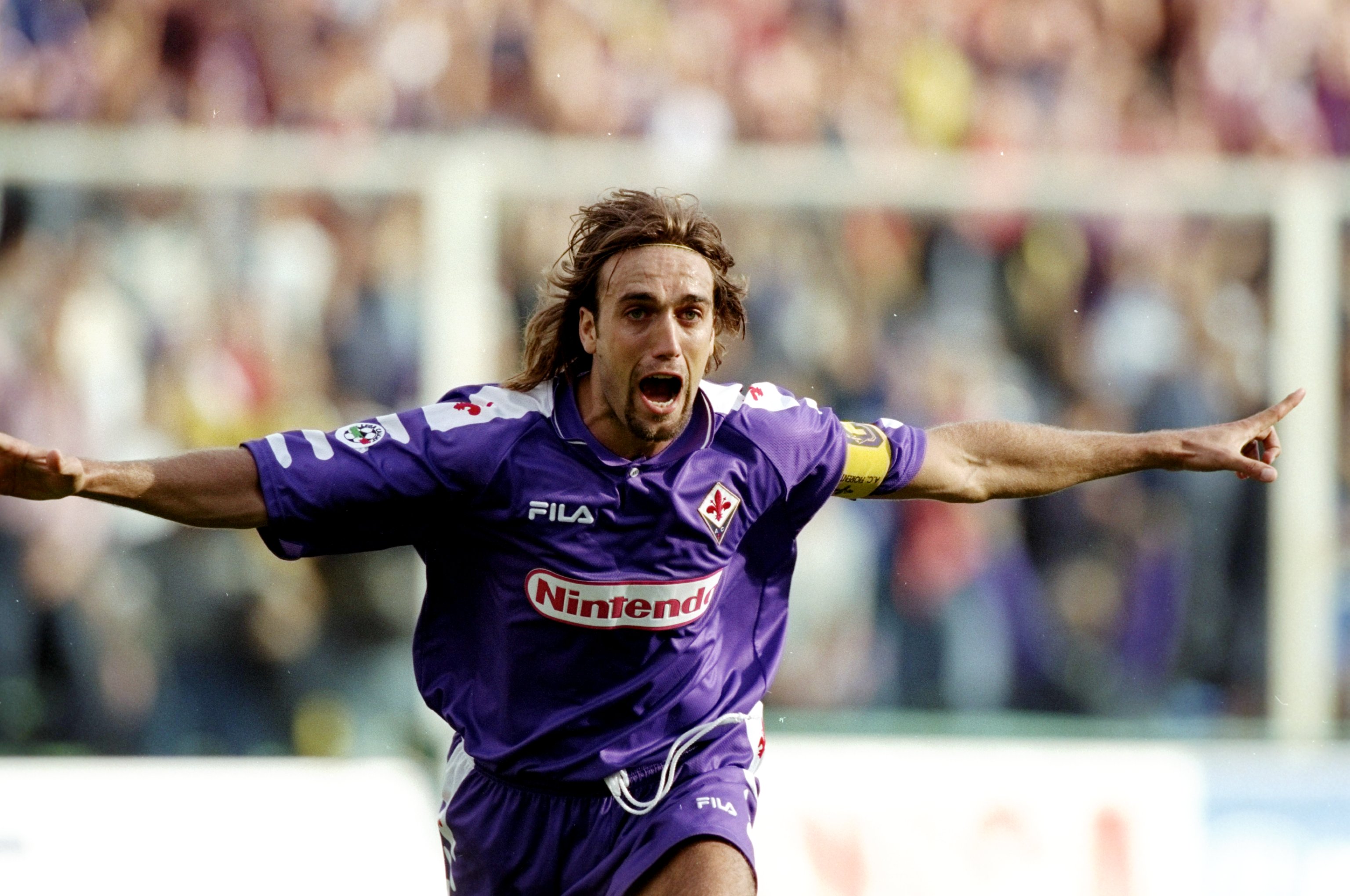
The 1996 showpiece saw Genoa humble Port Vale 5-2. Around 12,000 people turned up at Wembley to watch the Rossoblu race into a 5-0 lead, with the gulf in class evident from the get-go.
A young Vincenzo Montella, who would commit the cardinal sin of moving from Genoa to Sampdoria that summer, scored the third with a spectacular bicycle kick.
Genoa got to keep the trophy as the competition was finally axed altogether after disagreements over scheduling between the two associations. Three decades on it has never reappeared, and is unlikely to. Yet back then it gave the chance for fans to travel to Italy and sample a taste of what European football was like, to see stadiums, players and cities they would never ordinarily see in a regular season.
After all, if you’re a Southend United or Notts County fan, how often did you get to watch Batistuta or Hagi in their prime?
Related Topics
Related Articles
Related Articles
There's something for everyone in Florence to round off the night. Choose your setting, order something decent, and let the city do the rest.
Florence has a reputation for being impossibly beautiful, historically rich, and, of course, a little touristic. But beyond the postcard-worthy stuff, some places and experiences truly deliver, even after all the hype. These are the ones that stick with you long after you’ve left. Il Santino Wine Bar – Via Santo Spirito Blink, and you’ll
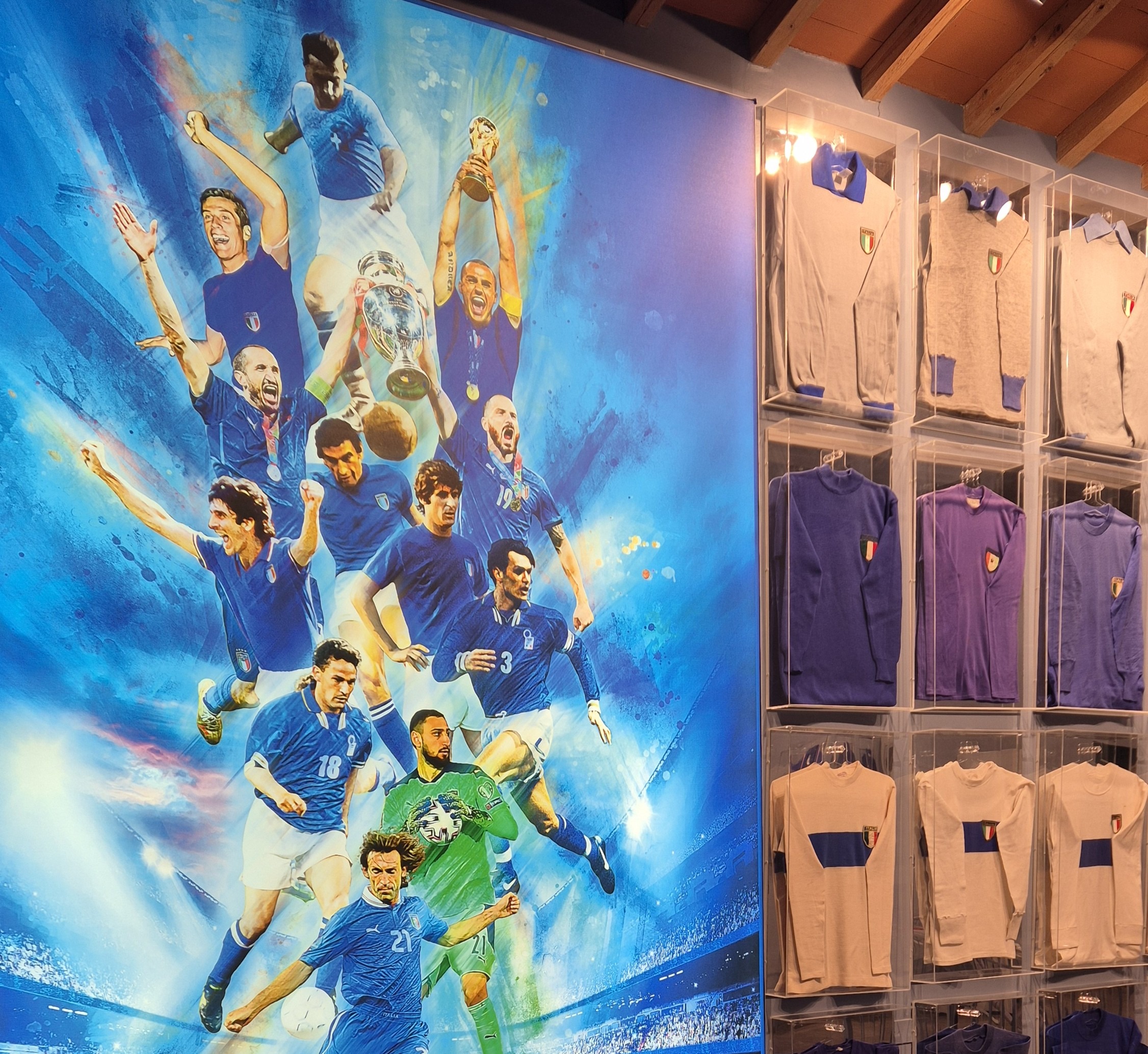
For all things Azzurri - the trophies, the tops and the romantic tales - Coverciano in Florence has it all and is worth a visit.