
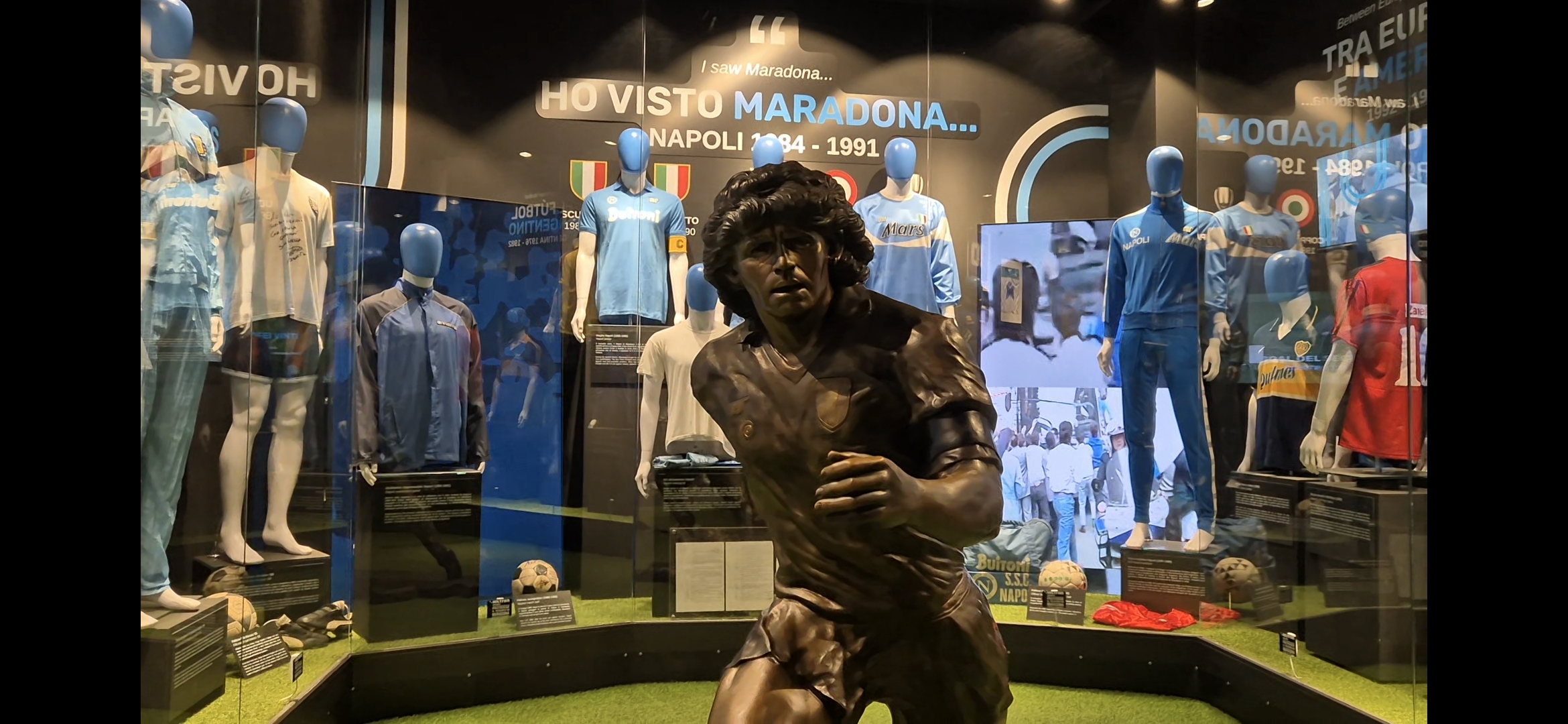
Shirts, Medals and THAT Jacket in the New Maradona Museum in Naples
By Emmet Gates
The first museum in Europe dedicated to Diego Maradona is tucked away in the claustrophobic alleyways that make up Naples’ Quartieri Spagnoli.
Close to the world-famous mural of the Napoli legend, the Museo Maradona is the newest addition to the popular tourist attraction.
Since Maradona’s death in 2020, the mural, painted in 1990 by local artist Mario Filardi in the aftermath of the club’s second Scudetto, has become the place to pay respect to arguably the game’s greatest player.
A small piazza has mushroomed into a sort of Maradona Disneyland, with the space around it – formerly a car park – selling Napoli and Maradona shirts, fridge magnets and just about everything else his image can fit on.
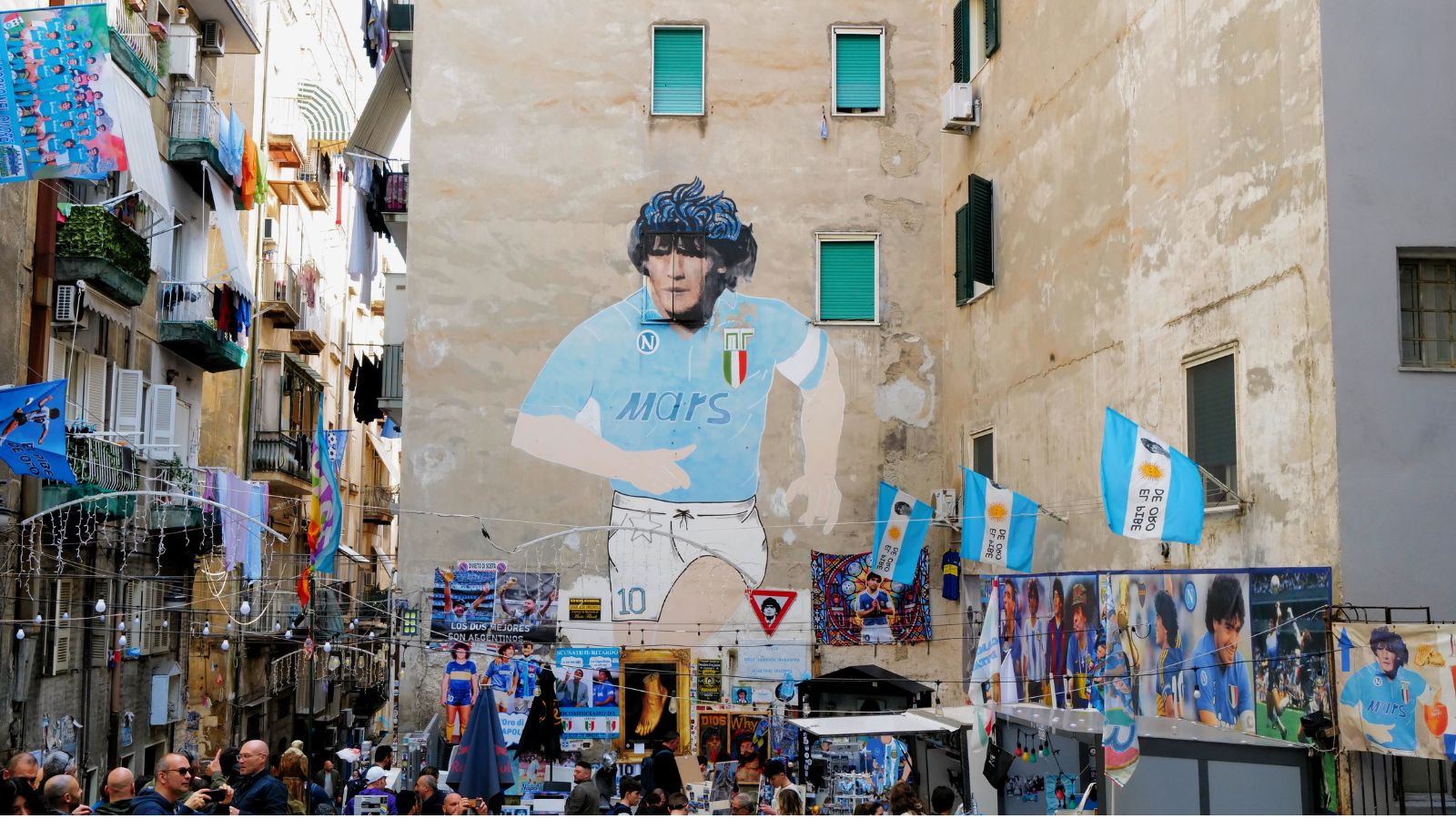
A coffee and drinks bar has now popped up, a far cry from just a few short years ago when the fading mural stood alone as a stark reminder of past glories.
Italian financial newspaper Il Sole 24 Ore reported that in 2023 only the Colosseum brought in more tourists across Italy. Considering the country has more UNESCO World Heritage sites than any other nation, it is quite the claim.
The increase in visitors was partly due to Napoli’s Scudetto win, which captured the hearts and minds of the football public, drawing people from all over the world who wanted to plug into the electricity charging the city that season.
The other part being, of course, Maradona. A man who came, saw, bedazzled and conquered a country, worshipped from all corners of the globe for what he achieved between the white lines. There are footballers, and then there’s Maradona.
Quartieri Spagnoli is the ideal location to maximise the flood of tourists and open a museum, so after paying the €15 entry, we wandered inside.
“Everything in here was personally worn by Diego,” our English-speaking guide, a local called Emiliana, tells us.
Among the first things we see is Maradona’s favourite moka pot, which was donated to the museum by the Vignati family and was the only one he would drink out of.
“Diego could tell the difference if it was made from another one,” Emiliana says, laughing.
Saverio Vignati was a guard at the Stadio San Paolo for over 30 years and formed a paternal relationship with Maradona throughout his chaotic spell in the city.
Lucia, Saverio’s wife, was the Maradona family’s housekeeper throughout their stay in Naples. Maradona gifted many items to the family, including a watch and the shirt he wore on the balmy July day he arrived from Barcelona in 1984.
One of the more interesting items was a medal made by the Catholic Church commemorating the exhibition games Maradona promoted in the name of peace. Despite being born a Catholic, he was highly critical of the church at various points, once admonishing Pope John Paul II for the churches’ lavish ways and telling him to melt down all the gold in the Vatican to feed starving children around the world.
The fact they made an official medal in his honour illustrates Maradona’s enormous influence.
Shirts from across his seven years at Napoli are on display, from the slender boy who arrived in 1984 to the few times he was benched (for one disciplinary reason or another) and forced to wear the No 16, to the scandal-ridden, drug-addicted and bloated figure who silently departed Naples in the middle of the night in March 1991 after failing a drug test against Bari.
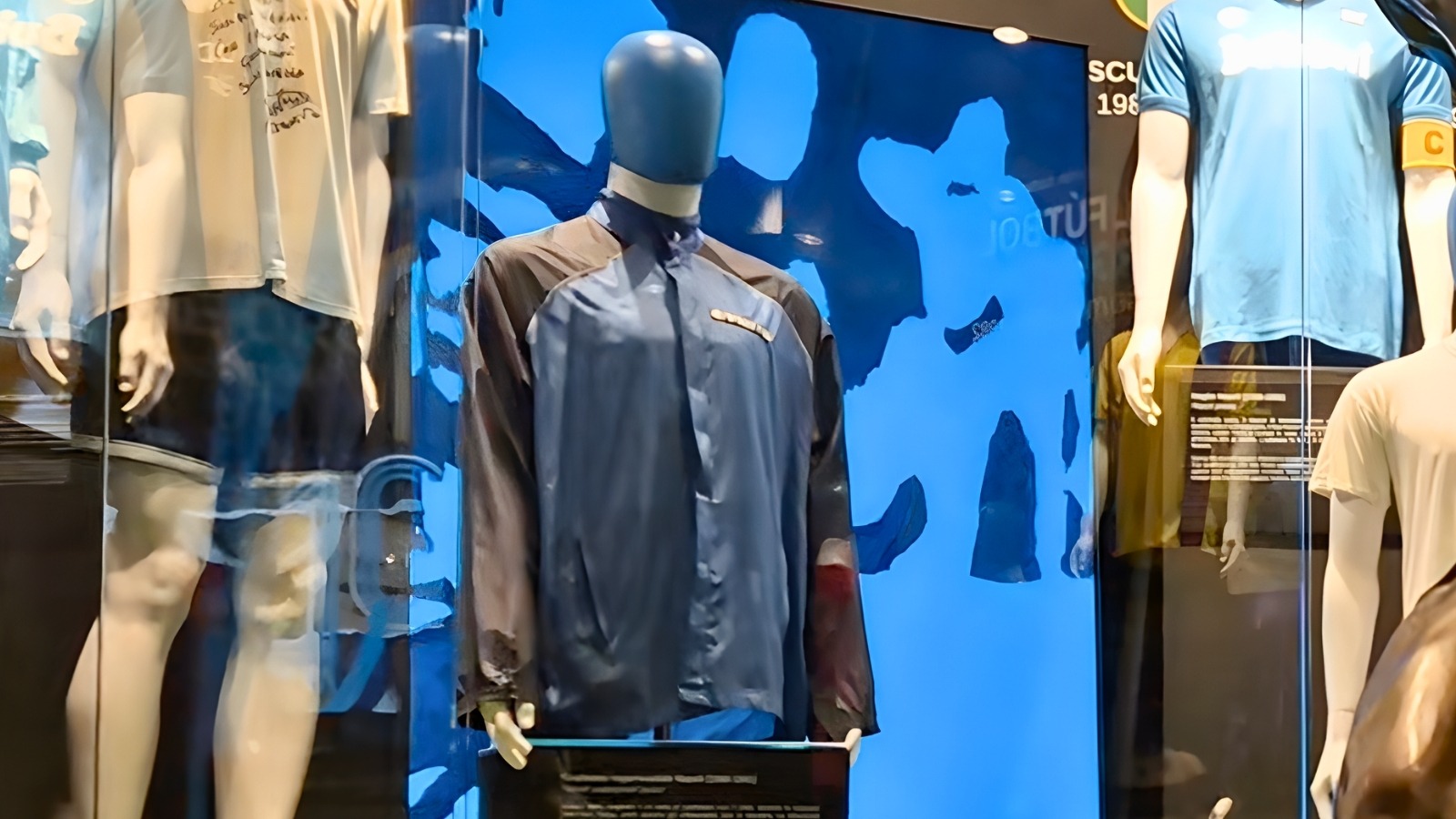
One of the best items on display is the jacket from the famous ‘Live is Life’ warm-up against Bayern Munich in the 1989 UEFA Cup semi-final. As much as the Hand of God, the footage of Maradona happily dancing, laces untied and playing with a ball in the build-up to the second leg in Munich has become the most viewed footage of his career.
Seeing the jacket up close, it is far too big for a man of Maradona’s size and the tour guide explains how he folded the bottom half and tucked it in, with the crease in the material still evident after all these years.
Match-worn shirts from the 1986 World Cup in Mexico and the later years of his career, from his short stint at Newell’s Old Boys to the second Boca Juniors spell, are on display.
Jerseys from his tormented and miserable time at Barcelona and non-official shirts are also represented, with the ‘No drugs’ shirt he wore during an exhibition game for Michel Platini in the late 1980s sitting alongside the top he wore during his retirement game in 2001 at the age of 41.
Maradona’s daughters, Dalma and Giannina, donated these shirts to the exhibition.
“I knew of Maradona,” says Emiliana. “But only the bad parts. Now I have much more respect for him, for what he went through and gave to the city.”
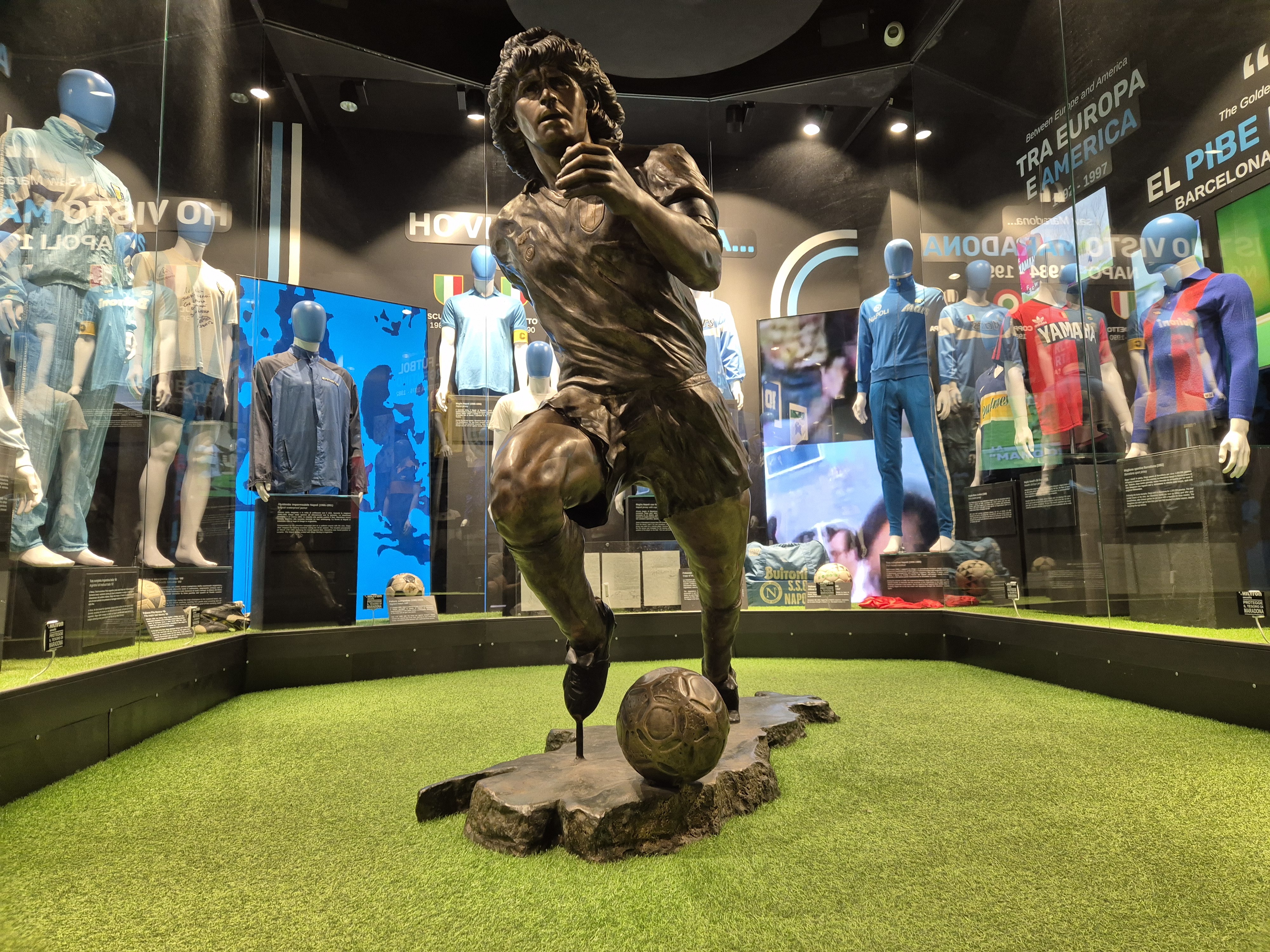
The centrepiece of the museum is a bronze statue, sculpted in 2020 by Domenico Sepe. Standing at 170cm (5cm taller than the man himself), the base is a map of Maradona’s native Argentina and the statue rests its left foot on Buenos Aires.
He is sculpted as a victorious hero, adorned with all the symbols associated with the Partenopei’s Coppa Italia win in 1986-87.
The Museo Maradona is small but a must for any football fan or Maradona diehard who wants to see authentic memorabilia from the man who defines Naples as much as pizza and babà.
Opening hours are 9am until 9pm, and each entry is accompanied by a guided tour for a duration of 30 minutes.
If you love all things Diego, this is the museum for you.
Related Topics
Related Articles
Related Articles
Italy's culinary reputation can make it difficult to know where to begin when trying to choose between Bologna and Bari or pizza and pasta.
The noise is incessant, with the capo ultras facing the curva and leading it through its repertoire of songs.
As we edge towards spring, winter lingers in the north, but warm weather emerges in the south, making it a great time to experience Italy.