You’re Born Red or Blue: Genoa’s Calcio Rivalry with a Very English Flavour
By Dan Cancian
“Football is the most secular of faiths. It’s the need to align ourselves with a party, which is symbolised by images, by a colour, but which claims to be supported by a tradition and a culture different from those of others. Being a fan is born from a somewhat childish, but nevertheless human, need to identify with a group.” – The late Genoese songwriter Fabrizio De Andre.
A proud Genoa fan, De Andre brought his home town’s rich tapestry to life through music. And football in Genoa is as deeply embroidered in the city’s fabric as its proud maritime and textile traditions.
Walk through the carruggi – the old town’s narrow and winding streets that were once lined by warehouses close to the port – and you will find murals dedicated to Sampdoria and Genoa.
Stop at one of the hundreds of bakeries selling freshly-made focaccia – a staple of Genoese cuisine – and chances are a flag is hanging behind the counter.
In the Stadio Luigi Ferraris, Genoa’s love affair with football has its perfect theatre. Like some corners of the city itself, the ground looks dated. Its last major revamp was ahead of the 1990 World Cup.
But Marassi – as it is known after the working-class neighbourhood it sits in – remains one of the most eye-catching grounds on the peninsula.
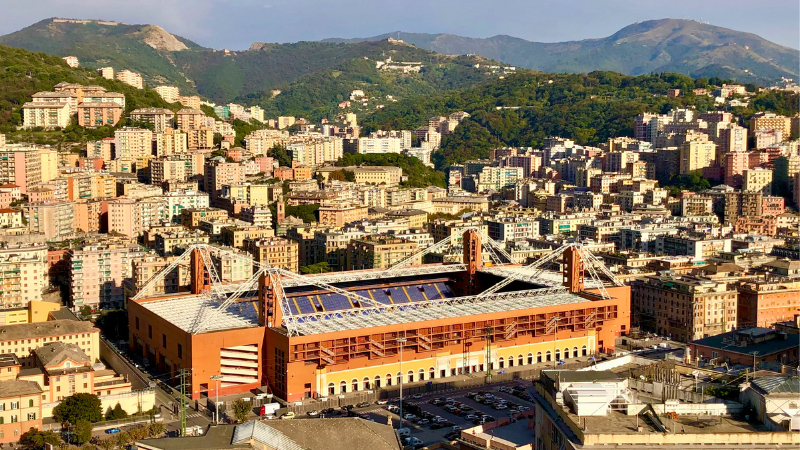
It also provides an electric atmosphere, especially when Sampdoria and Genoa square off in the Derby della Lanterna – which takes its name from the Lighthouse Tower, Genoa’s ancient landmark and the main lighthouse for the city’s port.
Rather than the curved stands behind the goal that characterise most Italian grounds, the Ferraris is famous for its two Gradinate resembling the English-style ends.
Graham Chmylowskyj, the Scotsman behind the North Curve retro fashion line, follows Sampdoria (and Hearts) and was at the derby a few years ago.
He told us: “Going to the Marassi to see Samp vs Genoa in April 2019 was magical. We won and the genius that is Fabio Quagliarella scored. It was a perfect day. The ultras, the choreography, the noise, my god. I’ve never been in an atmosphere like it.”
For now, the city rivals are in different divisions but absence has not made the heart grow fonder.
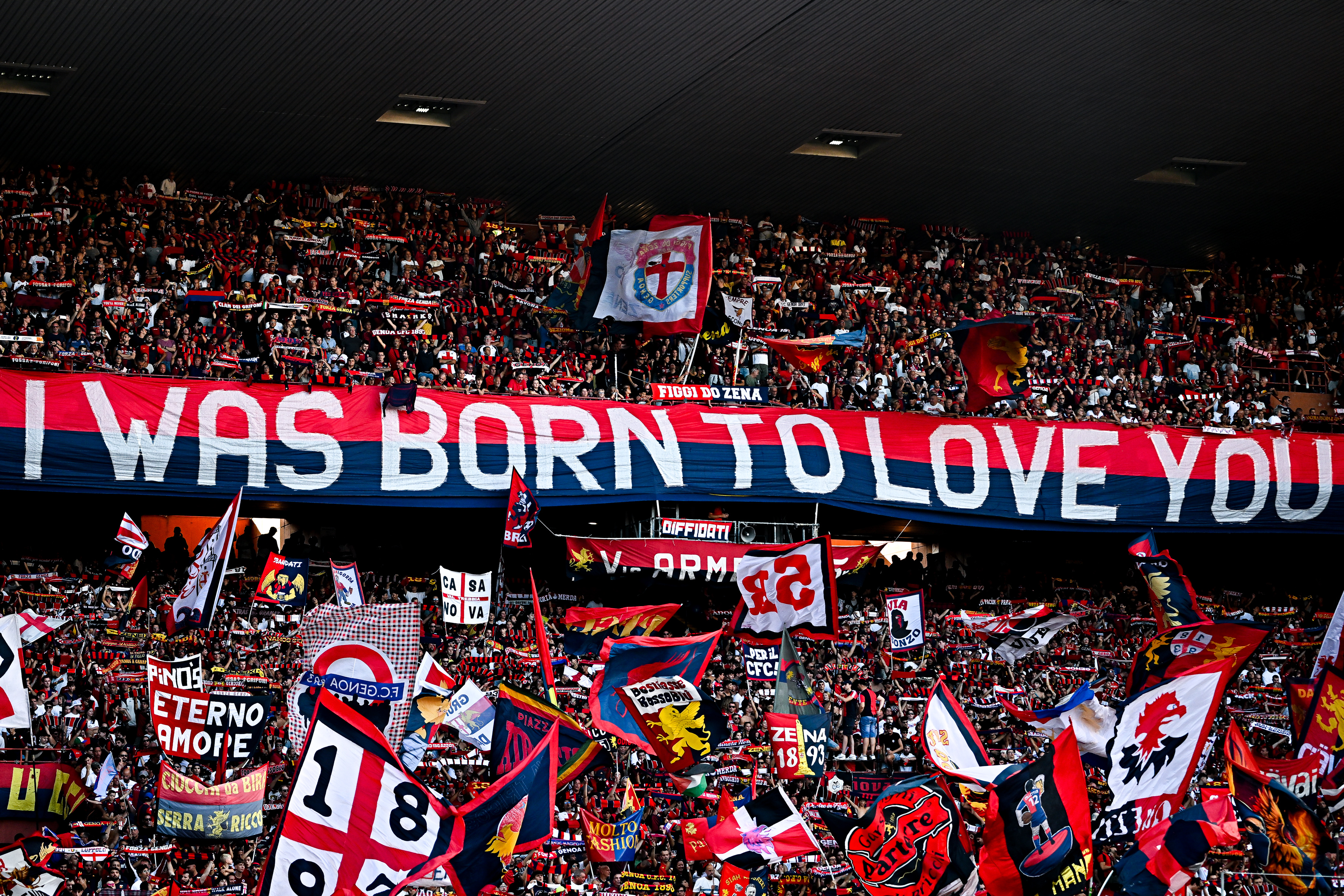
“We have no cousins,” proclaimed a giant tifo flag in the Gradinata Sud at a Samp game in the 2024-25 season. In Italy, teams sharing the same city are referred to as cousins.
A day later, Genoa were welcomed onto the pitch by an ear-splittingly loud rendition of Sara’ Perche’ Ti Amo (It Must Be Because I Love You), a 1981 hit by Italian pop group Ricchi e Poveri.
In the Genoa fans’ version romance has been replaced by something altogether more blunt. “It must be because I love you. Being a Genoa fan, that’s what we’re all about. I’ve hated the Doriani since the day I was born.”
Indoctrination does begin at an early age. Like in Manchester, Liverpool, Buenos Aires or Milan, you are either red or blue. Fence-sitters need not apply.
It is no surprise to see the flame of local rivalry burn so bright. The Genoese are proud people and refer to their city as La Superba – The Superb One.
Trailblazers
Founded in 1893, Genoa are Italy’s oldest club, a fact supporters take fierce pride in and hold over Sampdoria, who are 53 years younger.
Sampdoria, as Marassi’s stadium announcer never fails to mention, have “the most beautiful shirt in world football” but it did not see the light until the merger of Sampierdarenese and Andrea Doria in 1946.
Yet the Blucerchiati have been pioneers in their own right, off the pitch, as the Ultras Tito Cucchiaroni group claim to have introduced the word ‘ultra’ into calcio’s lexicon.
Formed in 1969, they blazed a trail for organised fan groups and take their name from Ernesto ‘Tito’ Cucchiaroni, who earned instant cult-hero status after scoring twice on his Derby della Lanterna debut.
Despite a lack of recent success for both clubs, support remains unwavering. At the start of 2025-26 Genoa had sold more than 28,000 season tickets while the campaign before, Sampdoria’s 19,000 was the highest in Serie B.
Considering the Ferraris’ capacity is just north of 33,000, those numbers tell their own story. It is no wonder that Genoa have retired the No.12 shirt in honour of their fans.
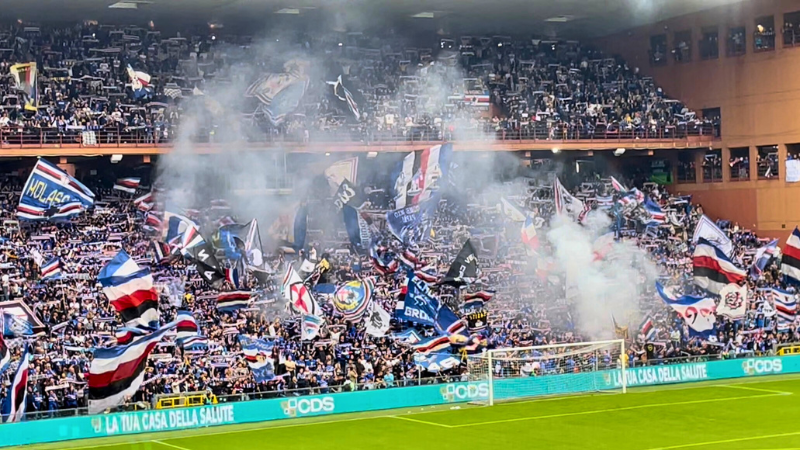
Without the regular derby, Marassi is still a sight to behold week in, week out. Watching the flags being waved and scarves held aloft reinforces the feeling that this is an English stadium with an Italian address.
And therein lies Marassi’s great paradox. The Ferraris does conjure memories of English grounds and an atmosphere which is often now absent from Premier League stadiums.
In that respect, the words of late Genoa manager Franco Scoglio feel relevant.
“Remember you are Genoa’s real custodians,” Scoglio, who managed the Rossoblu in three different spells, said. “Just like your fathers were before you and their grandfathers before them. You have history, you have culture, you have to represent Genoese pride.”
With the red half still in the top flight and the blue stuck in Serie B, it is possible to catch both teams at home on the same weekend. Tickets for Sampdoria start at €15 for adults while Genoa is slightly more expensive. They can be bought through their official websites while our club guides have all the relevant information.
The prices make it affordable for young supporters to attend and Italy has a relaxed attitude to standing so a cauldron of colour and noise is created where fans are a huge part of the spectacle.
Walking through the streets of Marassi on a Saturday or Sunday it is impossible to dispel the notion that, as De Andre put it, being a fan is born from the need to identify with a group.
If football really is the most secular of faiths, few cities can match Genoa for the fervour of its beliefs.
Related Topics
Related Articles
Related Articles
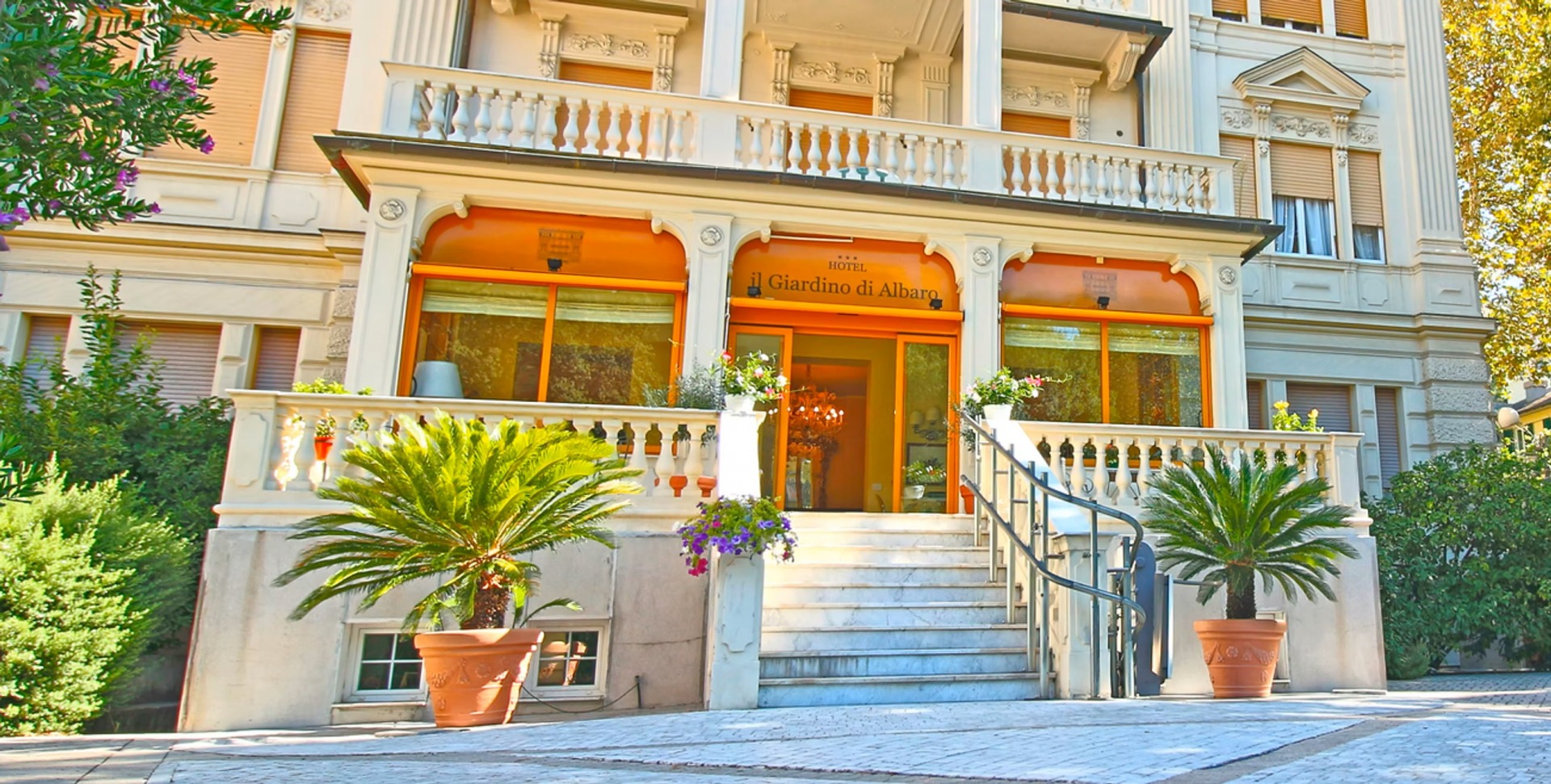
Genoa is more affordable than its famous neighbours, with plenty of hotel and Airbnb options available.
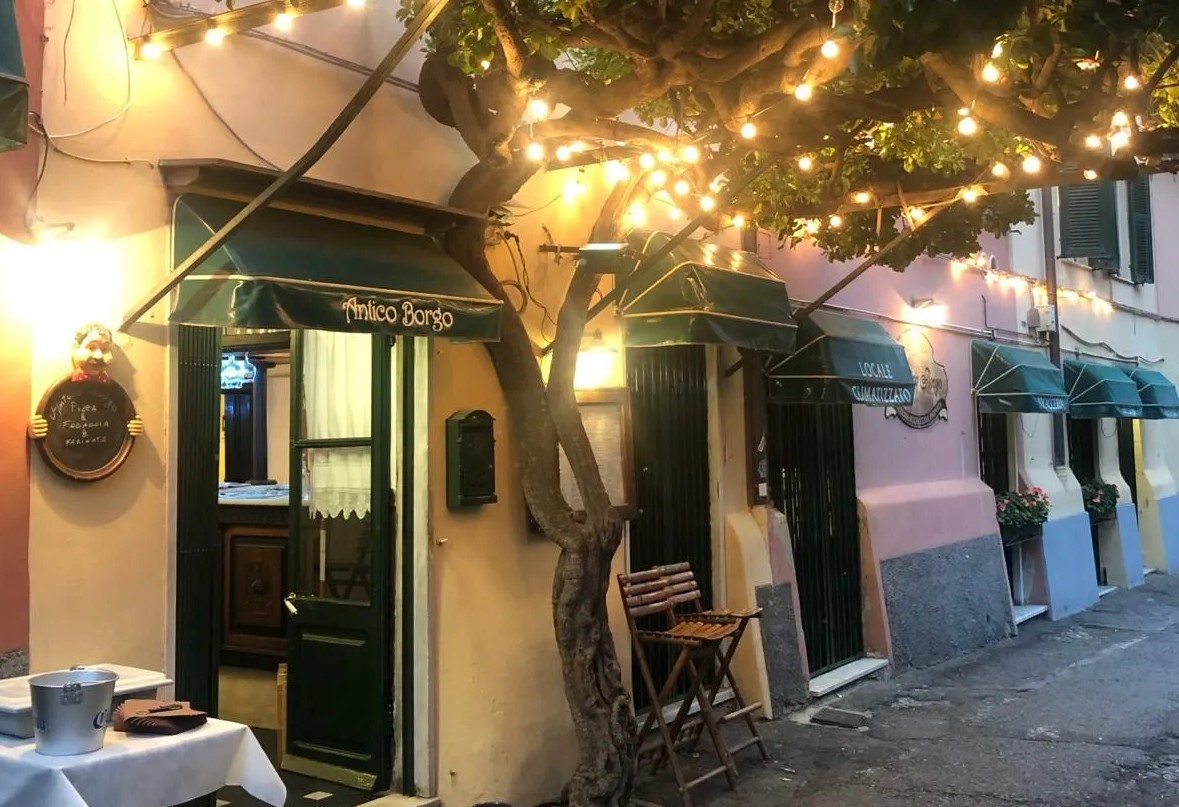
Eating farinata right by the Ligurian Sea as a Rossoblu flag flutters against the wind, ticks almost every box.
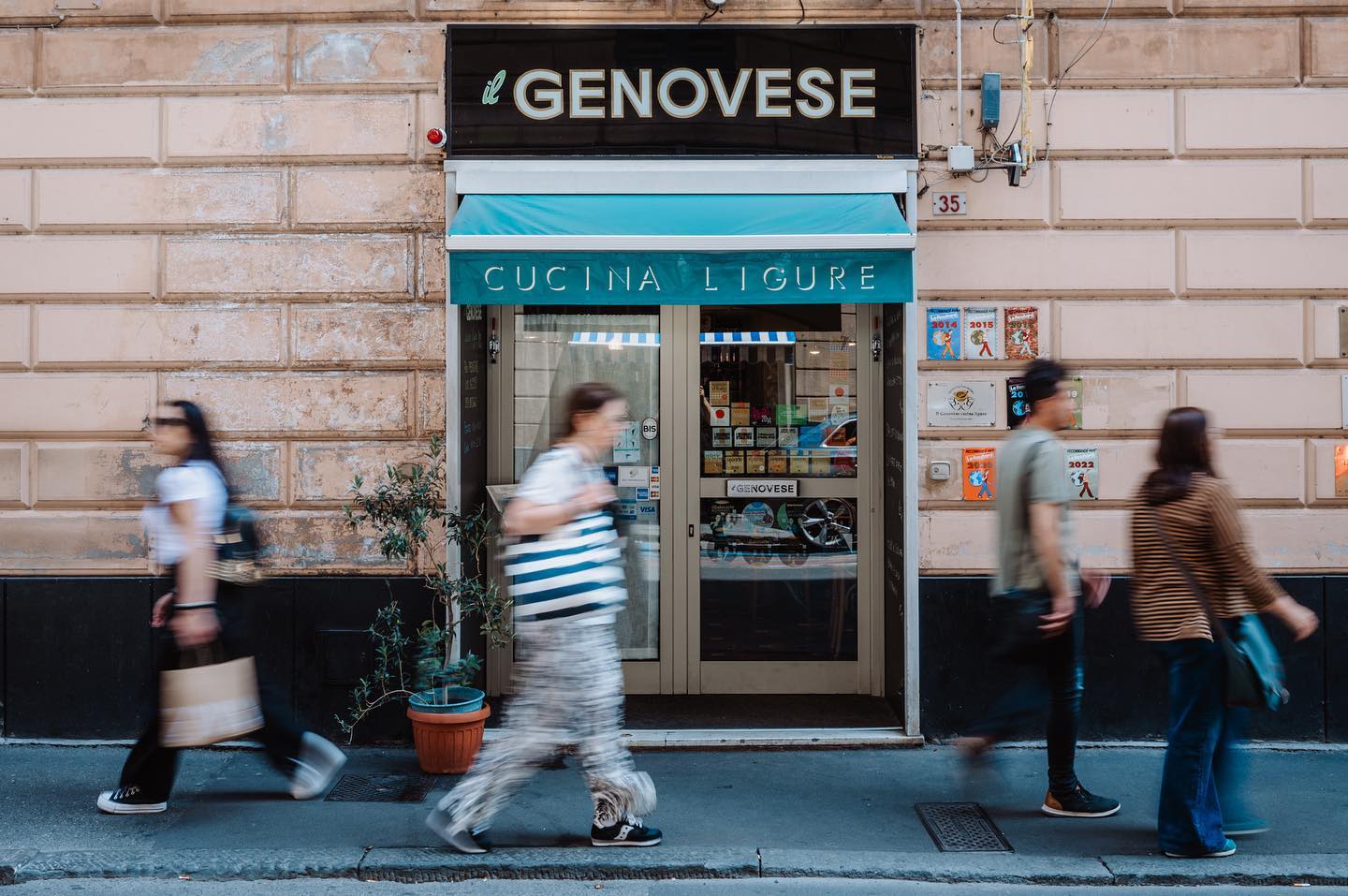
The Ligurian capital is its undisputed birthplace and real pesto alla Genovese is made with basil from this region.